Prior to this trip, when I thought of bus rides in the Andes, I didn’t think of lengthy sedate journeys through spectacular scenery. I imagined bald-tired relics driven by teenagers, careering around hairpin turns, crucifixes flying and music blasting. Luckily for us, we were treated to the former and as we drove for seven hours from the sea level city of Trujillo to the 9,000 ft. above sea level city of Cajamarca, we even managed to doze off a few times.
This is the Andes, at our restaurant stop two hours outside of Cajamarca. Unfortunately, I was unable to take photos during the drive, as the bus windows were tinted and had a mesh covering.
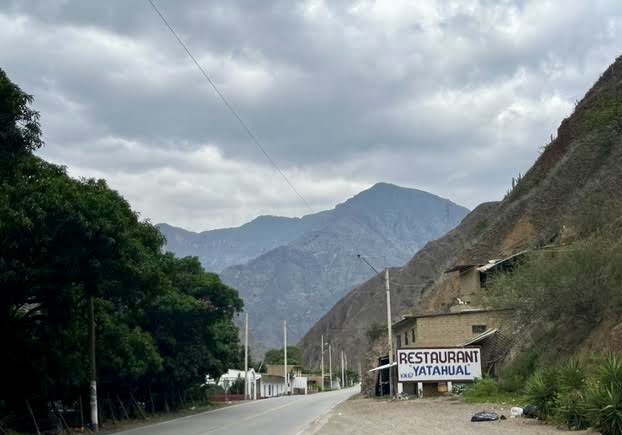
Our drive was not entirely uneventful though. We kept climbing and entered the “zona de niebla” (fog zone), which was an understatement. We went from 100% visibility to nearly nil and that lasted for about an hour; a tense and terrifying excursion navigating sharp turns, switchback roads and grazing cattle.
Our driver dropped his speed and delivered us all in one piece in Cajamarca.
And so began our introduction to the kindness of Peruvians in general, but in particular when you are almost the only foreign tourists. I had struck up a conversation with a young woman on the bus, who spent six months in Colorado and spoke perfect English. When we arrived at the bus station, we showed her our Airbnb location and immediately she offered to share a taxi, as she lived close by. She adamantly refused payment toward the fare, saying it was her honour to show us hospitality.
This happened all the time, in big ways and small. A gentleman passed us a bag of cookies on one of our tours. A curious couple, with a smattering of English, stopped to chat in the park. A gregarious young woman waiting in line for the bathroom, hauled out a roll of toilet paper and passed me a wad, possibly concerned that I wasn’t yet aware of public bathroom deficiencies.
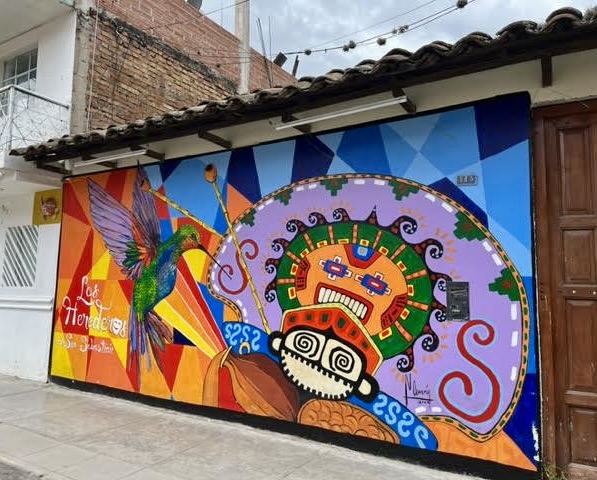
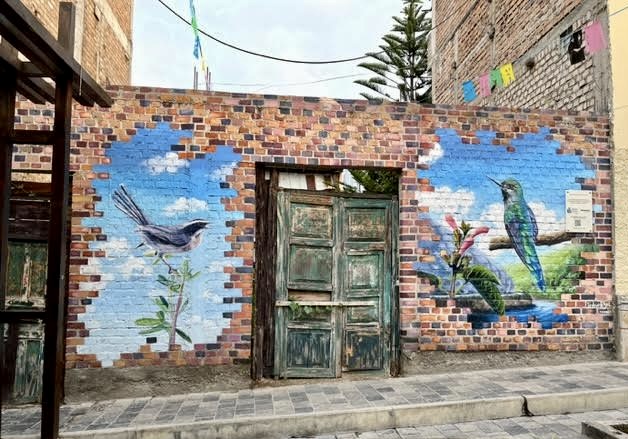
You know when you’re researching a trip and discover too late that you’ve missed an important piece of information? Had we been more diligent, we would have learned that Cajamarca is famous for its celebration of Carnaval – that Latin American frenzy of parades, costumes, food and dancing that precedes Easter. Had we known, we would have come to Cajamarca first, then travelled on to Trujillo. We missed the fun by just a couple of days. Remnants of the party still exist in the form of streamers and masks, but this beautiful mural was freshly painted this year.
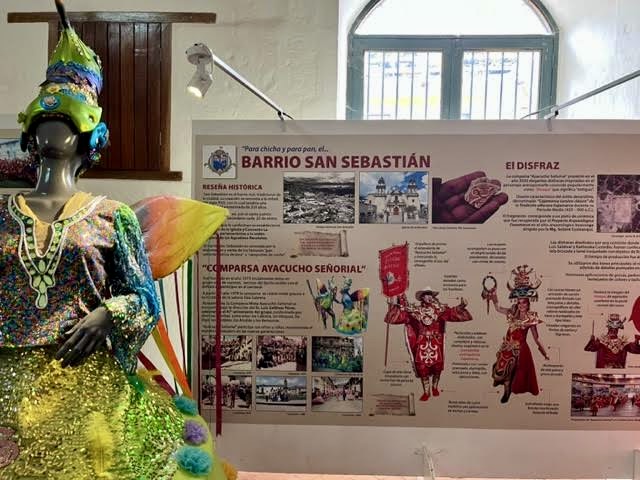
Much like Rio or New Orleans, costumes for Carnaval are a big deal. Hours upon hours are spent in their construction and four of the downtown neighbourhoods vie for the competition. This museum display shows our neighbourhood’s (San Sebastian) offerings.
We may have missed the party, but we were not wanting for things to see and do.
Cajamarca is pre-hispanic, one of the earliest documented settlements in the Andes, dating back to 1500 B.C. Evidence of the earliest primitive peoples can be found in Cumbemayo, which is one of the oldest constructions in South America.
We joined a tour with eight other people and although our guide did not speak English, one of our fellow tourists, Luis, was fluent in English and French. He took us under his wing and translated for us along the way. (More examples of Peruvian kindness).
Cumbemayo is a stunning example of a civilization dating back over 3000 years ago, and although there was no buildings or temples, there were petroglyphs, and a multi-kilometre stretch of canals that deliver water from the hills to the city.
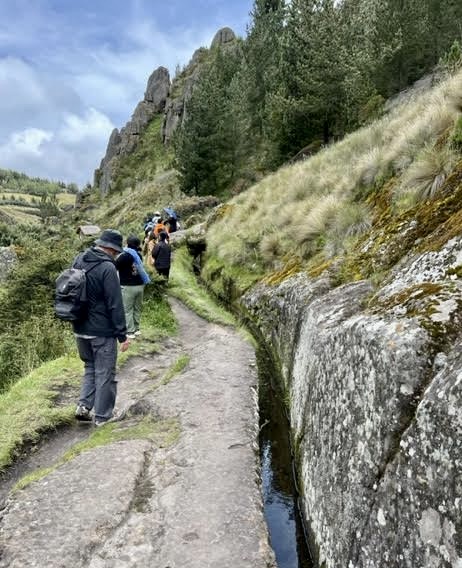
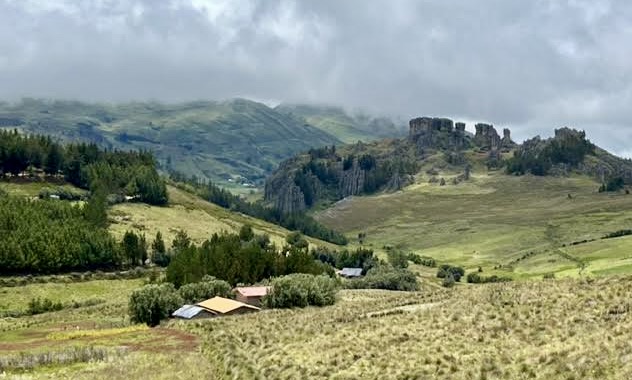
The pastoral landscape in the foreground, with the volcanic rock formations in the background.
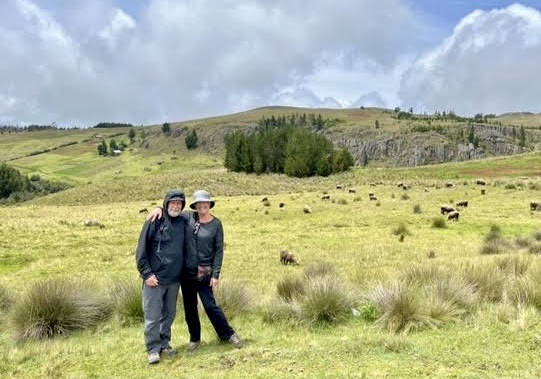
Us, among the sheep. Peruvians take photos and selfies from every imaginable angle and after several offers of “photo?”, we finally accepted, feeling somewhat churlish to keep saying, “no, gracias.”
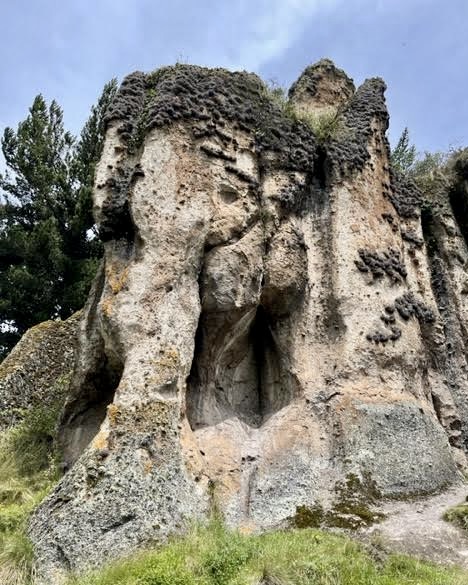
The incredible rock forests. I tried to take photos of the petroglyphs and carvings of crosses, but they didn’t show up well.

This particular rock formation seems to have fallen victim to a marketing type. Our guide explained that the long rock formation to the left resembles an elephant’s trunk, and the curved indented part to the right resembles a vagina. Our guide then coyly laughed. This may be a Peruvian Rorschach test; anything is possible if you look long enough.
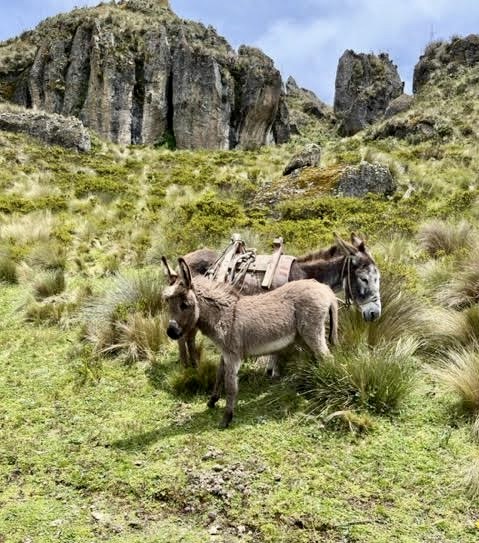
Cute-as-a-button baby donkey and his patient mother.
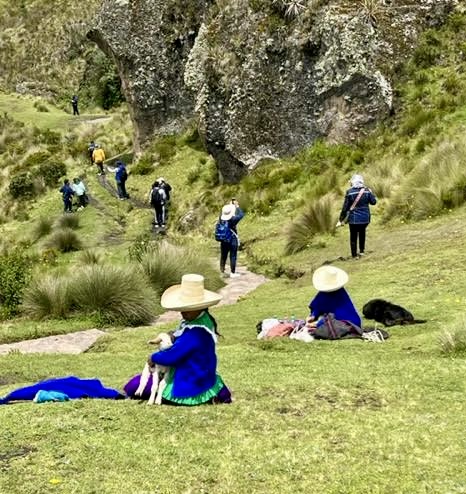
The Quechua people live both in Cajamarca and in the rural areas. They live in Cumbemayo, which is remote, lacks infrastructure and work, with a resulting high level of poverty. As we walked along the paths, we often came upon women selling trinkets or photo ops.
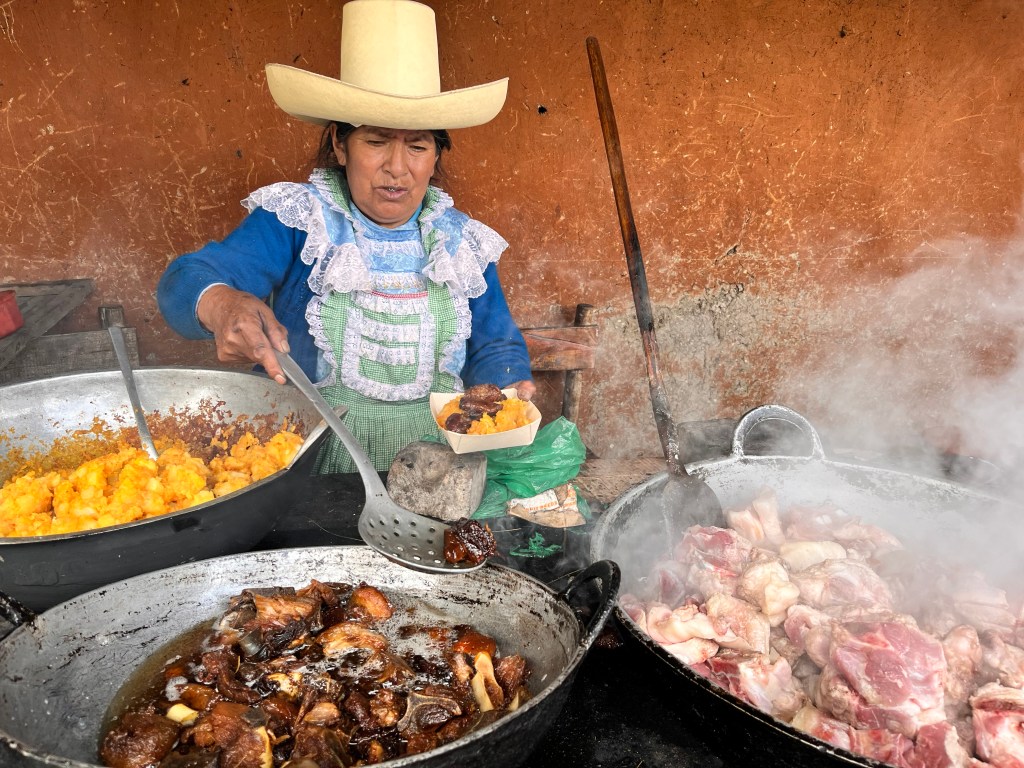
There was also a hut where this woman was selling chicharron, a local pork dish.
The Quechua people, notably the women, wear traditional clothing of skirt, shawl and enormous-brimmed hats. Typically, the women are on the streets and in the square, selling food, trinkets and handmade goods.
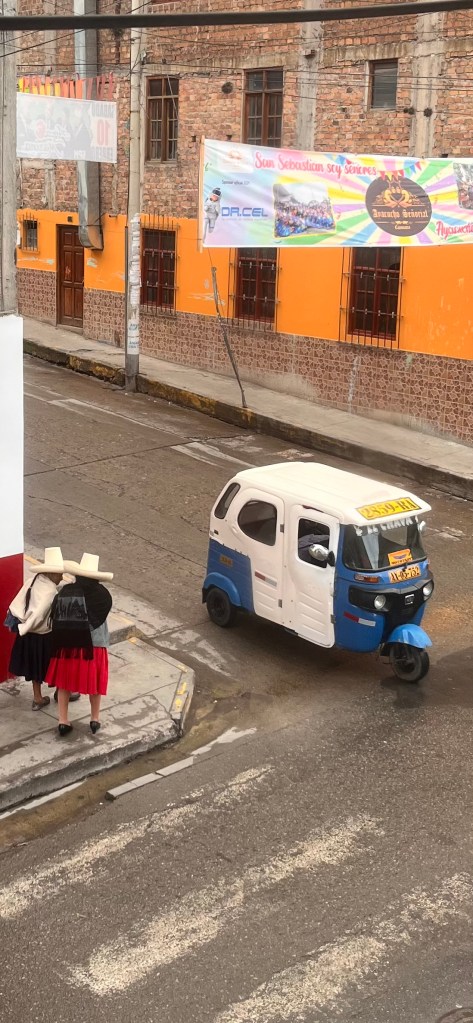
Two Quechua women and a moto-taxi – both ubiquitous sights in Cajamarca. The moto-taxis are well designed for the hilly narrow streets and they buzz about like a fleet of killer bees, honking and beeping.
We were so curious about the origin of the hats. Obviously the wide brim was designed to protect from the sun, but why the high height? We were sitting in the park and noticed a man eyeing us; he then plopped down beside us to chat. He was extremely curious about us and had never heard of Canada. We explained we were close to the United States, so he pondered that for a while. When Stephen asked him what was the name of his hat, he appeared quite perplexed by our ignorance. “Sombrero,” was his reply.
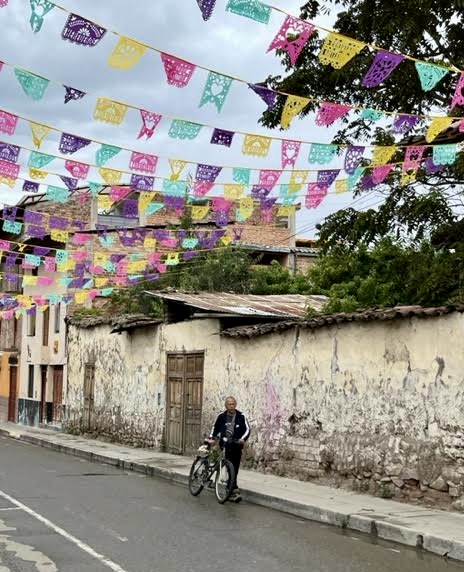
We did a good deal of wandering about Cajamarca on our own – it is an immensely walkable city, with numerous little parks and the glorious Plaza de Armas as the central hub.
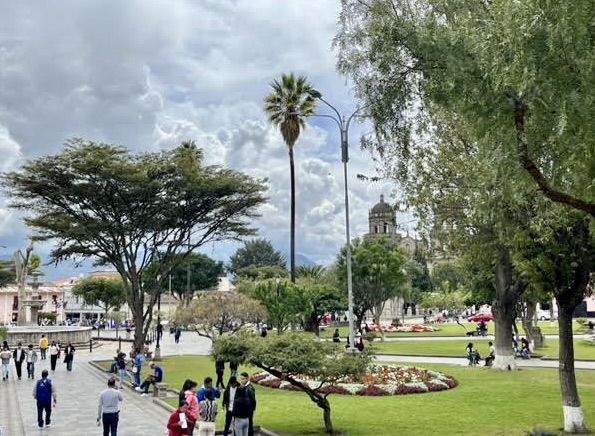
Much of the architecture of the important buildings around Centro Historico are baroque, but many of the streets are Spanish colonial and beautifully framed by the sightlines of the hills.
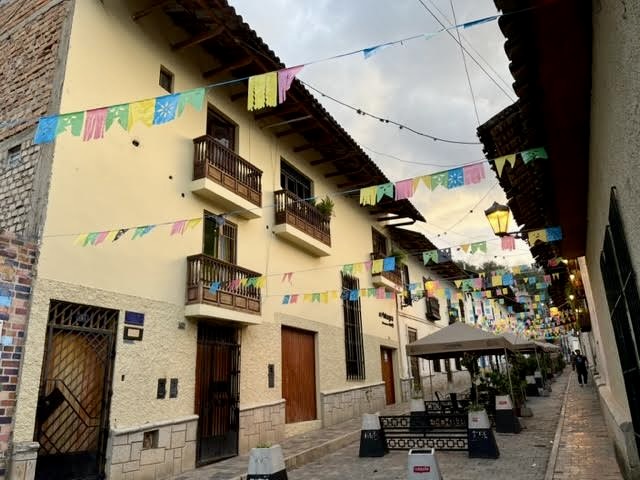
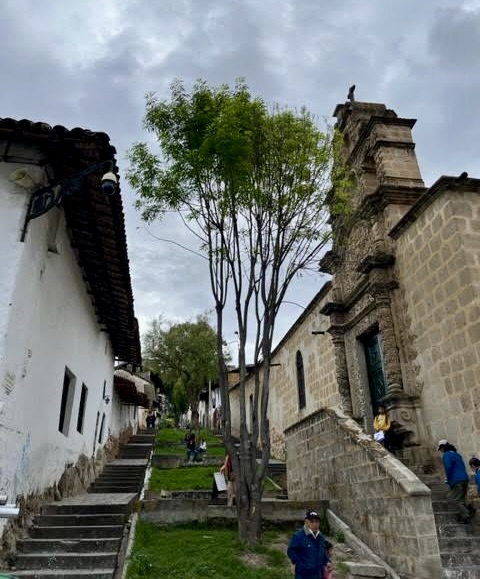
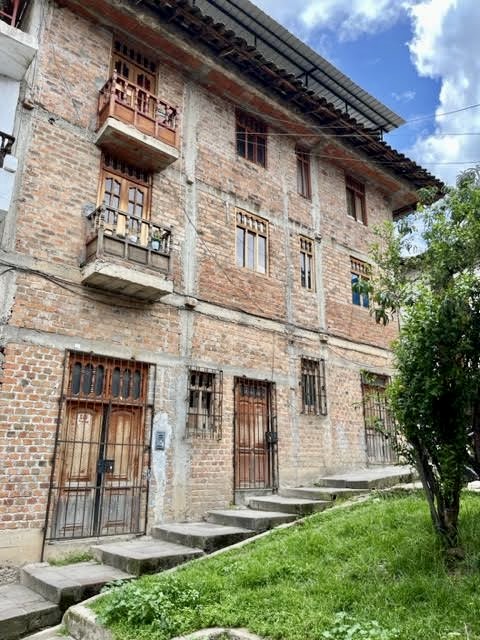
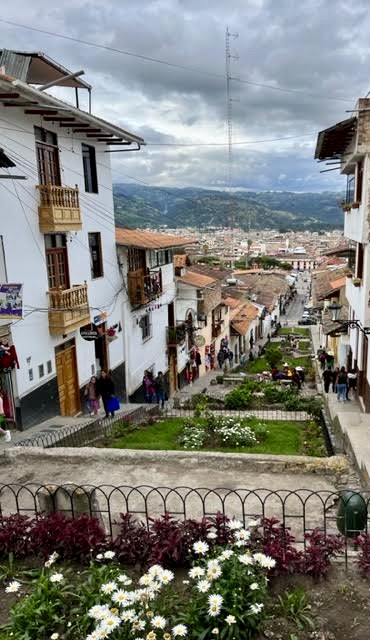
Even the still-to-be-restored buildings have a certain charm.
We took a walking tour of Cajamarca and were prepared to simply hear everything in Spanish. There are not a lot of English-speaking tourists in Cajamarca, so often the only option is a private tour. However, Luciana, the charming 17-year-old daughter of our tour agency offered to accompany us on the tour and translate as we went along. She would like to be a tour guide one day and was happy to practice her English.
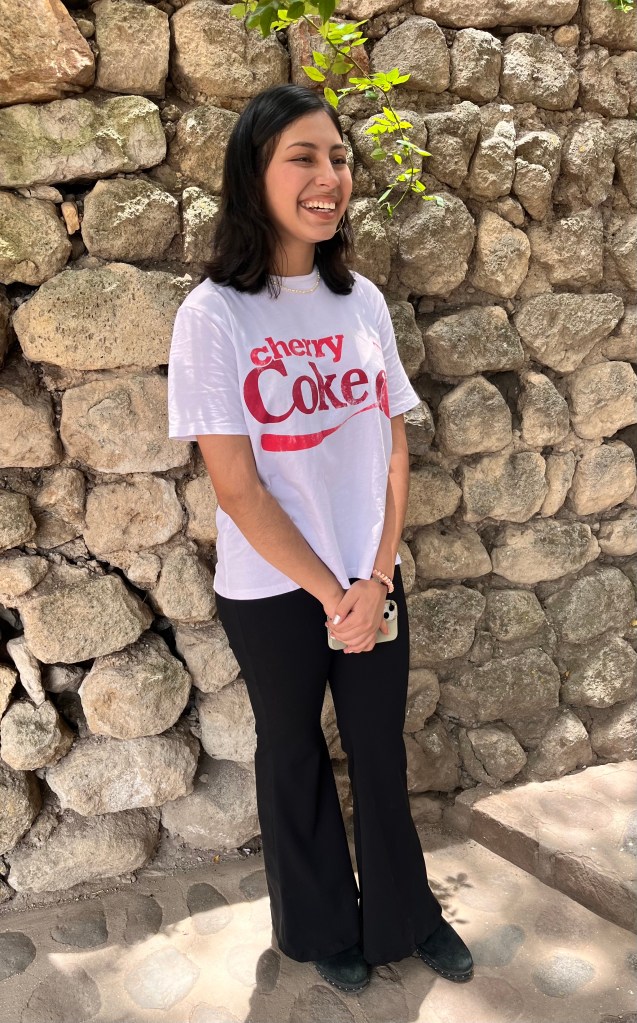
There are so many important historical sites in Cajamarca, but in the interest of keeping this already-long posting shorter, I’ll give you the thumbnail of our tour.
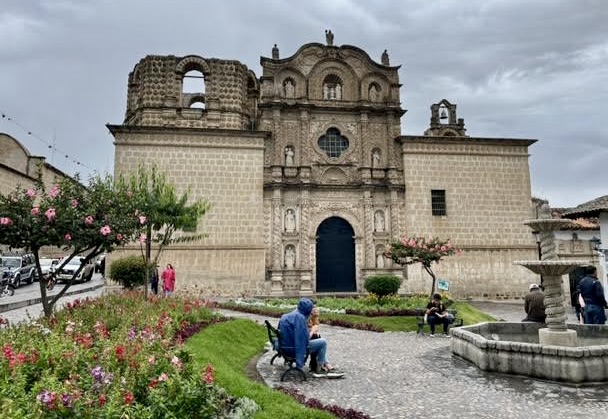
Santa Catarina Cathedral, built in the 17th century. Gold altar.
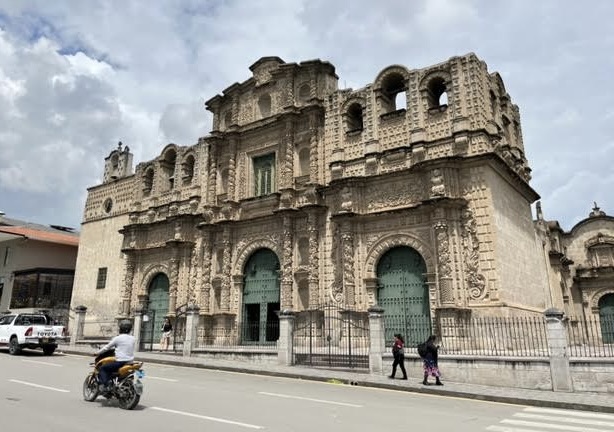
Recoleta Convent
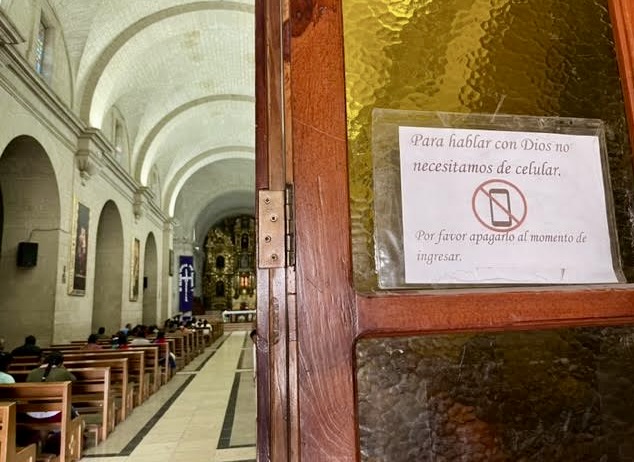
Exasperated sign posted inside one of the churches, reminding people that it is not necessary to use a cell phone to speak with God.
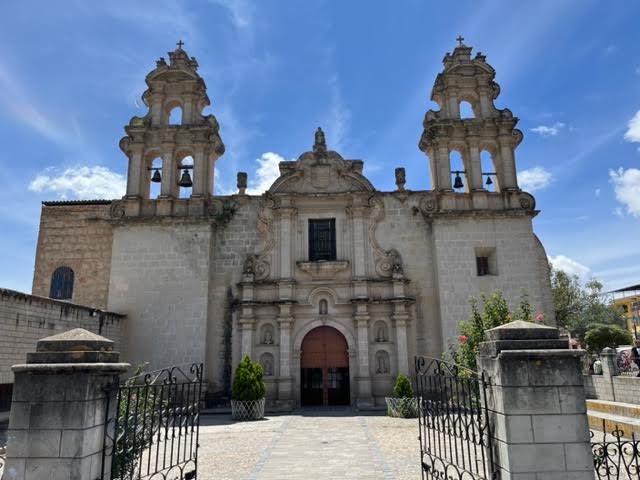
The Belen church. This was founded by Jesuits, and then was converted to hospitals for men and women; in use until the 1940s. Currently the church is only open for private functions, such as baptisms and weddings.
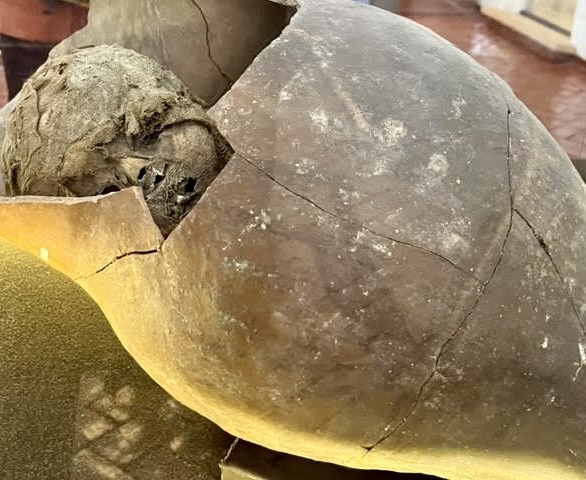
We explored the ex-hospital part of Belen, which now has a small museum. Among the exhibits ws the mummy of a baby, discovered perfectly preserved inside this funeral vase.
El Cuarto del Rescate (Ransom Room) is an important part of Cajamarca’s history. In 1532, this is where the Incan emperor Atahualpa was imprisoned by Pizarro. The story goes that Atahualpa offered Pizarro a roomful of gold and silver for his release. (Pictured through the open door). Although the ransom was paid, Atahualpa was executed; thus ending Inca reign and Pizarro’s Spanish invasion.
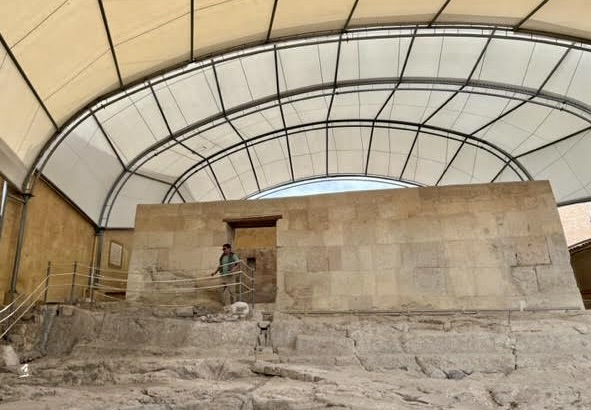
We finished our tour with a climb up Apolonia Hill to the point where it was said the Incas sat in power.
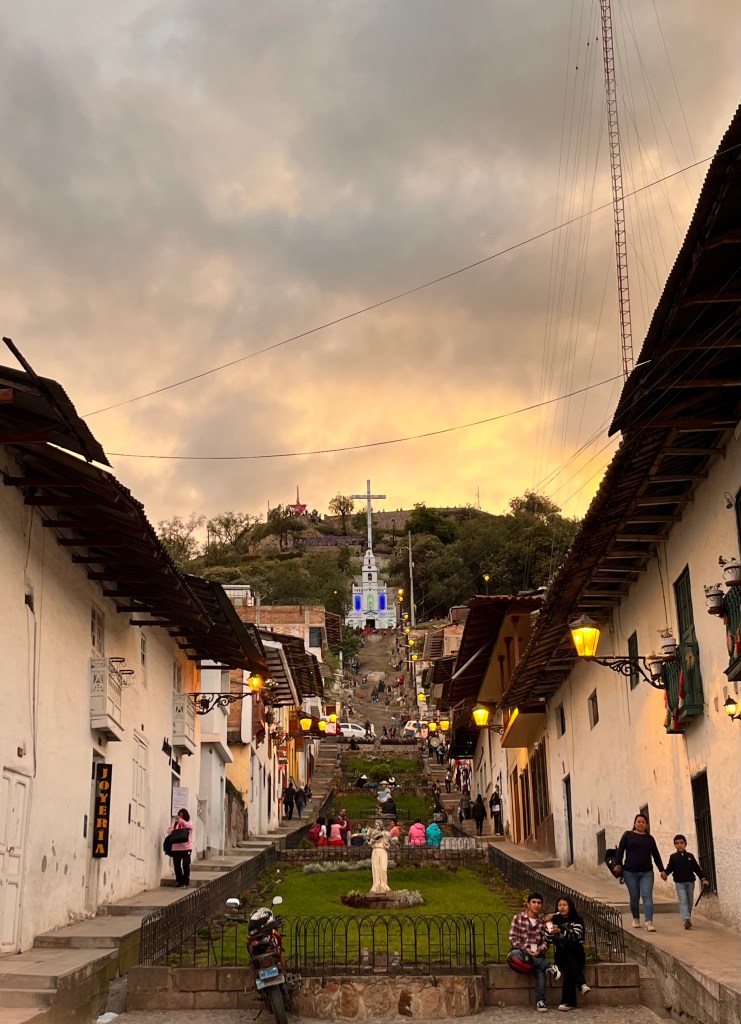
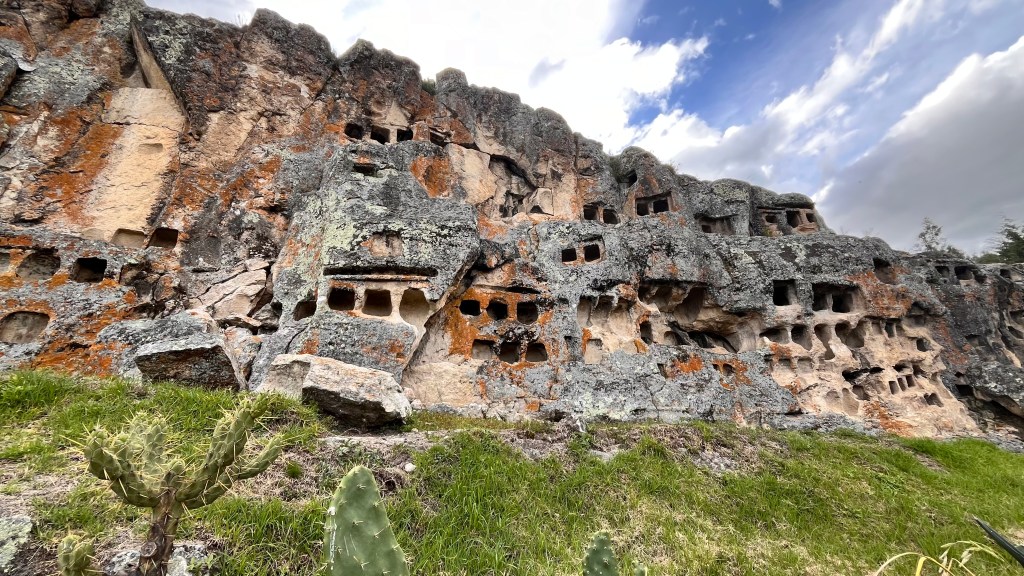
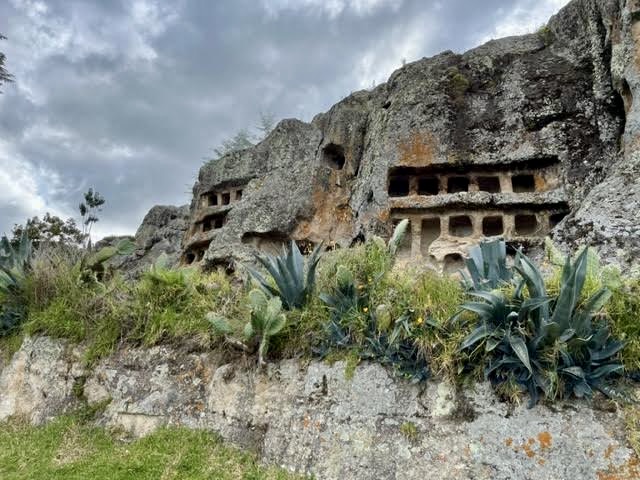
Our final tour of Cajamarca was a 40-minute drive to see the necropolis, or the Ventanillas de Otuzco.
This fascinating funerary complex of hundreds of niches was created between 200 and 800 AD. Custom had it that the bodies were first buried at another site, and then their bones were dug up and depositited in these tiny “windows.” Burial niches were reserved for the wealthy and important families of the time.
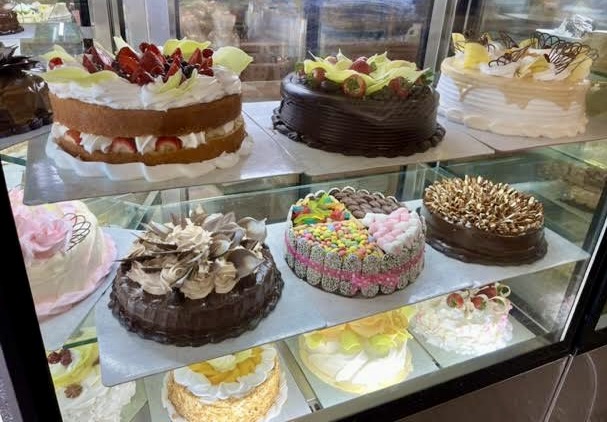
Back to the land of the living – cakes. Peruvians love their sweets and tea rooms are common in Cajamarca. Fabulous concoctions of teas, coffees, and scented infusions are on offer, as are these incredible creations. How to choose?
Cajamarca – what an incredible introduction to so many facets of Peruvian life. Tomorrow, we are flying (no 30-hour bus rides for us) to Arequipa. See you all again in a week.
 Leaving Ourselves Behind
love your photos! this is the Peru I remember. I cant wait to hear about Araquipa.
LikeLike
This was the Peru I was hoping for – can’t wait to see what comes next.
LikeLike
Beautiful photos. Did you see the Mapuches of Chile when you were there? A bit different aren’t they. Knowing the history of Cajamarca I would love the opportunity to visit the city. The legend of Atahaulpa was part of my second year Spanish classes. The students always were interested in what happened. Thank you for reminding me of those enjoyable lessons.
LikeLike
We did see the Mapuche in Chile, Jeanne. I have so much to learn about Peru and its history – I should have been in your class.
LikeLiked by 1 person
Cajamarca looks like a fascinating place, judging by your photos and descriptions! How fortunate for the two of you that Luciana accompanied you on your walking tour. It was a win-win for all three of you!
LikeLike
We always comment on the sheer luck of our travels – the people we meet make our best memories.
LikeLike
Fascinating place!
Imagine not knowing where Canada is? Well, have to say, not quite that but almost, found a similar knowledge about Canada. Conversation quickly went to the USA.
What a fabulous wander you are having! Thank so much for sharing some of it!
LikeLike
I’ve met people who’ve never heard of Toronto or Vancouver, but not knowing Canada is a first!
We are having a wonderful wander, Robin – I think the best is yet to come.
LikeLike
Fascinating journey !
Thanks for the interesting pixs and the stories behind them!
Enjoy !
Danielle
LikeLike
We’re having a great time Danielle – learning so much.
LikeLike
wow— wonderful pics!!! Amazing
What a great trip, take care & looking forward to seeing you soon! Hugs, Flo
LikeLike
Thanks Flo – this has been an incredible trip so far – we have been so lucky.
Looking forward to seeing you as well – coming home March 27th.
LikeLike
Hi Ginny and Steve: This is definitely one of our favourite posts. Cajamarca is a fascinating place that has everything; history, architecture, pastoral landscapes and lovely people with interesting hats. Did you ever find out why the hats were so tall?
Enjoyed the picture of you two amongst the sheep and the sign in the church indicating that cell phones weren’t necessary to talk to God🤣
Thank you for sharing your amazing travels. We are learning so much.
Bill and Julie
LikeLike
Thanks you two – glad you enjoyed this post. Cajamarca really felt like how we imagined Peru to be.
We never did find out why the hats are so tall, although someone told us there are several variations on that hat, depending upon the village or part of that region people come from.
We talked to one gentleman in the Cajamarca ariport who had a wide felt hat that was not quite conical and had an uneven hand-stitiching around the brim.
LikeLike