When massive tin deposits were discovered in the Kinta Valley in the 1880’s, the town of Ipoh grew rapidly, creating great wealth and numerous millionaires. The many fabulous colonial-era homes and buildings of modern-day Ipoh are a testament to that heady time.
One hundred years later, tin prices collapsed and many mines closed. Ipoh went into a slump, but in recent years the city has begun to reverse its fortunes again through heritage tourism, street art and a renowned culinary scene.
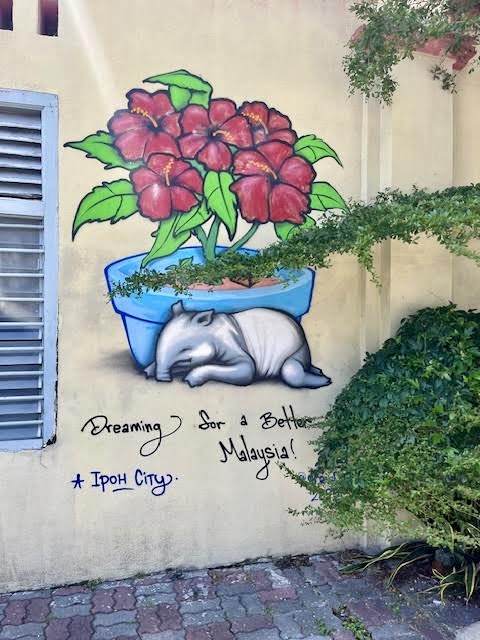
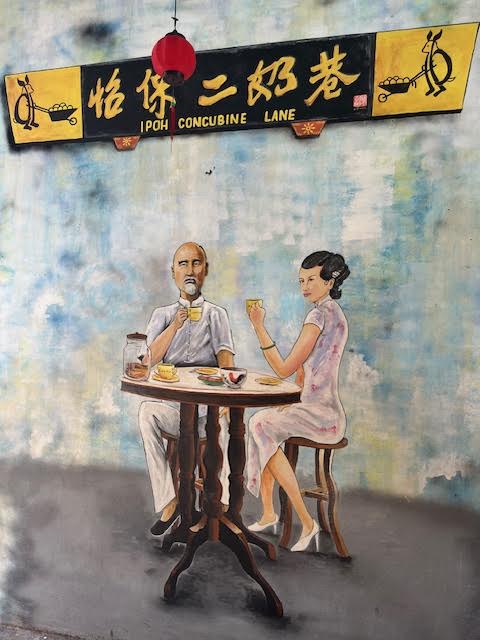
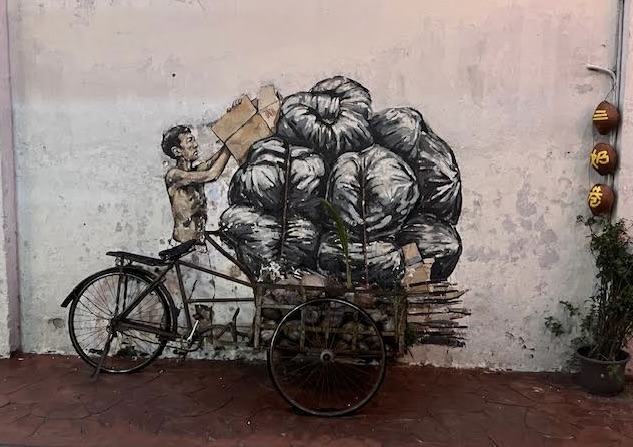
This poignant painting applies to all of Malaysia, as the country navigates its upward trajectory out of “developing nation” status.
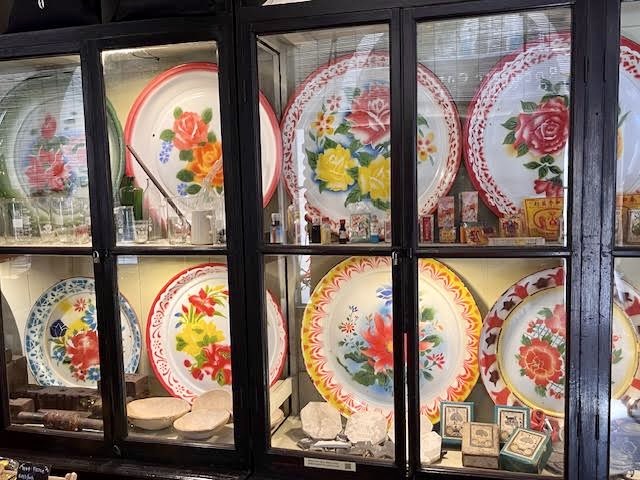
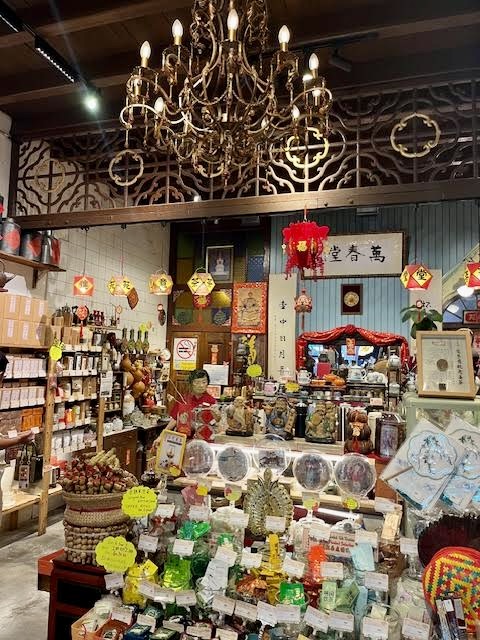
We visited a small museum/gift shop and I was immediately drawn to the display of tin plates. I know my grandmother used plates just like these (for everyday), I seem to remember having a tea pot like this and from time to time, I see a piece in a thrift shop. It was delightful to discover now that those plates were made in Malaysia.
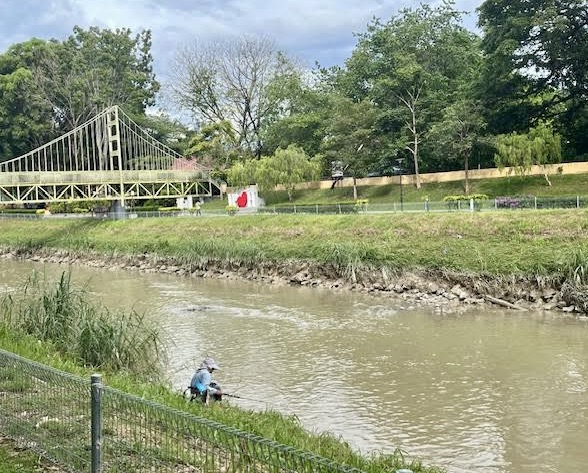
The city of Ipoh is divided by the Kinta River, which also bisects the city into “New Town” and “Old Town”.
Our hotel is situated right on the river, with handy access to the riverwalk. Mind you, the sluggish brown water is hardly the main draw, but rather a handy and less perilous15-minute walk to the Old Town core.
Like so much of Malaysia, sidewalks appear to have been an after-thought with early town planning. When they do exist, sidewalks require keen concentration to navigate, as they are of different heights, with crumbling brick and very sudden endings. We have learned to plan ahead so we are at the best possible spot to then run across four lanes of traffic without being run down. The idea of a car slowing and waving a pedestrian across? Not happening.
Ipoh’s tourist board has set up a wonderfully informative self-guided “Heritage Walk”, which guides the visitor through about 28 notable buildings and sites in the Old Town core. Each site comes with an information plaque and the whole tour can take a few hours, if you let yourself wander.
We began at the Railway Station, built in 1917, and set like a command post behind the cenotaph and small park.
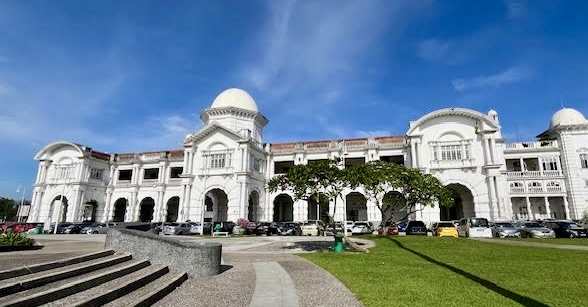
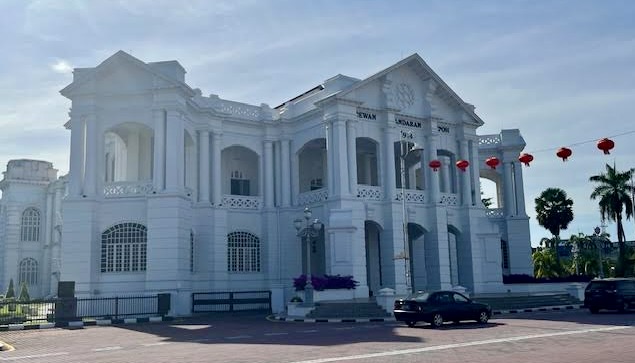
In front of the railway station is the Town Hall, built in 1914.
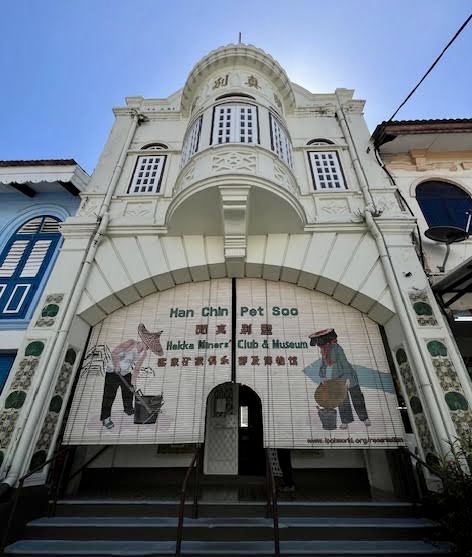
The Han Chin Pet Soo Club was founded in 1893 as a club for the Hakka miners and specialized in the vices – opium, gambling, prostitution. It was renovated in 1929 and today has a respectable new life as a museum.
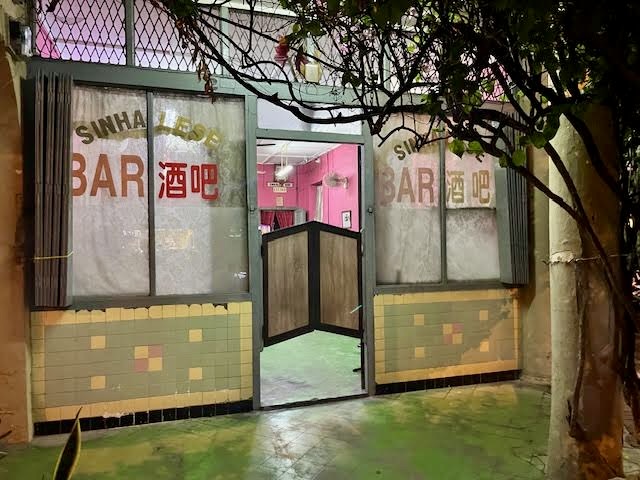
Men’s-only bars are still in existence in Ipoh. While nothing more decadent than drunkenness is happening behind these swinging saloon doors, it does have a look.
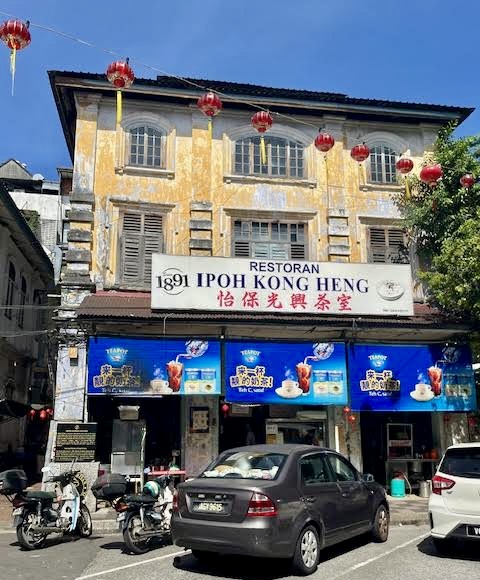
The Kong Heng Coffeeshop and Hostel was built in the 1890’s for the actors who performed with the Chinese Opera Theatre. It does not appear to have been recently renovated, but still exists as a legendary coffeeshop.
The Mikasa Photo Shop used to sit right beside this restaurant; it currently sells antique typewriters, but it was shuttered. Before WWII, Masaji Hosaka, a Japanese spy, used his photo shop as a cover to send information about Malay to Japanese army intelligence.
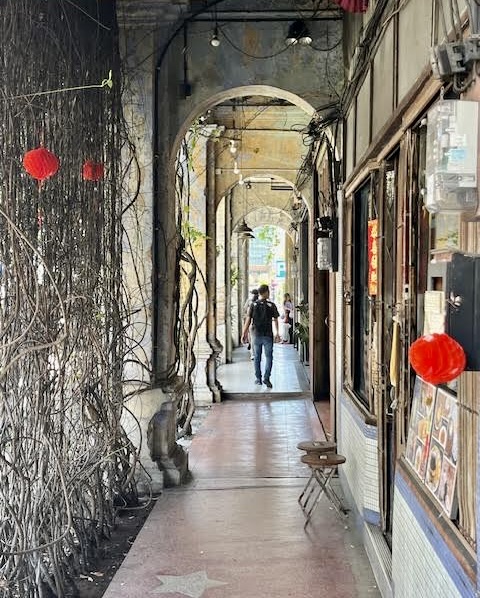
The famous Concubine Lane, named after the mistress of a wealthy businessman. A mural pays tribute to her.
Today, Concubine Lane is filled with small shops and cafes that showcase the beauty of some of the interiors.
This is Eddy. The crowds and heat were too much for him.

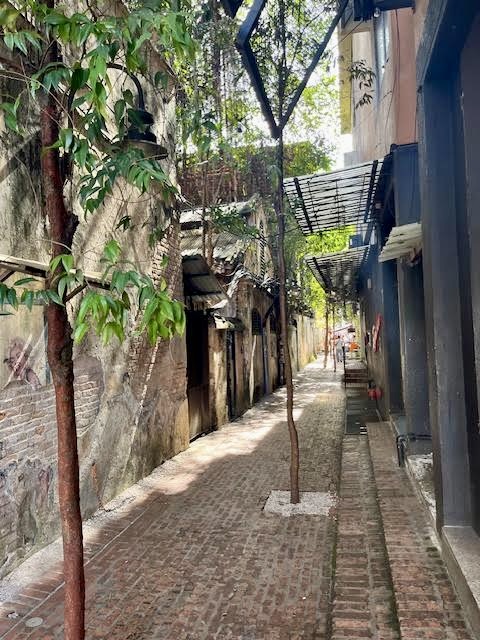
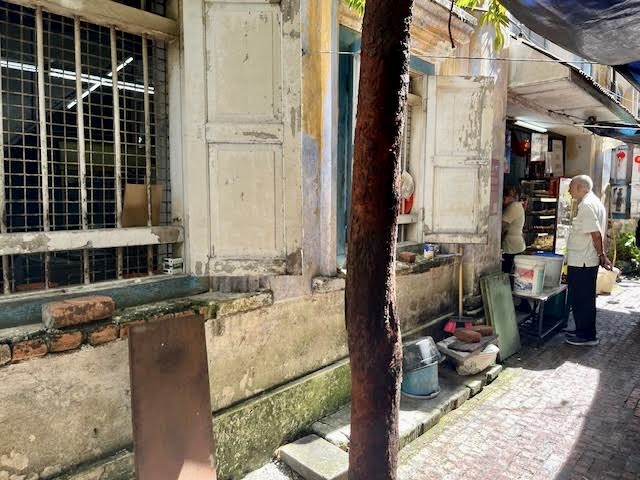
A typical small alley.
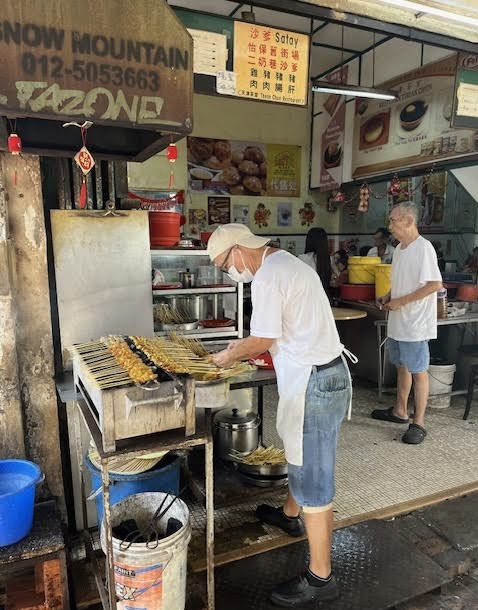
This one, a little scruffier, with lineups for the satay. As you can see, hygiene is something best not thought about, but the food is wonderful, cheap and so far, so good – no tummy rumbles.
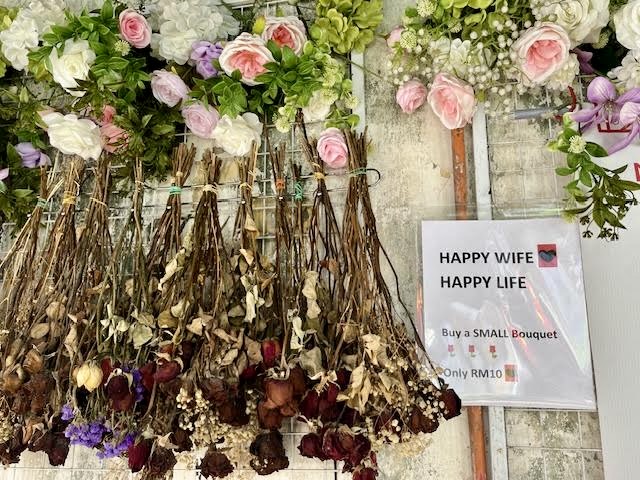
I have always found the phrase “Happy Wife, Happy Life” massively annoying – the lament of the put-upon bro. Well darned if it hasn’t made its way to Malaysia. Helpful hint, guys – a bunch of dead roses is not your ticket to happy anything.
On the upside of global messaging: it is now Ramadan and our hotel is celebrating each night with a huge buffet laid out for their Muslim guests. Our charming hotel manager wanted to show us how they celebrate, so he escorted us around the tables and explained some of the food. He was anxiously waiting until 7:30 to break his fast.
I told him about an interview I had listened to with Zohran Mamdani about how much he loves Ramadan – how he looks forward to it. Our manager lit right up -he is so proud of Mamdani – his incredible influence is felt around the world.
A nearby alley was filled with murals – here are just a few.
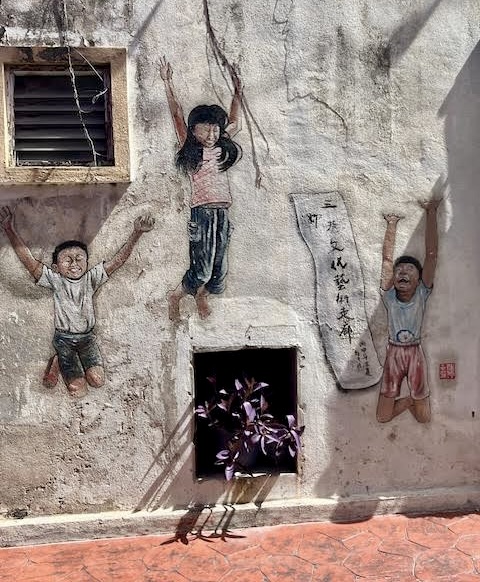
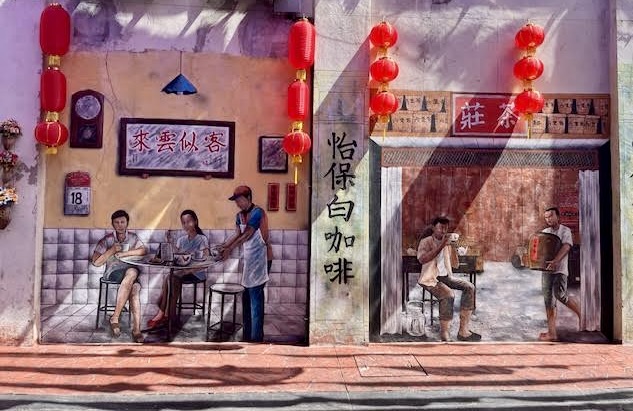
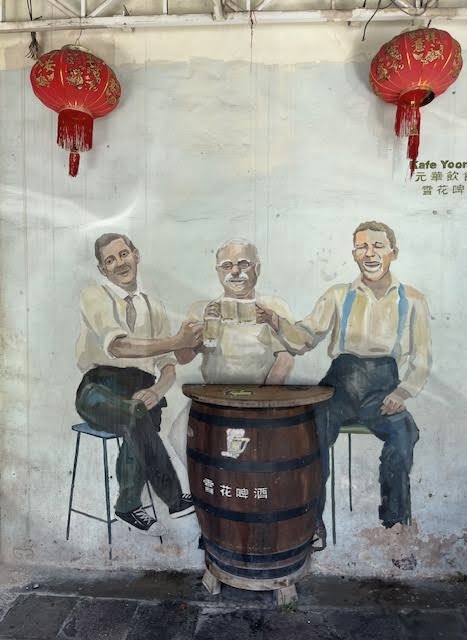
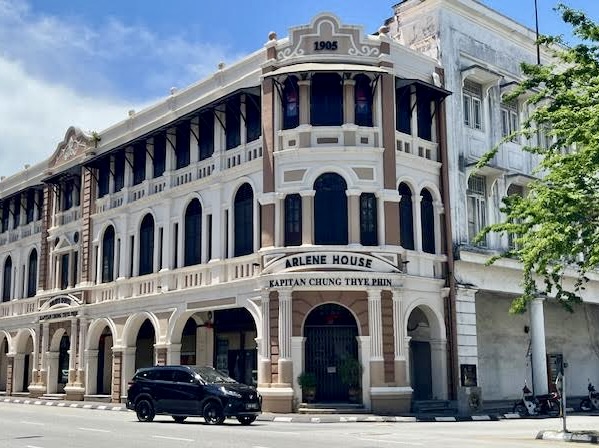
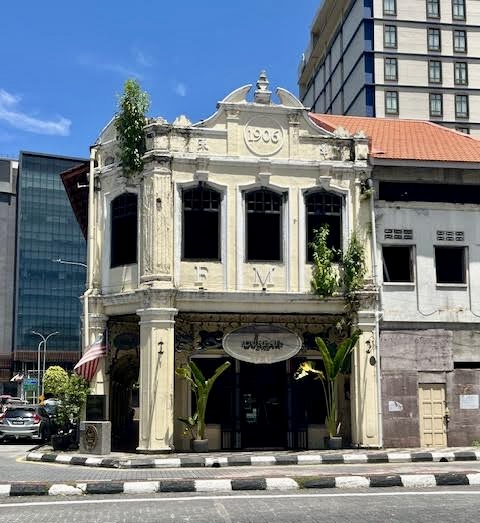
Another couple of buildings – one spit and polish, the other a little more worn. That is Ipoh’s Old Town – the beauty still shining through from a century ago.
Just outside the centre core of Ipoh lie a number of Taoist cave temples. We visited three of them.
The first, Sam Poh Tong temple is the largest cave temple in Malaysia.The grounds were simply beautiful.
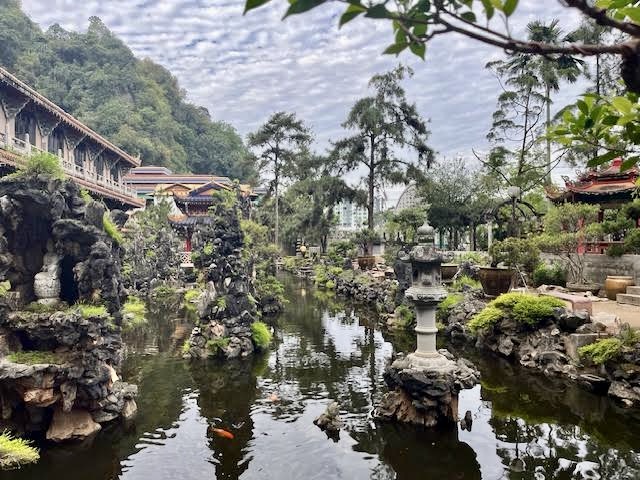
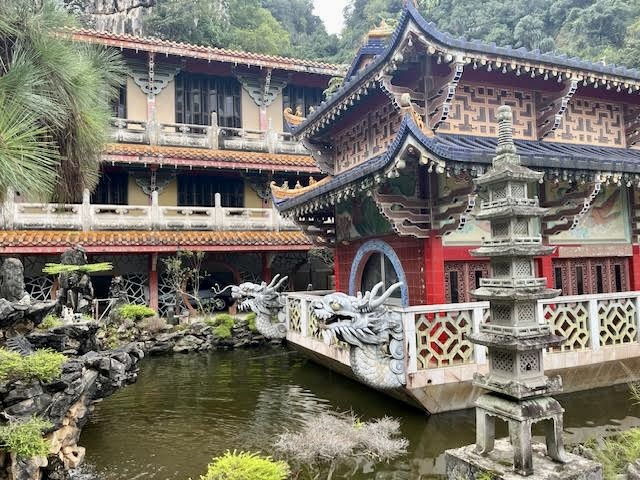
We walked through the temple and came out the other side to discover this serene sight – a small temple surrounded by limestone karsts and birdsong. It was incredibly peaceful.
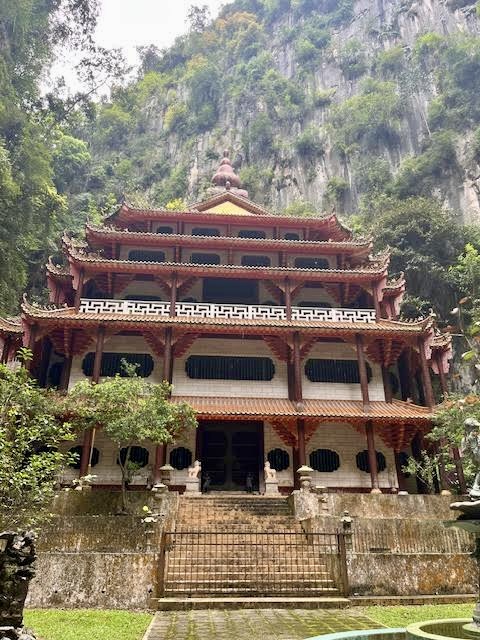
All three temples are within a three-minute walk of one another on the same road. They are all cave temples, but that is where the similarity ends.
The Nan Thean Tong Temple had a more modern entrance – it could almost pass for a modest theme park/shopping plaza from the front.
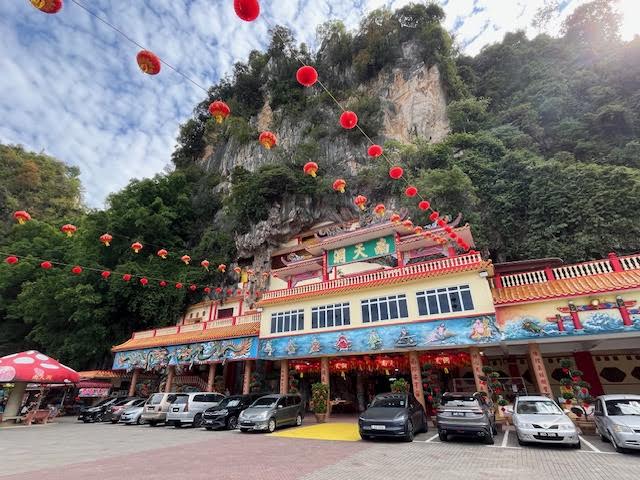
Then, we hit the motherlode of Taoist cave temples. Ling Sen Tong Temple, built in 1968, employs figures from Chinese mythology to great effect. it is cartoonish, garish, not one surface left untouched by crayon colours and gilt paint. No quiet religious reverence here – it was fabulous.
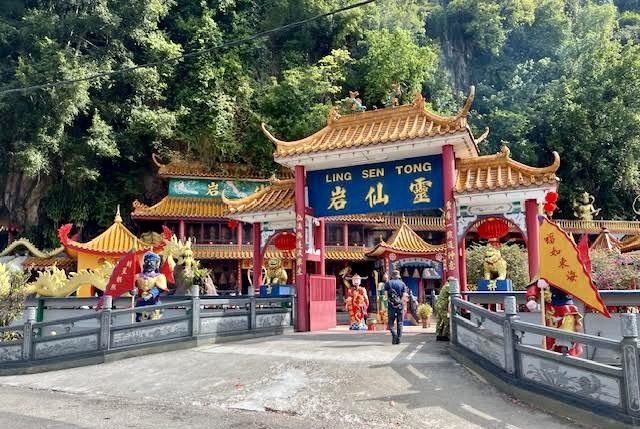
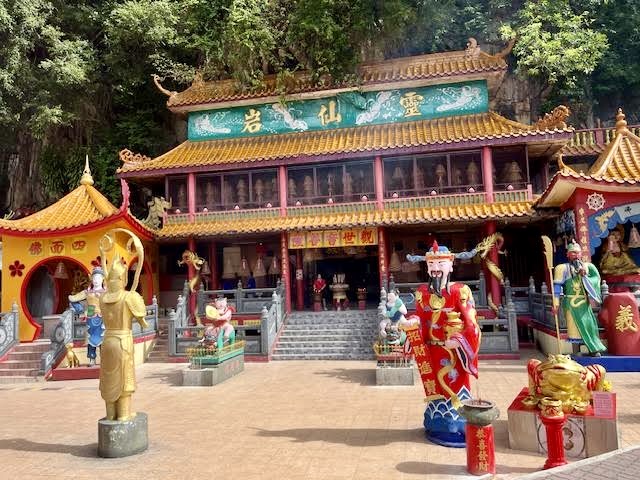
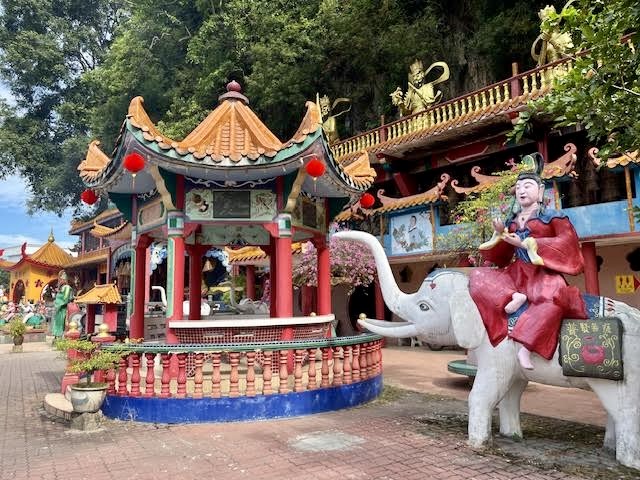
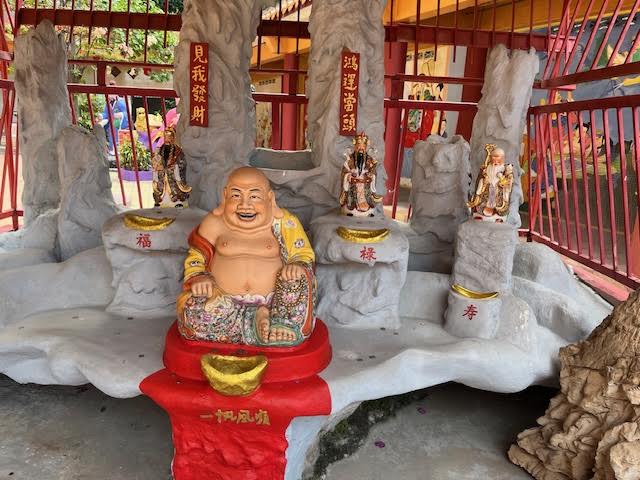
I loved the unabashed grinning Buddha, exhorting the faithful to play ring toss with their spare change.
And that was our two days in Ipoh – yet another side of Malaysia to explore. Tomorrow we head to the Cameron Highlands for a few days respite from the heat. We plan to visit tea plantations, do some hiking, perhaps treat ourselves to a British a high tea.
 Leaving Ourselves Behind
Hi Ginny and Stephen,
I was particularly interested in your pictures of the Taoist cave temples. One can’t say of them that “once you’ve seen one, you’ve seen them all!” I used to think that sometimes of the churches in England; but not these temples!
Cheers, Heather
Sent from my iPad
>
LikeLike
My favourite one was the first one, with the beautiful gardens and serene temple set against the limestone. I can’t imagine how you can find religious calm and reassurance in some of the more garish temples, but I’m hardly one to judge.
Years ago, we saw people in Mexico having lunch on the floor of ancient churches – they were sharing their food with their departed loved ones. I found that quite touching and it proves we all find our spiritual and religious connection in different ways.
LikeLike
Murals ! Photos ! and history lessons are outstanding. Love it.
LikeLike
Thanks so much Robert! I appreciate you following the blog.
LikeLike
No problem following, just challenging to comment due to software hurdles.😫
LikeLike
Had to Google Ipoh to check out more info (and location). We know almost nothing about Malaysia, but you have whetted our appetite. Love the street art and cave temples. Have you sampled the “white coffee”….whatever that is??
Also anxious to hear about hiking in the Cameron Highlands…hopefully in a much cooler, clearer climate! Maybe an alternative to Sri Lanka???
We are enjoying all the blogs. Thanks for taking the time to share your adventure, Ginny.
LikeLike
Yes, white coffee is an Asian tradition and each country has their own version. Did you have cafe sua da in Vietnam – made with sweetened condensed milk? This is similar – I like the iced white coffee – it’s like a milkshake.
We’re in Cameron Highlands now and will tell you al about our hiking adventures. Suffice to say – Kris and Gord we are not!
LikeLike
Hi Ginny & Steven! Brings back memories, I was in Malaysia in 1991 and visited Ipoh and Cameron Highlands. Kayla and Noah are hitting the road for 3 months on March 1 and following in many of your footsteps. They are headed to Vietnam first and then Japan and then back to SE Asia with a stop in Malaysia enroute to Thailand. Keep on enjoying your time there, I always look forward to reading your posts. All the best!
LikeLike
Sue! So great to hear from you – thanks for reaching out. We just got back from a day trip to see the tea plantations and do a seriously tough hike. We shared a jeep with three young people from Poland and boy – the faces change but the kids remain the same. Young, excited, so much to give and to learn and to experience and now your kids are doing the very same thing. Hopefully it’s just the beginning of their travelling lives.
I’d love to see you when we get back in March – it has been such a long time.
LikeLike
Loved your time in Ipoh, especially the smiling Budha ring toss. I would not like the humidity and would welcome a good hike at higher and cooler elevations. Sounds like you have that to look forward to. Keep on enjoying your time in Malaysa and I look forward to more of your blogs. Stay safe and well.
Hugs, Lyn Morris, Langley, B.C., Canada
LikeLike
We just had our last wonderful Indian dinner in Cameron Highlands – roti, chicken and cashews – so good.
Up early tomorrow for a long travel day – 4-hour bus, 1-hour train, 3-hour flight and then a cab to our hotel in Borneo. Looking forward to a complete change once again.
LikeLike
It all sounds so exciting for you. Borneo – wow!!!!! Anxious to hear all about that part of the world.
Enjoy!
Love Lyn
LikeLike