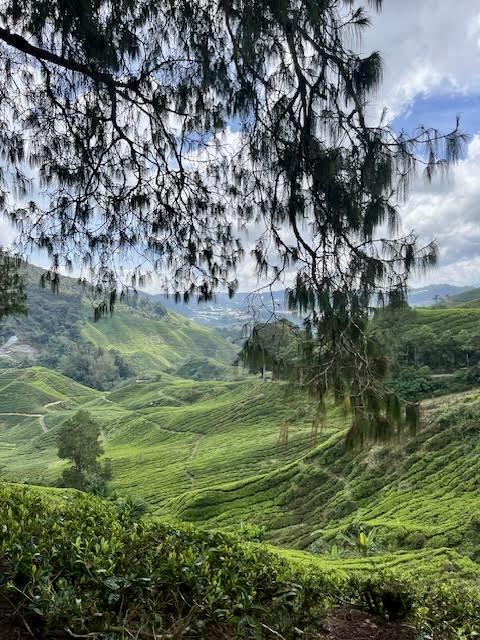
Cameron Highlands was one part of our trip we were really looking forward to, in part because there would be a 10-15 degree drop in temperature and in part because we had such fond memories of staying near a tea plantation in Munnar, India. We had scenes like this one in mind and we weren’t disappointed.
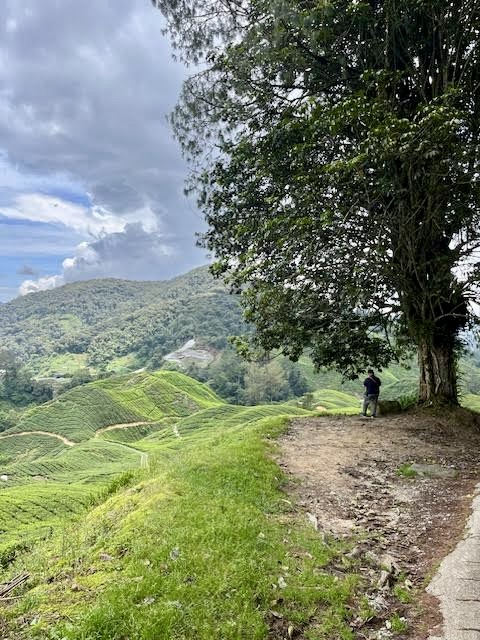
The major difference between our experience in India and here in Malaysia is that in India we stayed in a hotel overlooking the tea fields and were free to wander about the dusty paths, up to our necks in tea plants. We had breakfast every morning on a deck overlooking green hills just like the ones in the photo above.
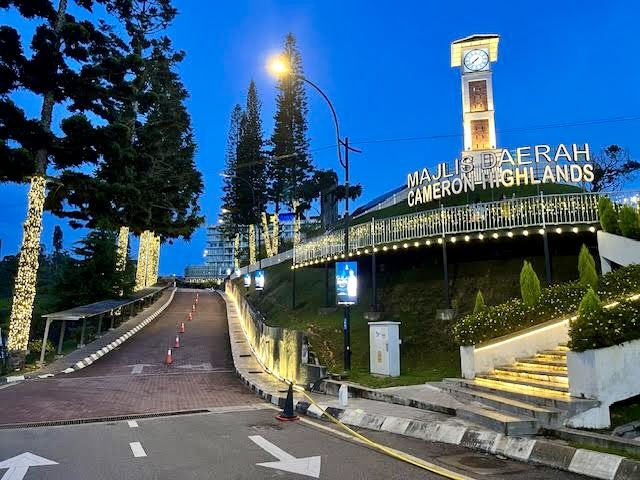
We weren’t able to find a similar arrangement here, at least not for a price we were willing to pay, so like most visitors to this area, we booked a hotel in the small town of Tanah Rata. It was convenient for transportation in and out of the area, had plenty of amenities and loads of tour options. The view from our hotel may not have been a tea plantation, but it was atmospheric.
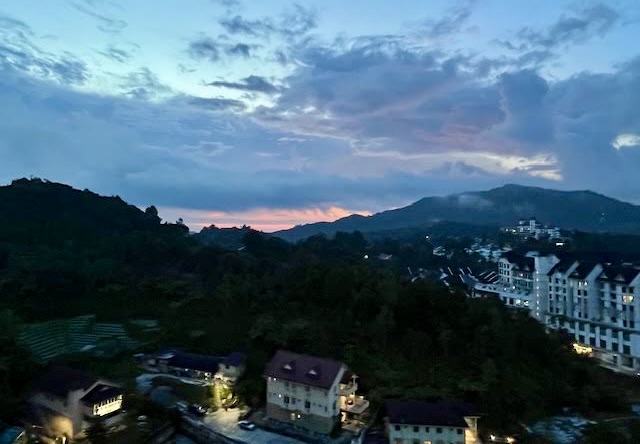
More scenes from around town.
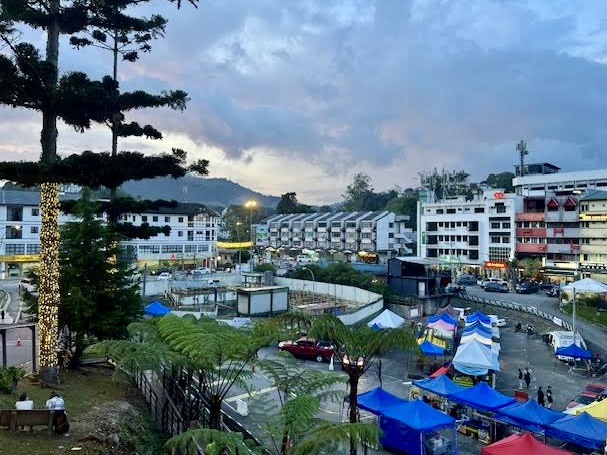
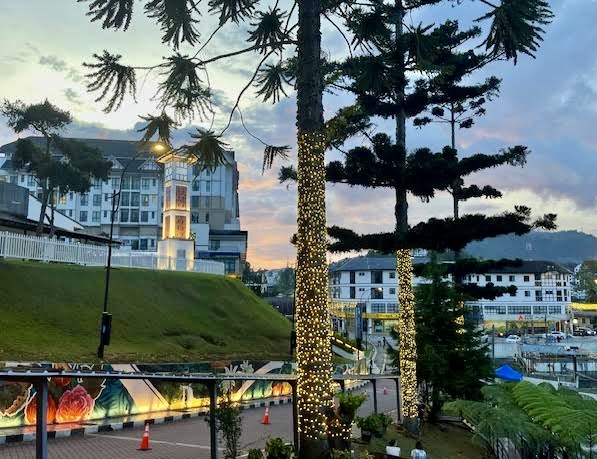
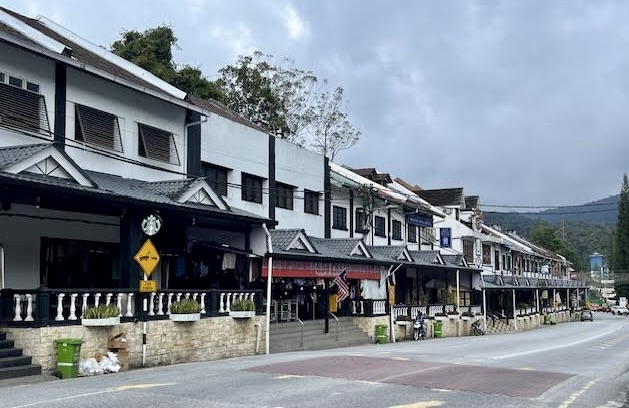
We ate most of our meals at restaurants along the main street, with most of the restaurants offering Indian food – cheap and delicious. We had a “tea set” at a little place that served beautiful scones, clotted cream, homemade strawberry jam and of course local tea for about $4.50 a person. Our server was a sweet young woman from Sri Lanka, who has lived here for two years and admitted to missing her home and family very much.
There is a very large population of “foreign workers” here – more on that in a bit.
One of the big draws to the Cameron Highlands is the trekking and I’m going to begin by saying that Stephen and I are no longer in the market for lengthy trails that involve rappelling, climbing up inclines on our hands and knees, and/or possible encounters with wild dogs. So, with those limitations in mind, we did not tackle the more beautiful hikes that the area is famous for and therefore can’t fairly judge the quality of the local treks.
We did set out on Jungle Walk #5, a linear trail that could either be a 3-km. hike out and back, or be tacked onto another trail at the end, making it about 10 km. That last option would also involved hitchhiking back to town – a common practice that we were quite prepared for if we had decided to go on.
It took a while to find our trailhead, but after climbing up a hill behind a parking garage – there it was.
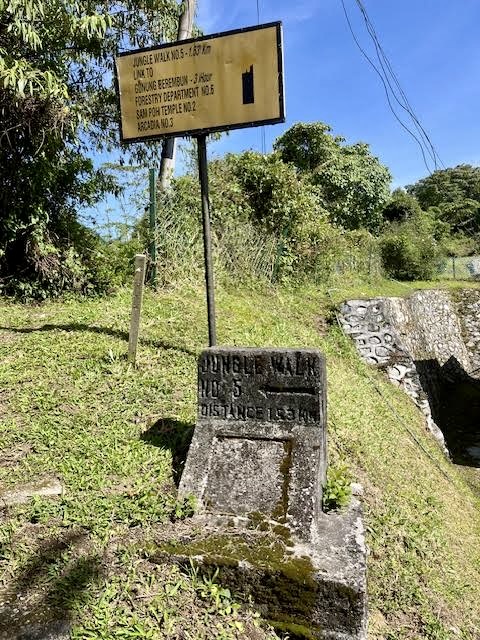
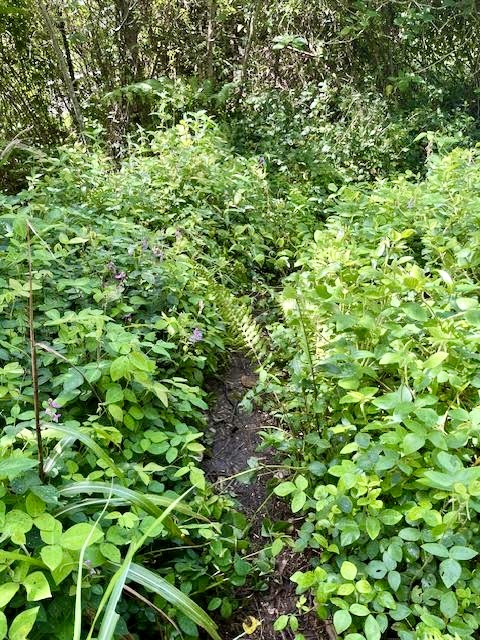
The marker has been there for a few years, and I think it has been at least that long since this trail was tended to. We waded in, thinking it would eventually open up, but it never did. Vines snapped at our ankles and all I could think of was “pit vipers.” Or even, “rats“. Amazingly, no bugs, but it was not a comfortable experience.
We carried on, but after climbing over umpteen tree roots and slipping on mud, we decided that Jungle Walk #5 would be enough for the day.
Now I was feeling a bit defeated – we used to love this stuff. I did feel better after reading several reviews from other tourists who felt the trails were unsafe, untended, overgrown, poorly marked and not enjoyable. One account told a harrowing tale of someone having to leap up several feet to gain a toehold, which he only managed after nearly hanging himself on a vine.
A challenge at this time of year is that the monsoon season has just ended, but there are still daily rains which keep the paths muddy and slippery.
In fact, one of the major attractions here, Mossy Forest, is closed indefinitely after a landslide, which will involve a lengthy recovery before it can reopen to the public.
We did book a half-day tour, which covered the main attractions – a tea plantation, a walk through a different “mossy forest” and a visit to a strawberry farm. This was both a lot of fun (great fellow tourists), and quite challenging (the walk.)
As Stephen is prone to motion sickness, he sat up front with Zafran, our guide, and I sat in the back with the rest of the gang. The jeeps are built to tackle all sorts of roads, but with two benches facing sideways, and most of the seat belts non-operational, we threw our fates to the tea plantation gods.
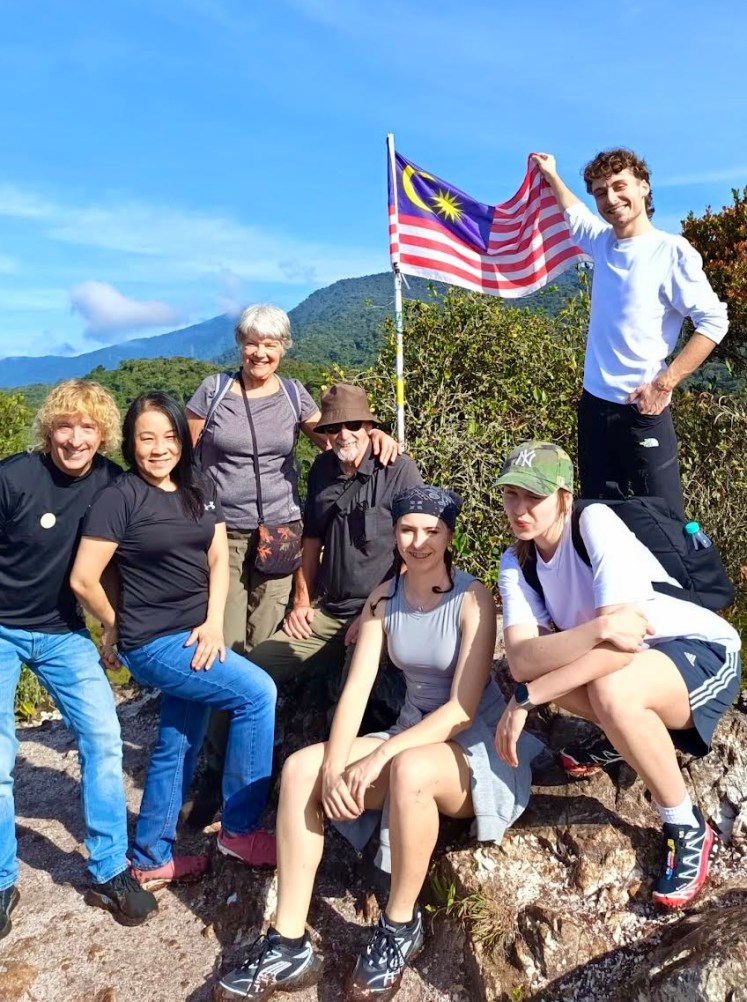
Our fellow travellers were three young Polish kids, a couple from Singapore and Kansas, and a couple from Kuala Lumpur. Here we are at the summit of our hike, appearing to plant the Malaysian flag in triumph.
We began our hike through Coral Hill (the stand-in for Mossy Forest) with our guide Zafran explaining that we were standing in a forest that is 200 million years old. The ground we walked on felt spongey – we were literally walking over many thousands of millenium of ancient fauna.
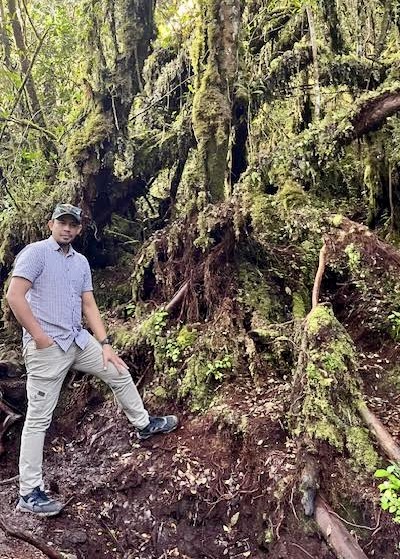
Zafran really made the trip entertaining. He was extremely knowledgable about everything we might have wanted to know, and kept handing us leaves and small berries to smell and try and identify. There was a gold leaf with two interesting functions – one was to be brewed up and given to a woman who has just given birth, to restore minerals. The other function was, (and this said after a bit of hesitation and a direct glance at Stephen), “for men.” Got it.
It would seem Zafran does not yet need the leaf aid – he and his wife are expecting their sixth child in June, and after that, ” the shop is closed. I’m 40 years old.”
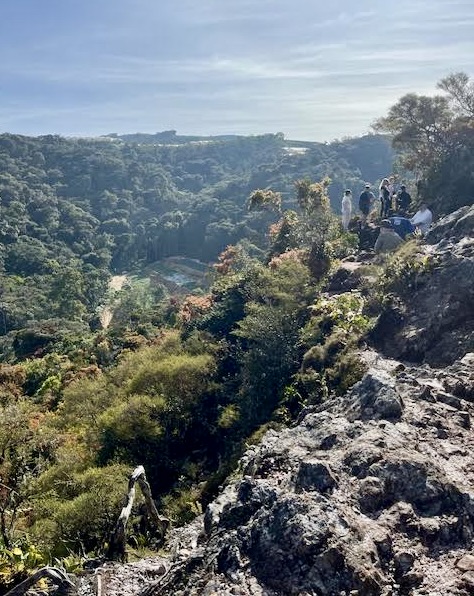
Okay, so back to our hike. Even with Zafran to take care of us, there was nothing about this hike that felt safe. We climbed straight up for a half hour, climbing over roots and hanging onto tree branches to ensure our grip as we tried not to fall in thick gooey mud.
When we made it to the top, the view was beautiful, but we all had to navigate a thin stone ridge, with drops on either side of hundreds of feet.
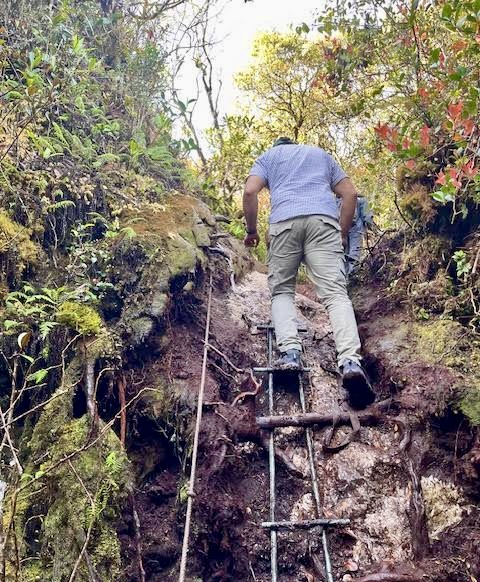
The climb back down was equally challenging; tackling ladders and ropes along the way. Most of us slipped in the mud, a couple fell right down, but no injuries.
Typical mossy branches.
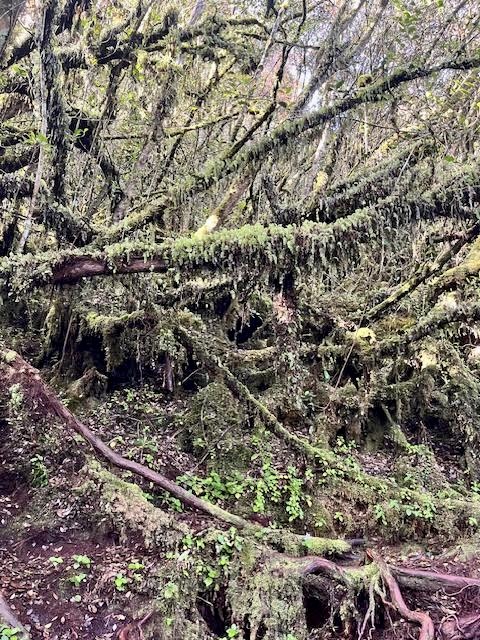
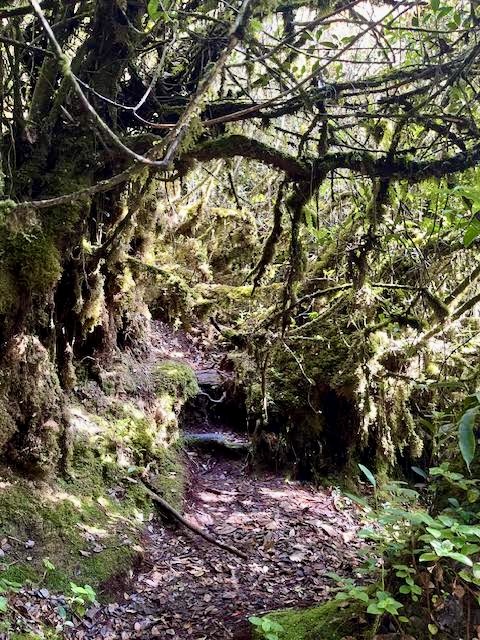
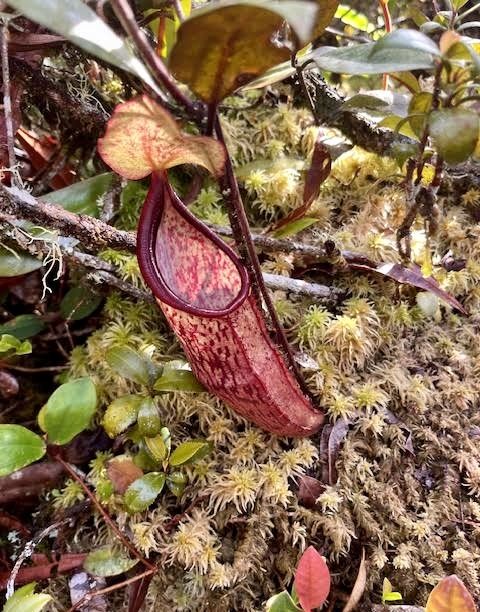
A pitcher plant – kindly saving the world from insects. We did have a bug-free walk.
The hike finally ended with all of us going one-by-one over what looked like rotting plywood strung over a creek. When Stephen asked Zafran if the government would replace that soon, he just smiled.
We were very happy to have had this experience – it was challenging, and that’s always a good thing. I felt proud that we were not holding up the rest of the gang, and it made me vow to add more slightly-unnerving adventures to my life.
Our next stop was the BOH tea plantation. This is the main plantation in Cameron Highlands, founded in 1929 by a Scotsman and in operation ever since. Cameron Highlands produces 70% of all the tea in Malaysia, with an altitude of 5000 ft., cool temperatures and acidic soil creating ideal conditions.
We stopped for a tour of the factory, a tea tasting and some photo ops. First – the incredible beauty of the area.
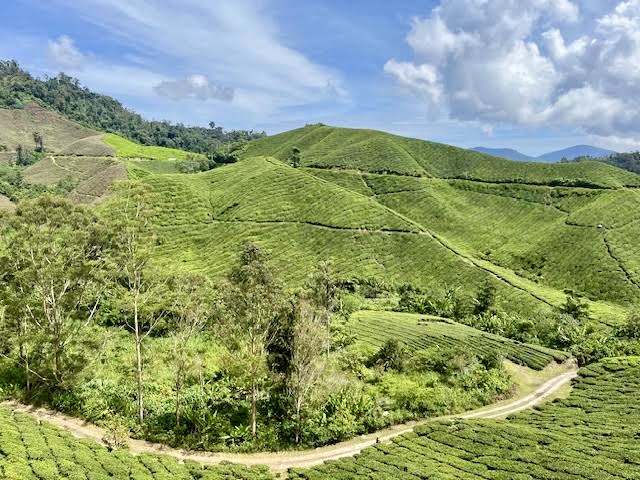
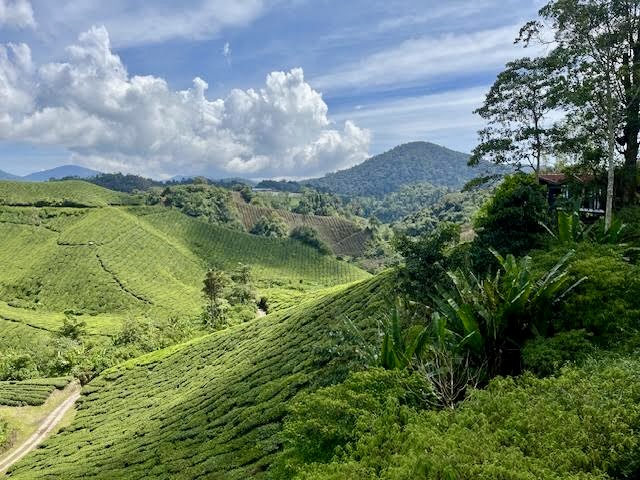
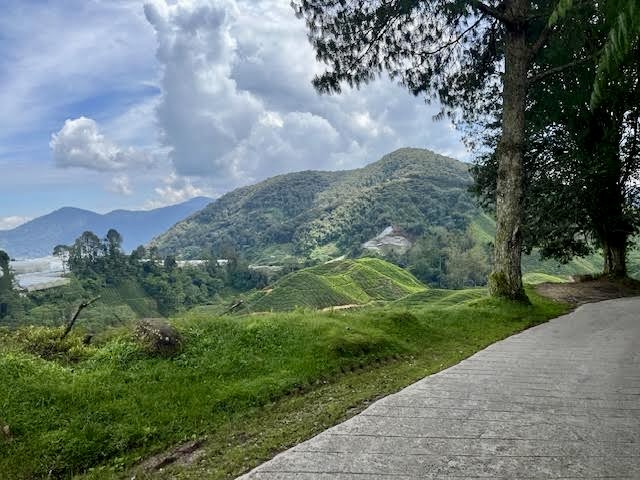
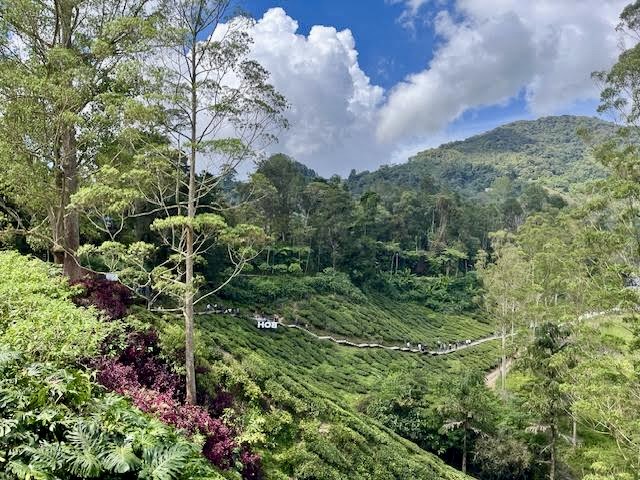
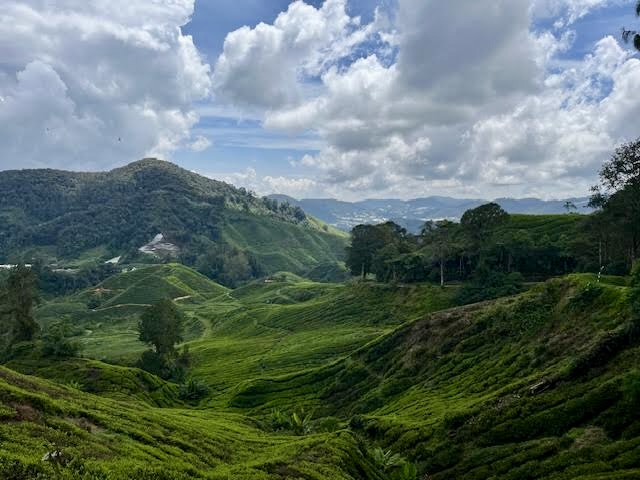
We went through the tea factory tour, and for some reason we were not allowed to take photos. Our guide did a good job of explaining the different qualities of tea leaves and the process from farm to packaging.
Interestingly, he was quite open about the reality of the lives of the tea pickers. They are almost entirely foreign workers – from Bangladesh, India, Sri Lanka – countries they have left because they can make more money in Malaysia. Their accommodation is provided, but they are responsible for their own food and their working conditions are gruelling.
They fill their bags with 90 kilos of leaves, put them on their backs, then carry them up the hill to the plant. They do that all day for 10 hours a day, 6 days a week in all weather. By anyone’s account, they are not well paid, their working conditions are harsh and they live lives of poverty.
Another cost of the tea plantations and local farming practices is that the massive clearing of trees has affected the environmental ecosystem, caused the climate to warm up, and rivers to dry up, and frequent landslides to occur.
It is sobering to think about the human and environmental cost of a cup of tea or coffee. Strawberry farms are another drain on the system here. I read an account of a young Malaysian woman who spent her childhoods eagerly anticipating visits to her grandparents house in Cameron Highlands. After moving away for several years and returning for a visit, she was shocked by the changes. Massive farms have replaced the quaint strawberry patches and stalls of her youth.
Our last stop on our tour was to a huge strawberry “farm”. We walked past rows of plastic toys and knick-knacks, which always confuses me. Who is buying a plastic water-gun or a child’s tea set at a strawberry farm?
The Cameron Highlands were stunningly beautiful, mercifully cool and fresh, and quite eye-opening on a number of levels. Malaysia is like that – always a sense of something else going on beneath the surface.
Next up – Borneo! If the animals cooperate, we will see orangutans and proboscis monkeys and sun bears in sanctuaries, and hopefully also in the wild. Pygmy elephants would be a thrill. We’ll keep you posted.
 Leaving Ourselves Behind
Hi Ginny and Stephen,
Your notes on foreign workers working on tea plantations was sobering – not that I shouldn’t be surprised. I only hope I am more appreciate of my many blessings the next time I have a cup of tea.
Take care, Heather
Sent from my iPad
>
LikeLike
It’s a good reminder of how many things in our lives we take for granted come at a cost to others.
LikeLike