We’ve been in Hong Kong for just two and a half days and are in love with this fabulous city. We’re only here for six nights in total – how I wish we had booked for longer.
Hong Kong was a bit of an after-thought. We flew to Malaysia with Cathay Pacific and they offered a seven-days-or-less layover in Hong Kong, so we grabbed it. We’re packing our days and nights, but will leave a lot behind. We know we will be back at some point.
Hong Kong has two sides – Kowloon, which is attached to Mainland China, and the island of Hong Kong, separated by Victoria Harbour and joined by ferries, the subway and three major underwater tunnels.
We’re staying in Kowloon, surrounded by many notable sights and just a 15-minute walk to the waterfront.
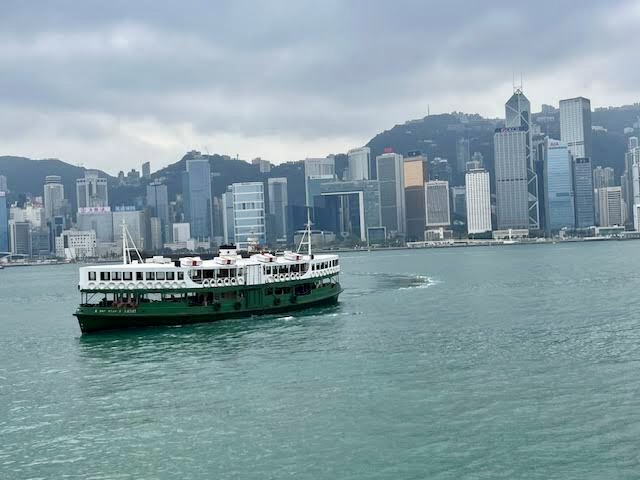
The Star Ferry, which has been operating since 1888, is not only an iconic Hong Kong experience, but an unbeatable bargain. A one-way ticket is less than $1. Transportation options in Hong Kong are varied, frequent and reliable – double-decker buses, minivans, the subway, the ferry, taxis and Uber. An essential tool when travelling in Hong Kong is the Octopus card – a plastic card that comes loaded with 50 HK$ – just under $9 CA – easy to buy, easy to refill and so handy to use.
Just up the street from our hotel is Nathan Road – a main thoroughfare that is lined with bougie stores, tiny dumpling kiosks, Chinese medicine shops, and the ubiquitous 7-11’s. Oh – and crowds of people. You’re seldom alone in Hong Kong.
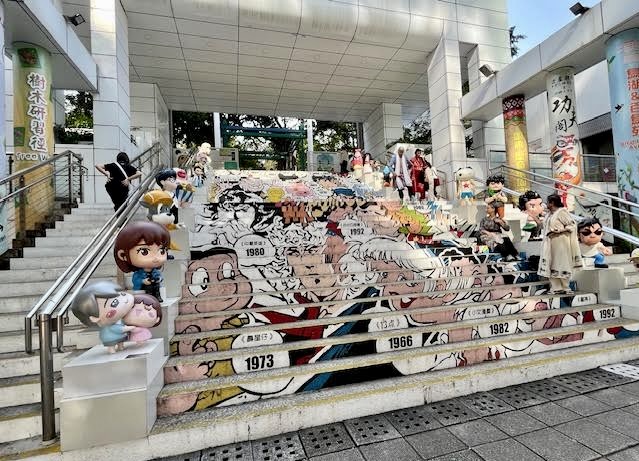
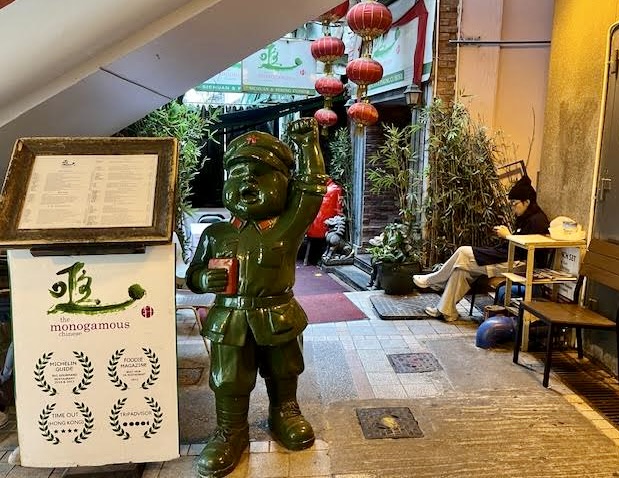
The pathway to Kowloon Park – a tribute to China’s anime characters.
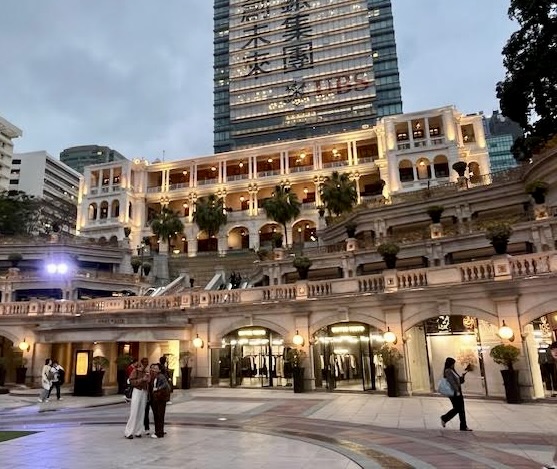
Just down the street is Heritage 1881. This magnificent compound was the Hong Kong Marine Police headquarters from 1884 until 1996 when it was completely renovated and turned into a luxury hotel, with swanky shops and upscale restaurants.
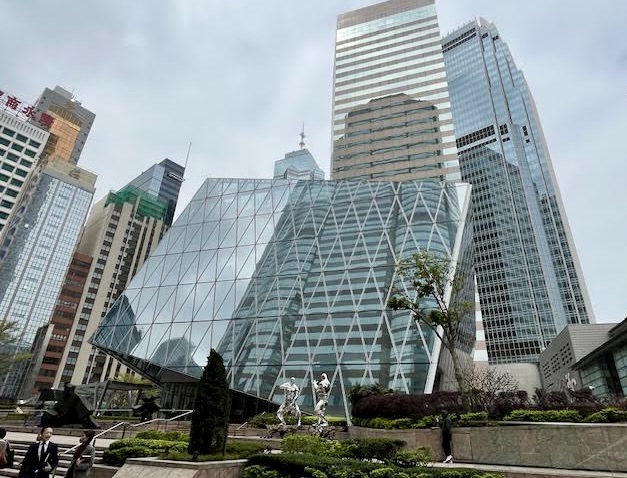
As interesting and diverse as Kowloon is, the island of Hong Kong is home to the images we all think of when we think “Hong Kong.” It is impossible to walk around without looking up – street after street after street of big shiny skyscrapers.
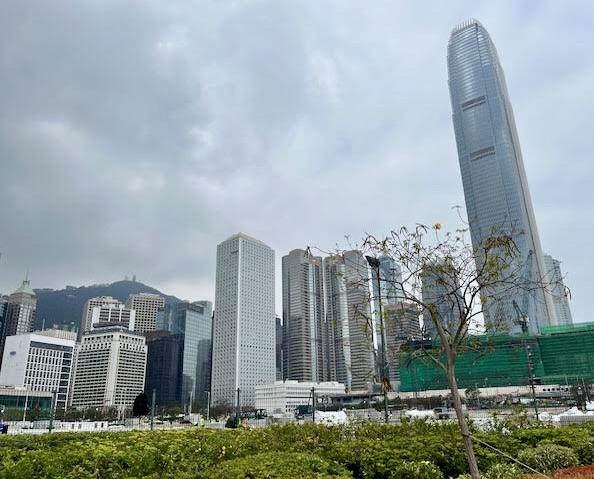
The International Commerce Center, built in 2010, is the city’s tallest building at 108 storeys. In the city of big buildings, this one stands out.
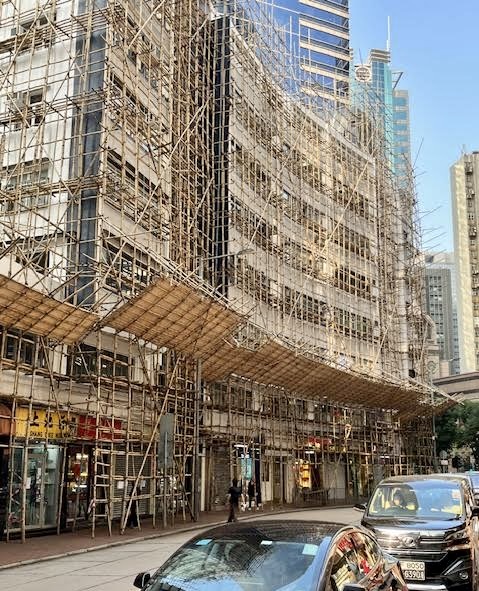
There is a ton of building going on – the skyline is filled with cranes, and look at the scaffolding – bamboo. It does not seem possible that this is safe and secure, but – who would argue with construction crews from Hong Kong?
While there is no end of bona fide HK attractions, if you come from a small Canadian city, it takes very little to become fascinated with just what’s in front of you on the street.
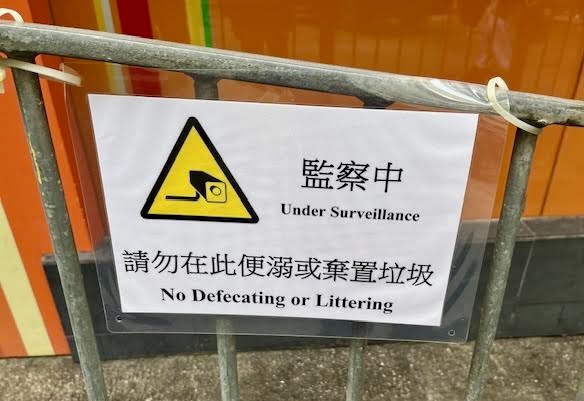
Now this sign got me thinking. Public defecation and littering don’t really fall into the same category of social misbehaviour. Many people litter, but I have to think that very few are comfortable with squatting in the street. Certainly if you are of that mindset, the idea of surveillance won’t be a deterrent.
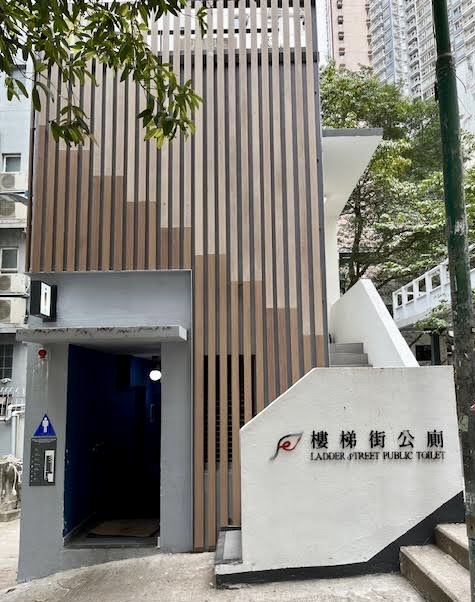
And why would you not take advantage of this handsome building?
The Ladder Street Public Toilet has been serving the public since 1930, and features not only a modernist architectural style, but is clean, well maintained and equipped with toilet paper and soap.
Hong Kong is a hilly city and to that end, the Central-Mid-Levels Escalator were built in 1993. The world’s longest covered outdoor escalator, it runs 800 metres and gains an elevation of 135 metres. It runs downhill from 6:00 am to 10:00 am, allowing residents to get to work easily and after 10:00 am, it reverses direction and runs uphill.
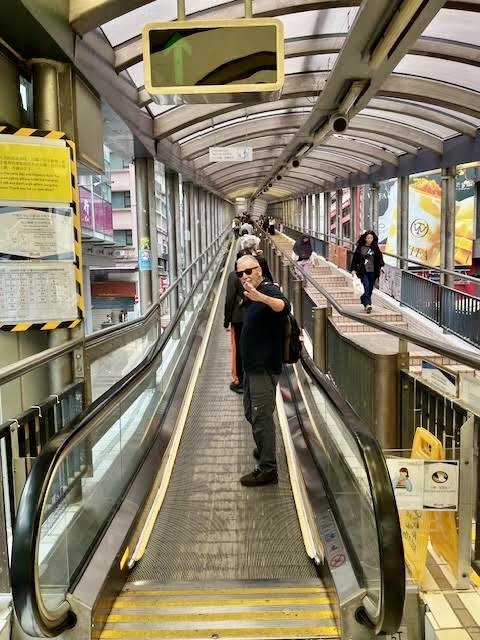
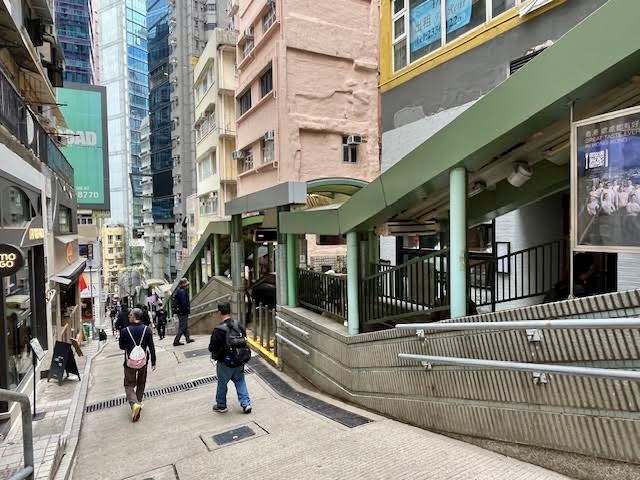
This incredibly interesting mode of transportation provides a slice of Hong Kong life that changes with each rise. If you rode straight to the top without stopping, it would take 20 minutes, but there are numerous diversions along the way.
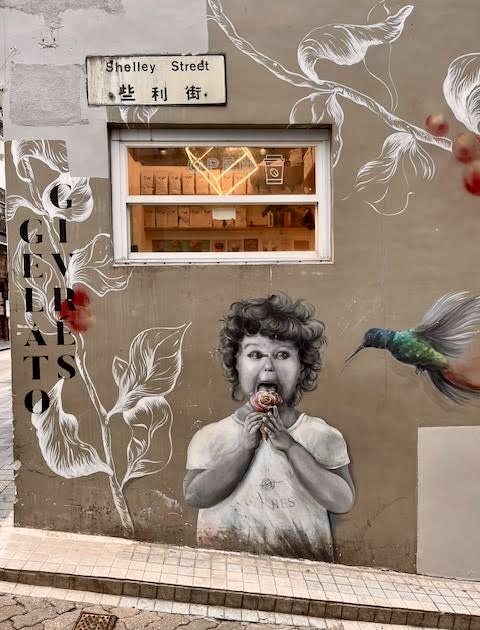
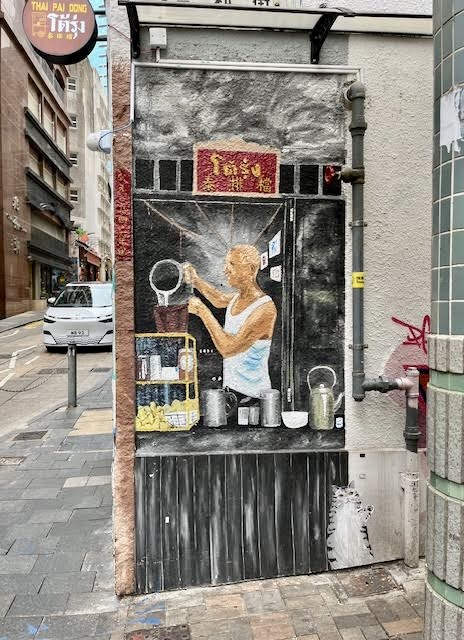
Like street art:
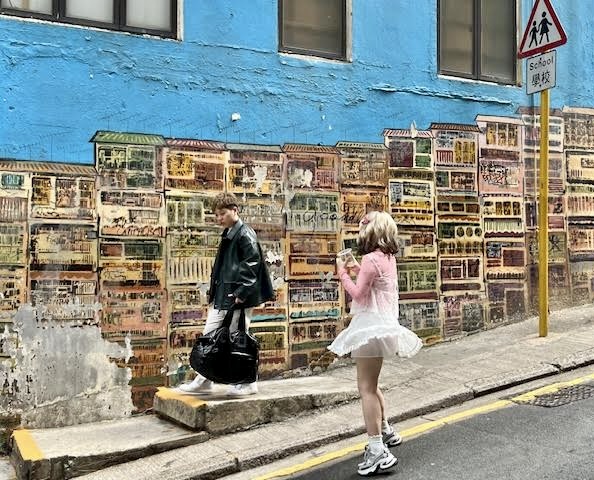
This young woman was fighting a losing battle trying to instruct her companion to pose properly. She must have taken dozens of photos in vain as he could not get the hang of being insouciant with his over-sized jacket and bag.
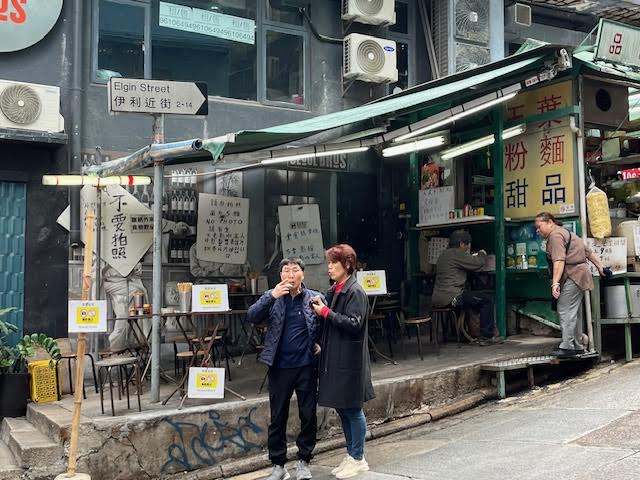
This restaurant owner may have inherited the artwork that graces his walls, but he’s not happy about it. He has the images covered with signs telling people not to take photos as it bothers his customers. As he was empty at that moment, I snuck this shot.
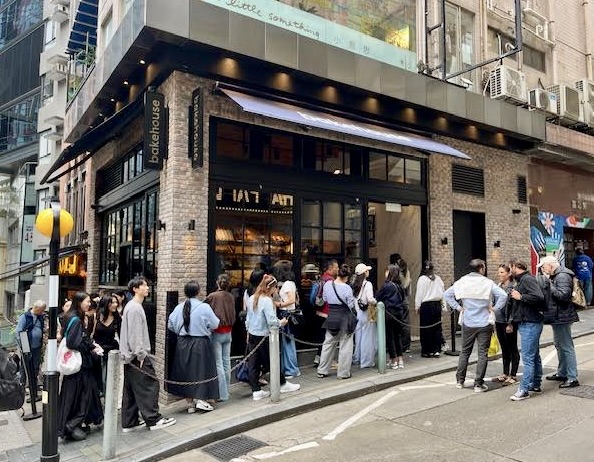
One place that is never empty is The Bakehouse. Famous for their baked goods, they always have a long queue – we have yet to try their products.
Fine dining restaurants seem to be almost on every corner. I love the behind-the-scenes glimpses into these heady establishments. Still hours away from opening for the evening, a staff member is having a cigarette out front; a sight you won’t see at 7:30 pm when you show up for your reservation.
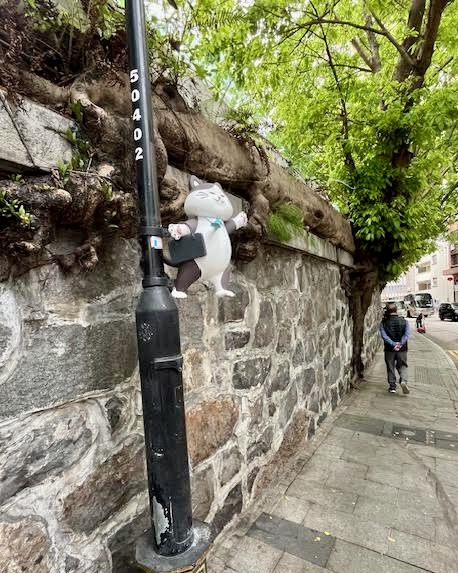
These cheery little cats brighten the landscape around mid-level HK. It can become a game to try and find the many cats that are within a few block radius. We found three.
An incredible tourist attraction, just off the escalators, is Tai Kwun. This recreation of a former police station and prison that were once at this location is now painstakingly restored as an art venue and event centre and spread out over 16 buildings.
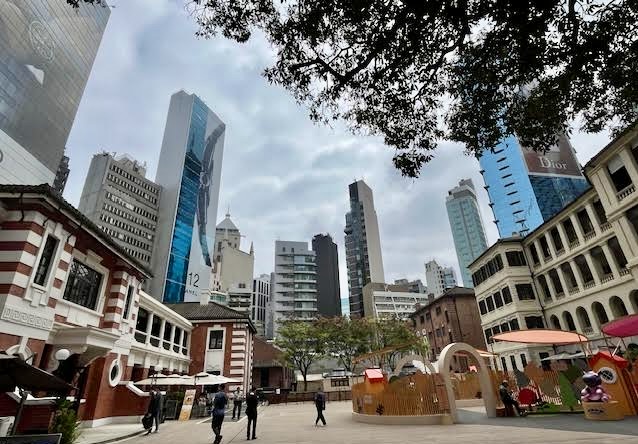
This is the main entrance, called the Parade Ground.
The complex was well laid out, with a comprehensive description of how the police station, judge and jail were often a one-stop shop. Founded in 1881, conditions were harsh. Not only were criminals housed here, but also illegal immigrants, such as the Vietnamese boat people.
We watched a video featuring a pastor who worked with prisoners for years, and as he put it, “not everyone is jail is a bad person and not everyone on the outside is good.” He didn’t want to romanticize criminals, but rather to humanize them.
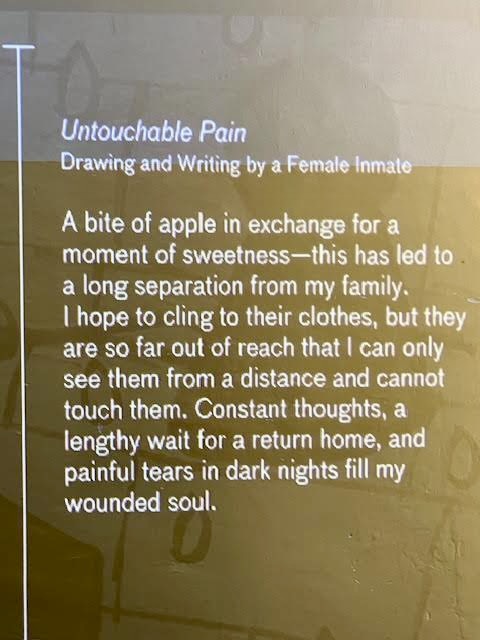
An initiative from 2018, called Women Who Shine Through the Walls, featuring art therapy for female inmates really showcased rehabilitation efforts, as this piece of writing amplifies.
Every corner of this complex was a photographer’s dream.
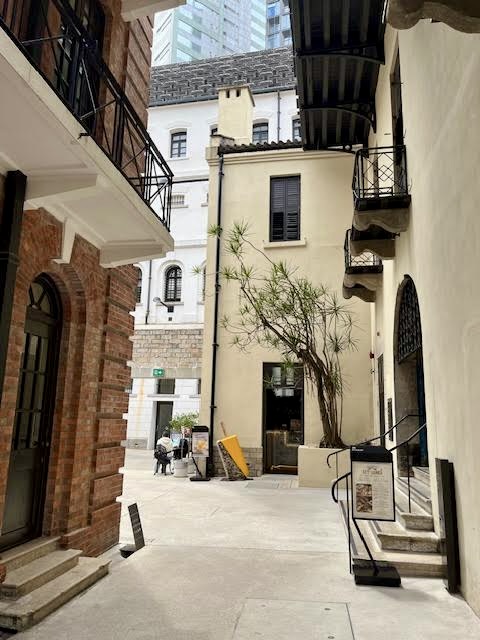
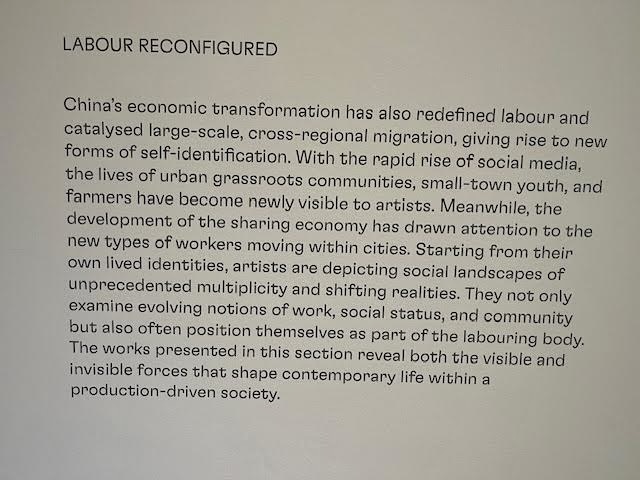
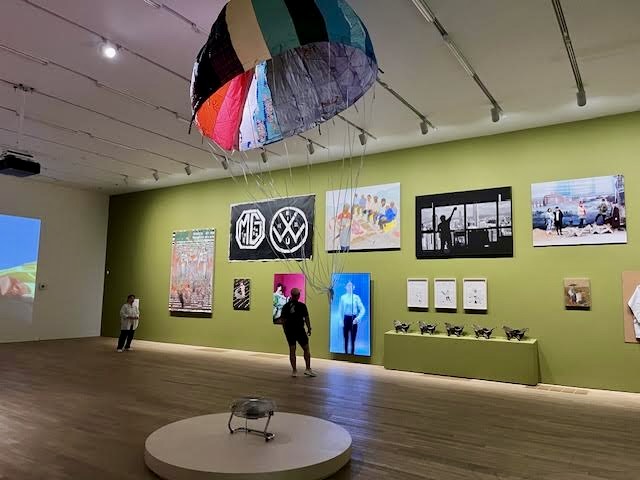
There is a contemporary art gallery in one of the buildings. This is the main theme of the artwork.
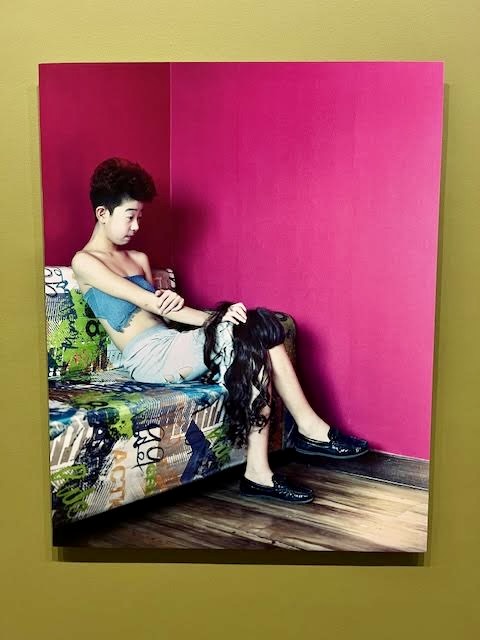
I find this portrait incredibly lonely. I couldn’t stop looking at it and wanted to share.
Back to Kowloon, where we visited two gardens and they could not be more different.
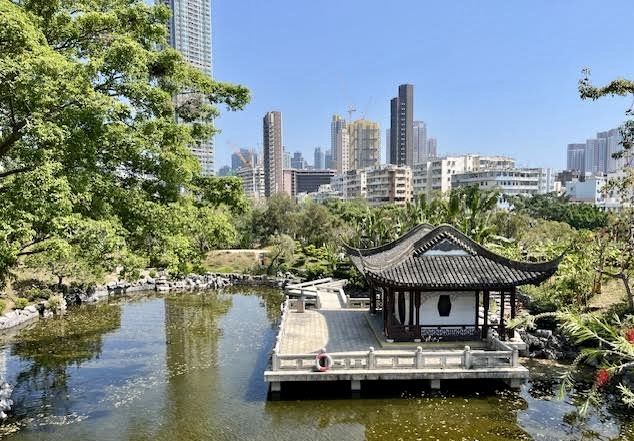
The Nan Lian Garden – a little piece of serenity in the middle of the city, with a monastery and a nunnery surrounded by glorious gardens.
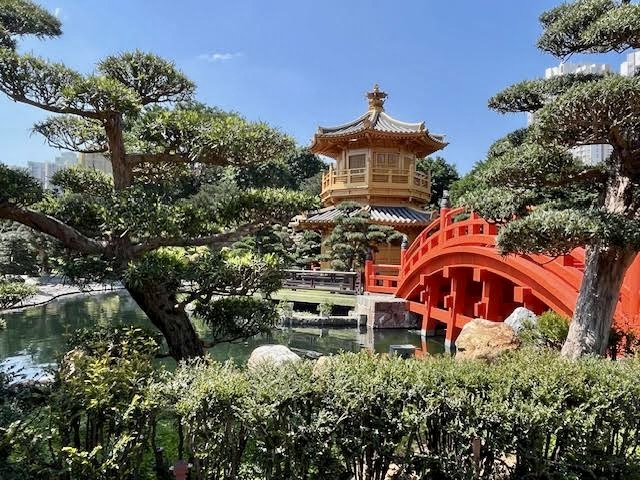
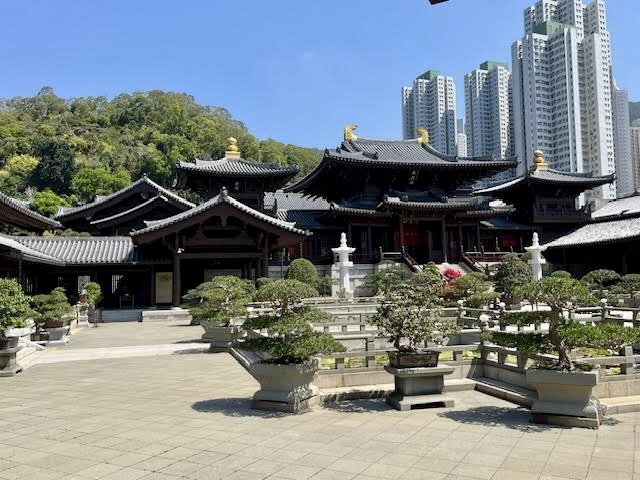
From here, we went to Kowloon Walled City Park, which has undergone an almost impossible-to-imagine transformation since the 1990’s.
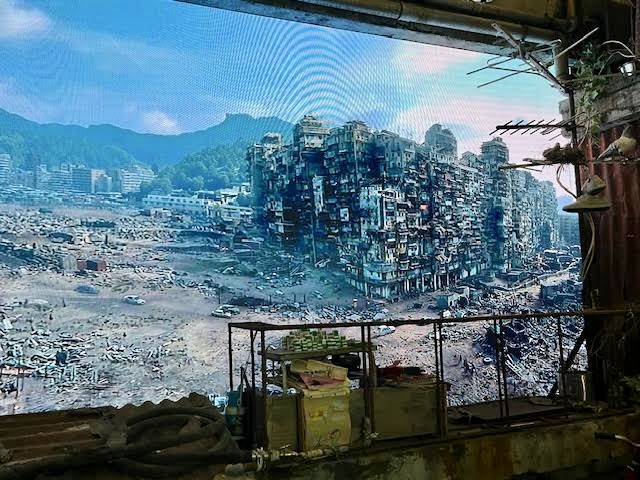
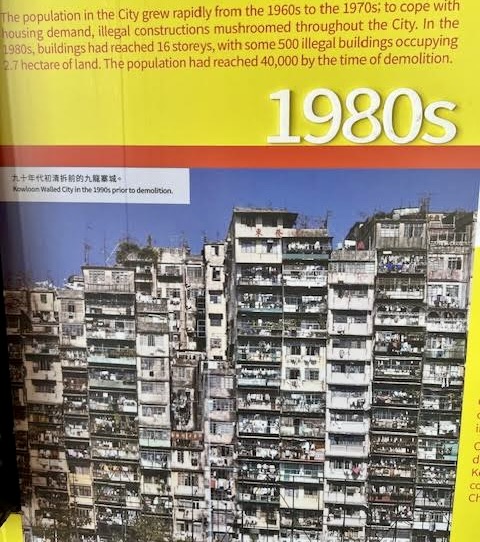
This was once one of Kowloon’s most notorious slums – so densely packed and filled with labyrinthine little alleys, drug dealers, hanging wires, illegal activities of all sorts, even unregistered dentists who could not practice elsewhere. Fires were a constant threat, there was no running water, hygiene was non-existent and the cops were afraid to enter the area. At its max, over 40,000 people were crammed into this lawless neighbourhood until finally, in the 1990’s it was demolished.
This is what it looked like during the demolition.
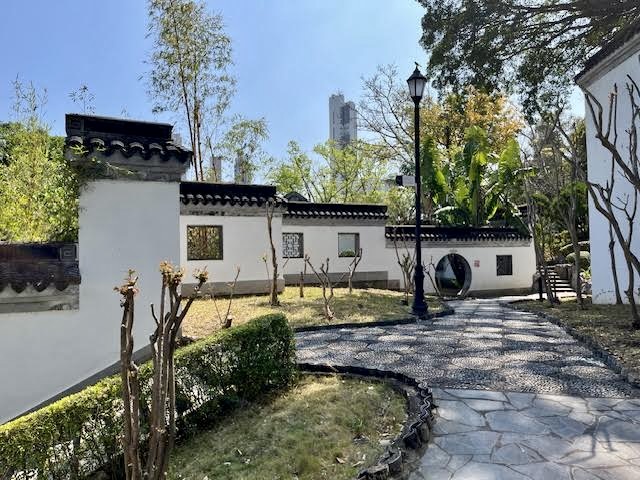
And this is what it looks like today – an idyllic park with mature trees, koi ponds, walking paths and birdsong.
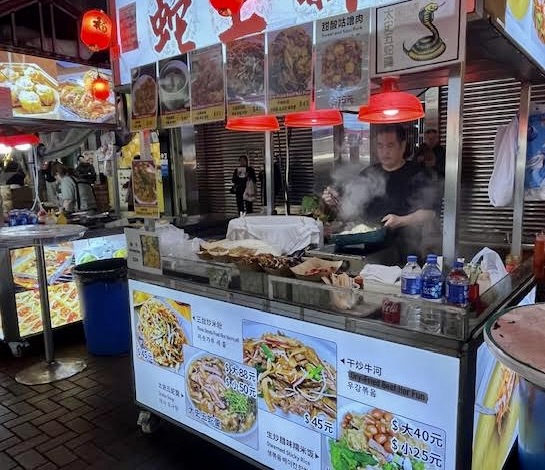
The Temple Street Night Market in Kowloon is a lot of fun. Several food stalls serve up everything from noodles to dumplings to samosas to fruit smoothies.
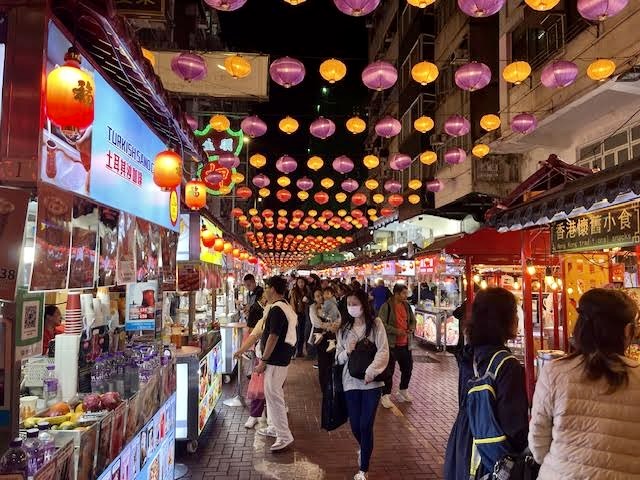
There is also the usual lineup of tourist tat – knock-off purses, fridge magnets, “jade” bracelets – still amusing to walk through.
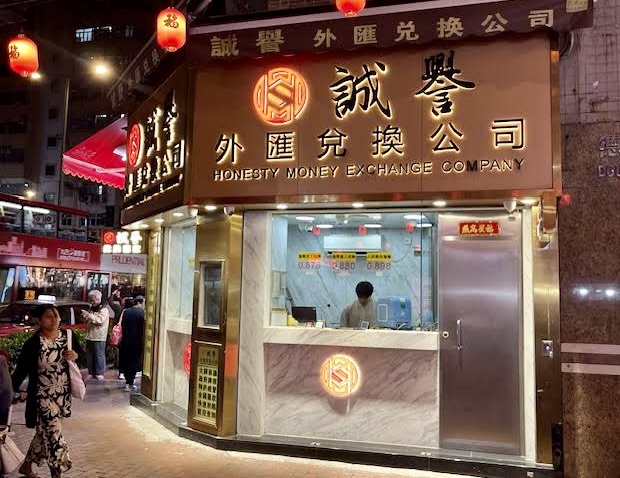
And, if you happen to need to change some money, you can count on this kiosk to give you the best rates.
Not to cast aspersions on casinos, but you might not have the same good luck with your money here.
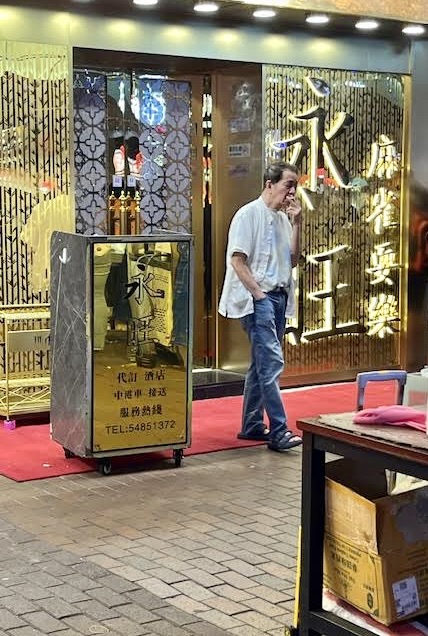
This area does cater to all tastes – sex shops, fortune tellers, tattoo parlours and sketchy dive bars. Something for everyone.
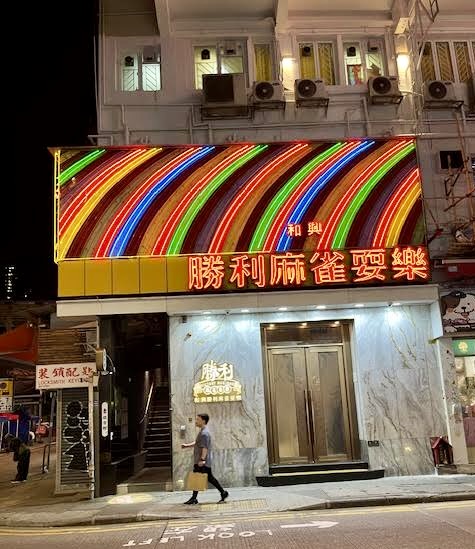
Then, there’s Mahjong, which feels like a more wholesome way to lose your money somehow.
Long blog posting, but there is so much more to come. I’ll send out another blog posting in a couple of days.
 Leaving Ourselves Behind
WOW! I just love the photos and information that you provide. Thanks so much for sharing. Karen Jones
LikeLike
So glad you enjoyed it Karen! We’re home tomorrow night – I’ll be in touch soon. xo
LikeLike
Hi Ginny and Stephen,
I was absolutely enthralled with each and every photo and accompanying description in your latest blog! So much to see and so little time. It is truly a feast for the senses!
Cheers, Heather
Sent from my iPad
>
LikeLike
Thanks so much Heather. Hong Kong really is a treat, but I have to say – we’re tired!
LikeLike
Thanks Ginny. I really enljoyed your pictures and felt I was right there with you.
LikeLike
Thanks Ginn. I really enjoyed your pictures and felt like I was right there with you. The only thing missing as the smells of the delicious food. Keep on enjoying.
Love Lyn Morris, Langley, B.C., Canada .
LikeLike
It’s hard to see the end of the trip on one hand and we’re also looking forward to being home again.
That’s the gift of travel, isn’t it? You look forward to much to exploring a new place, and then while you’re there, it is all-encompassing and exciting.
And then, it’s time to go and that’s a good thing as well.
LikeLike