You wouldn’t call Tirana a beautiful city, but it has a beating heart and is vibrant and highly walkable. It was battered and bruised and neglected for years and while some of the architecture shows Ottoman influences, a great deal more leans to Soviet-era buildings.
Between 1944 and 1991, vast tracts of massive featureless apartment blocks and industrial buildings went up and function definitely won out over design.

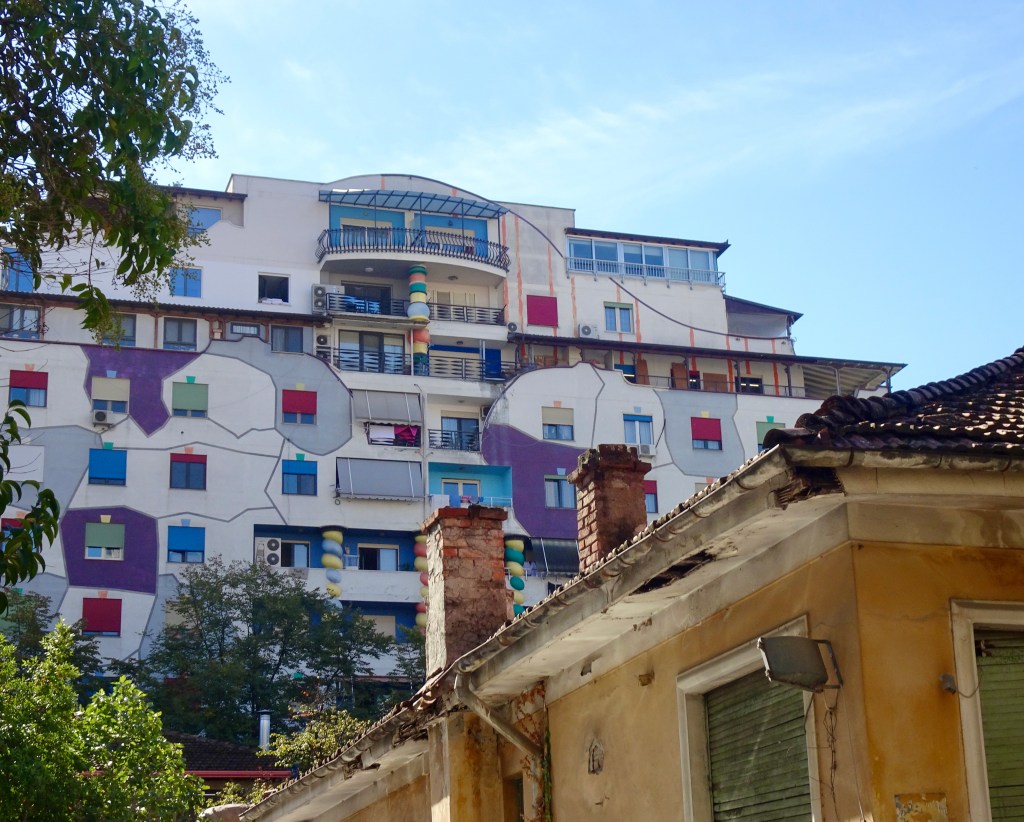
Years ago, when Edi Rama (current prime minister) was mayor of Tirana, he began a campaign to try and brighten the dull facades with colour and pattern.
This is an example of how some buildings look today in Tirana.
But…change is afoot and everywhere you look there are cranes dominating the skyline.
I love this photo for so many reasons. I love the humour of household lamps masquerading as street lights. There are a few streets in the main square lined with these giant lamps and you could imagine a few giant recliners to go with them.
I also love the sign “Work in Progress Upstairs.” The only progress so far is the fencing, so was this sign borrowed from another site? Also, the sign is in English – perhaps the Albanians have turned the tables and are hiring illegal immigrants from the U.K. who can’t afford to live in their home country anymore.

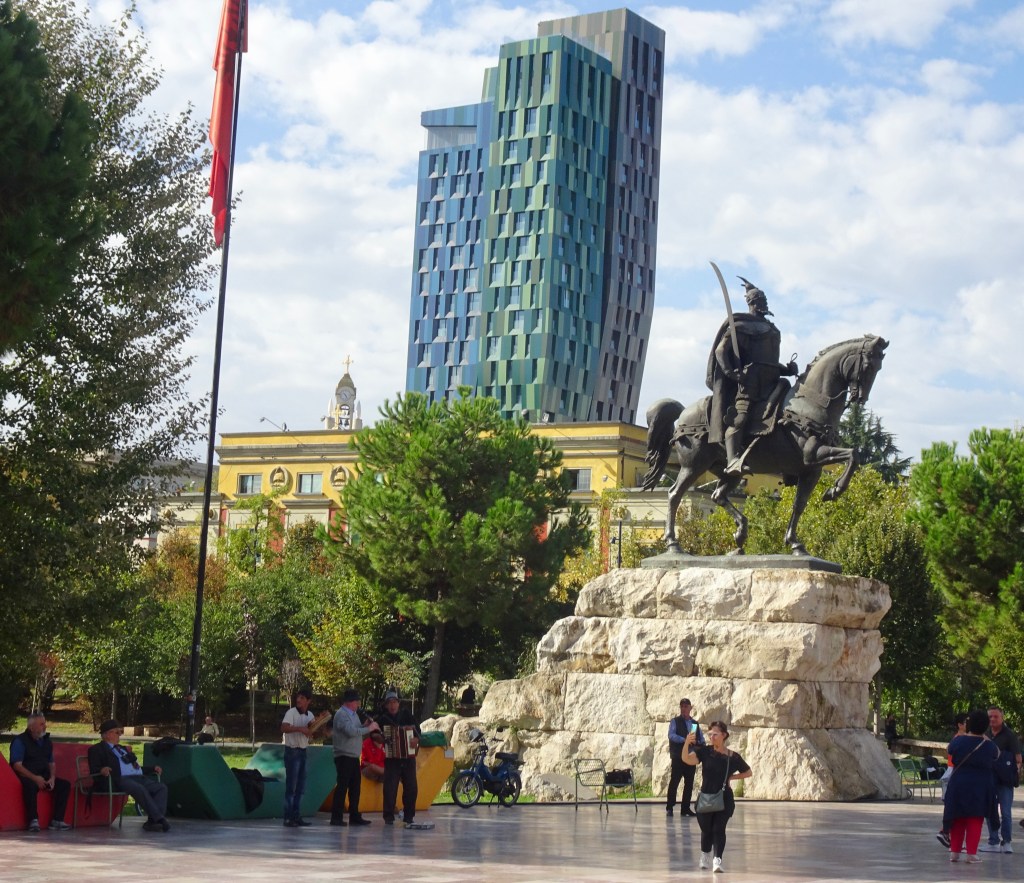
Much of Tirana’s history and main attractions revolve around Skanderbeg Square, named after Albania’s national hero, who fought against the Ottoman empire from 1463 to his death in 1479. This area is also where most of the city’s attractions are to be found.
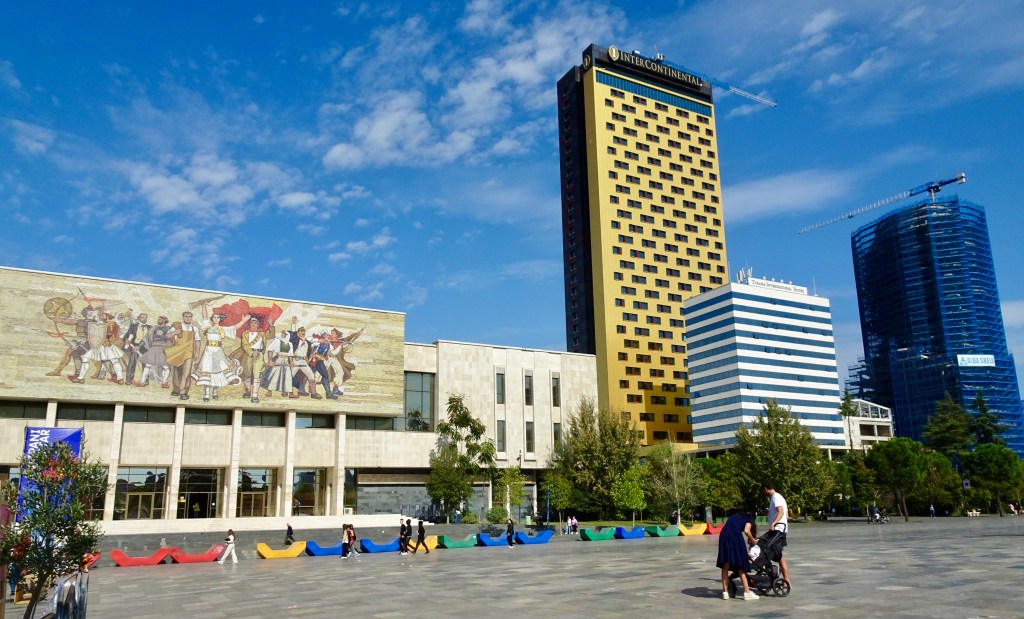
Across the square is the National Historical Museum.
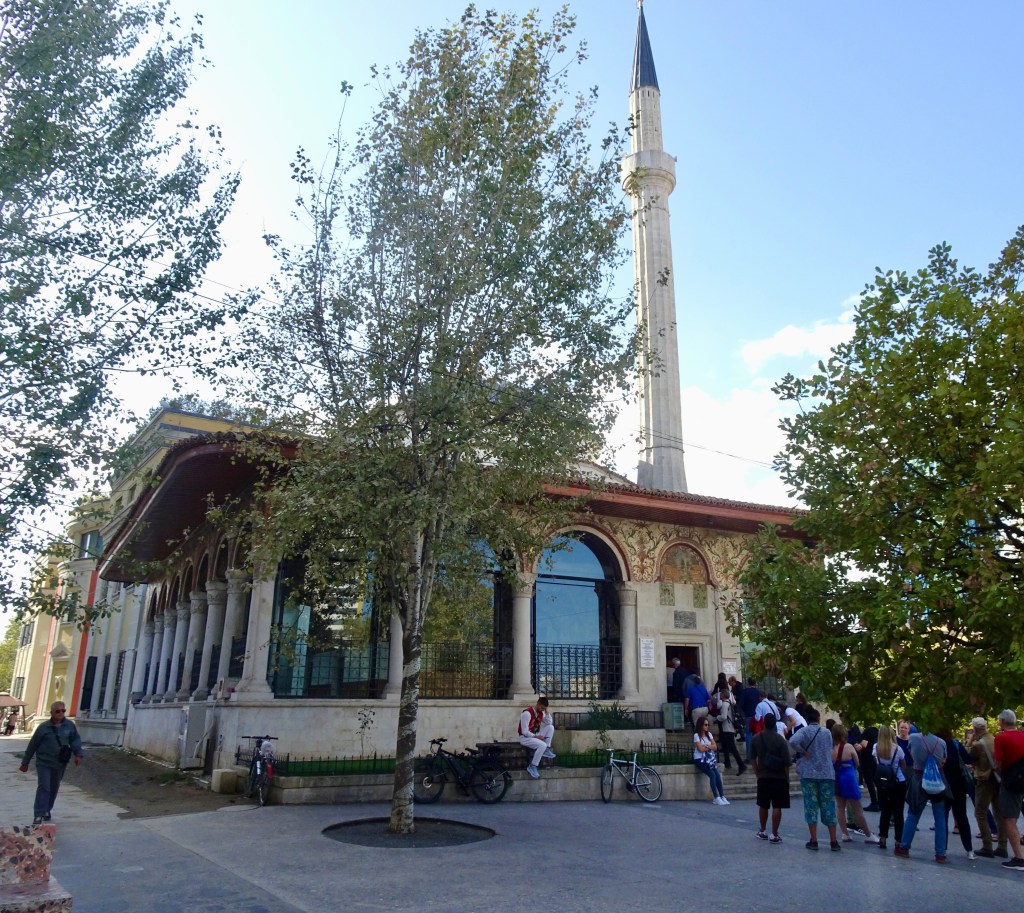
On another corner lies the El’hem Bey mosque, built during the 18th-19th centuries, and the only mosque in Tirana to survive the communist regime.
Our neighbourhood, called Pazari y Ri (New Bazaar) was ideal – within a 5-10 minute walk of most things, but very much a local neighbourhood. This was the view from our apartment window. We had the advantage of being able to spy on our neighbours without them seeing us (if you’re into that sort of thing.)

We also had the chance to chat with some of the kids in our building. We met up with Aria, a tremendously poised 9-year-old girl, who spoke unaccented English as well as ” some German and Italian.” She was shepherding her little brother and his friend, both of whom were wearing their Hallowe’en masks. Apparently last year they hit up over 100 apartments and plan on doing the same in a couple of weeks.
We’ve had the pleasure of talking to quite a few Albanian kids and if they are any indication of the future, their country is in very good hands. They’re bright, curious, incredibly mature for their age and most of them are already polyglots.
Tirana is not without its beautiful little corners. One area, called Tirana Castle, dates back to the Byzantine era. All that is left of the original castle is a six-metre wall, incorporated to a pedestrian street that is lined with shops, cafes and restaurants.
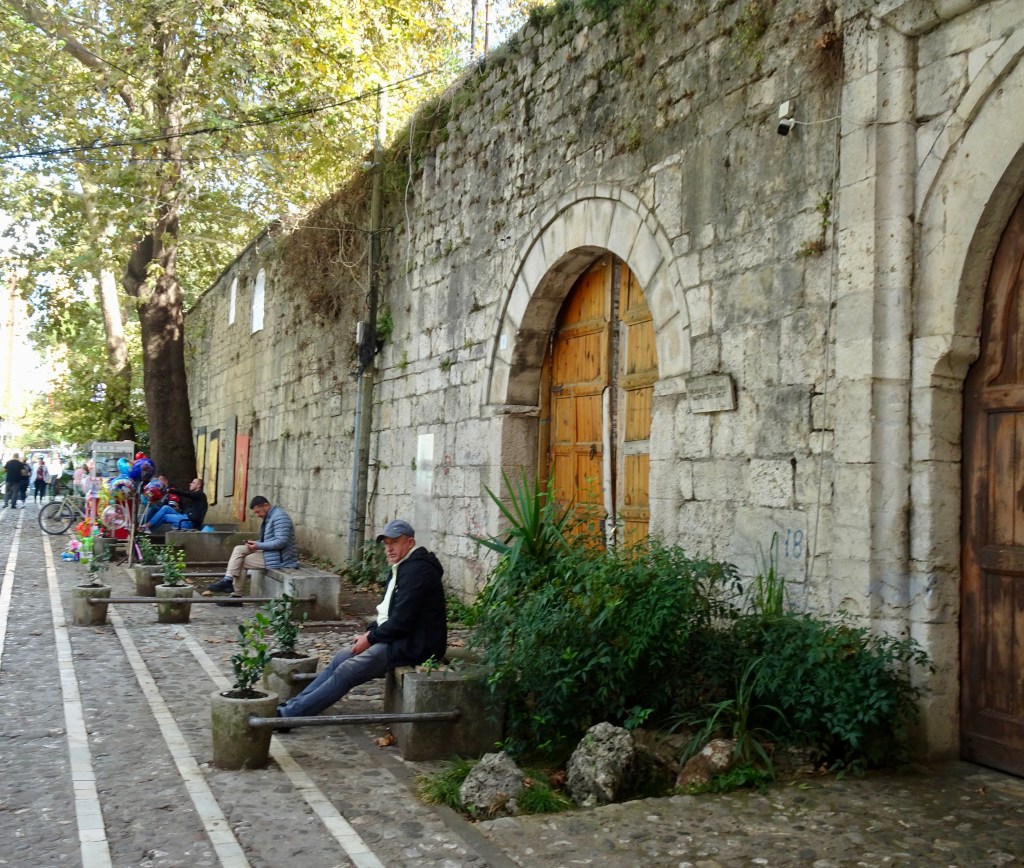
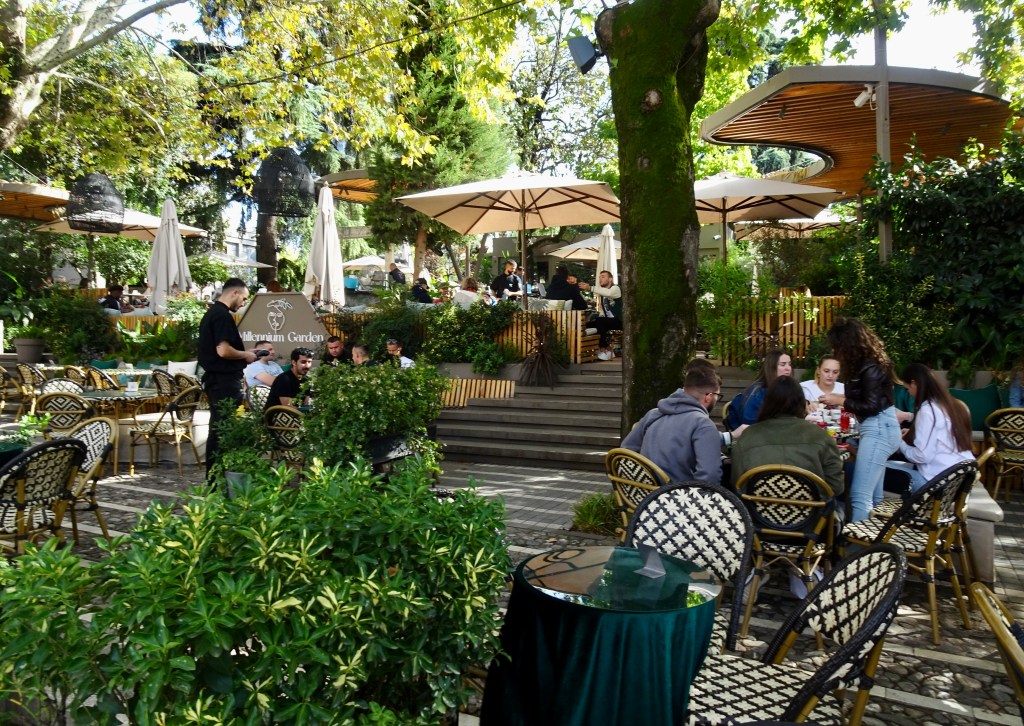
We had a most disappointing lunch in that area, due to letting ourselves get too hungry and then squabbling over where to eat. We got pressured into sitting in a restaurant with a boring menu, populated entirely by tourists and it was exactly like tourist trap restaurants the world over – mediocre food and substandard service. And we know better…arggh.
This is where we could have eaten, had we walked for another two minutes.
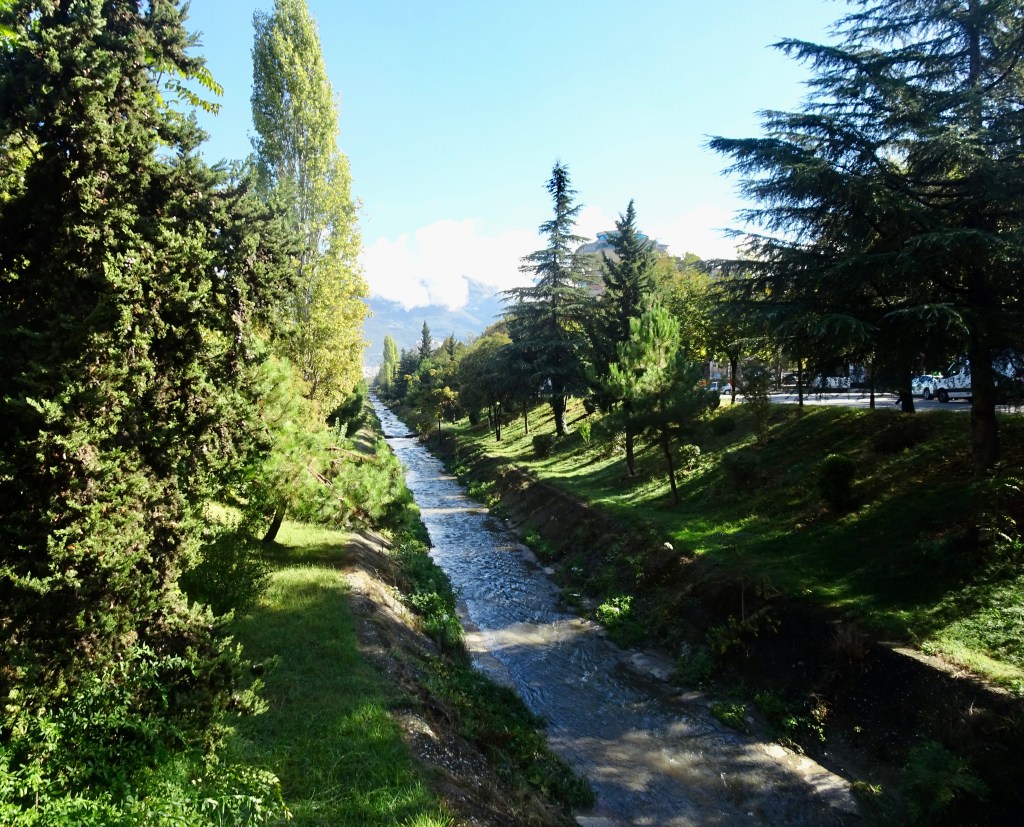
The River Lana bisects the city, and is surprisingly clean. I saw a couple of men walking along the banks of the river, picking up trash.
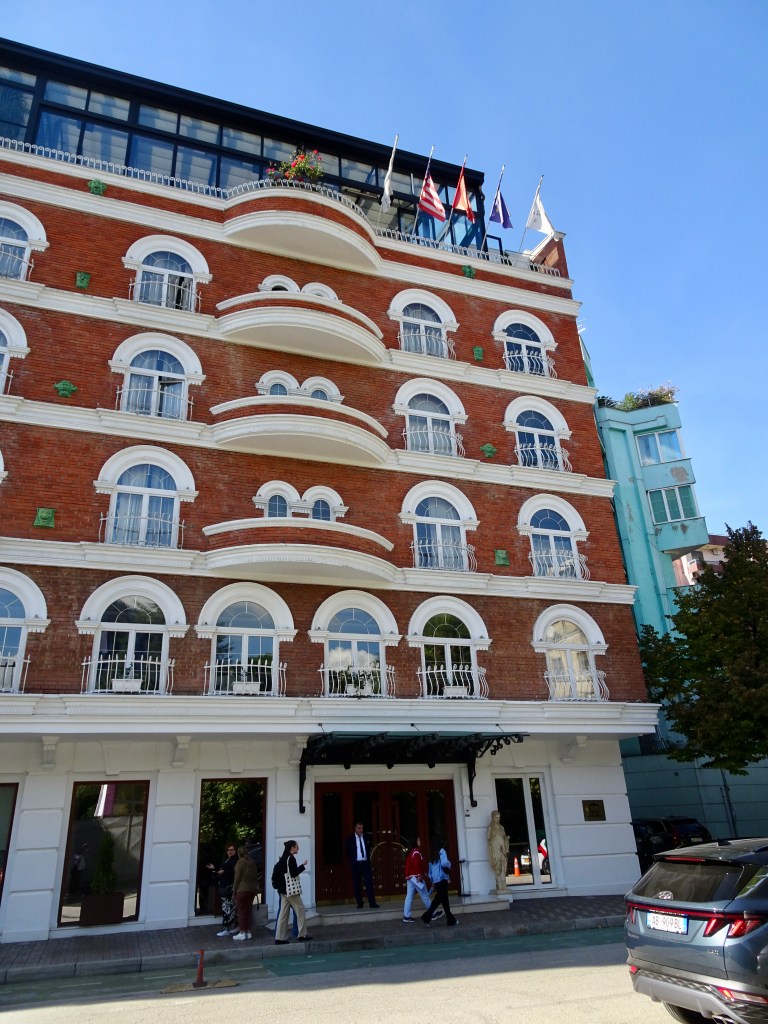
We crossed over to visit the Blloku area ( Block in English); an upscale area that used to be off-limits to the general population as it was reserved for Communist elite only. It was an area of several blocks of nicer apartment buildings, expensive restaurants and swank shops. You can buy Louboutin shoes there, Cartier watches, and the parade of cars we watched from our restaurant table were variations on a theme of Mercedes, BMWs and Range Rovers. There is money in this neighbourhood; just the faces have changed.
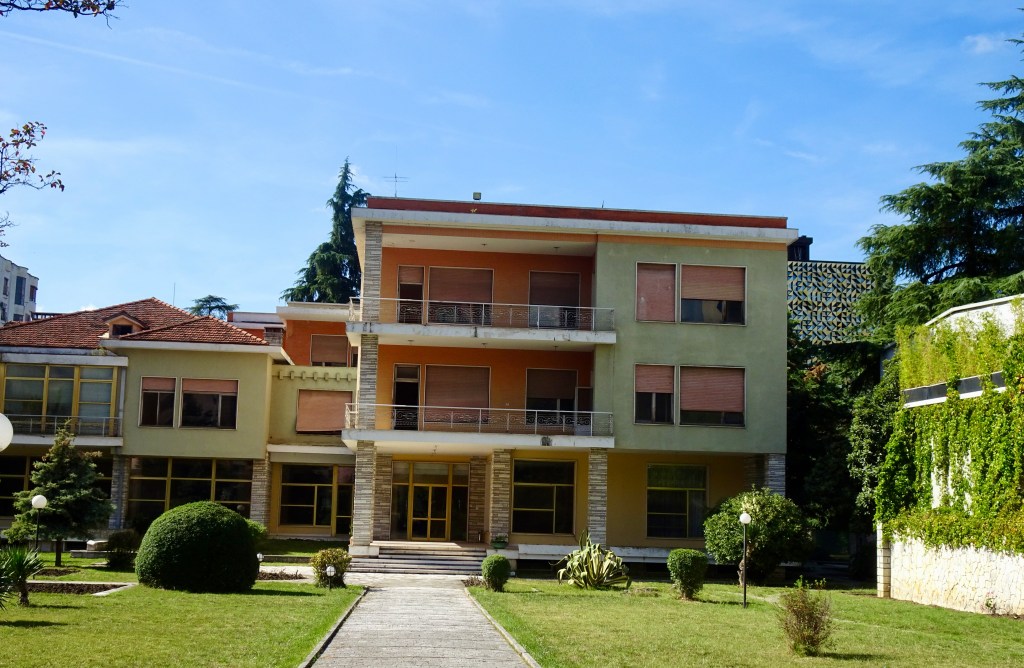
Since we’re talking about Enver Hoxha once again, this is his former home. Shabby and with a couple of big locks on the front gate, this has not been occupied for decades.
We don’t know why this house has not been demolished; this is valuable real estate. We’ve been told that there are still several Hoxha descendants living in Albania, and according to our source, ” they still have lots of money.”
One Hoxha landmark that has been absolutely transformed is the Pyramid. Built by Hoxha’s architect daughter in homage to her father, the Pyramid was once a museum dedicated to Hoxha, but after the fall, it sat empty and began to deteriorate. Although the impulse was to destroy it, most Albanians wanted it to remain as a representation of the country’d victory over the regime.
It has indeed been a triumph over those dark times. This beautiful new version has been transformed into a cultural hub, with colourful boxes containing cafes, studios, offices, and workshops where Albanian youth can learn the latest technology – for free. It just opened to the public this May, so we were lucky to be able to visit.

Even better, you can climb the 100+ steps and walk all over the site – with panoramic views of the city.

And so to the theme of being haunted by its past. I’m trying to imagine what it would have been like to be under Communist rule for over 40 years, and before that, two world wars. My late father, a WW II veteran, often talked about the incredible peace and prosperity enjoyed in post-war Canada. Albania did not have that same experience – they went straight into communist rule to the enemy from within.
Museums in Tirana focus on those years and while that history is critical to understanding Albania, it is also very oppressive. We visited three museums; all of them covering communism from slightly different angles.
The House of Leaves – its reference to things hidden in the woods – is a museum dealing with the constant surveillance that occurred on all levels – government, police and even neighbours snitching on neighbours. Individual homes were bugged; privacy was non-existent and paranoia ruled. Photos were not allowed in this museum, which even added to the sense of being spied upon.
BunkArt2 was a whole other thing. This bunker, which reconstructed the history of the ministry of Internal Affairs from 1912-1991, sits right in the centre of Tirana.
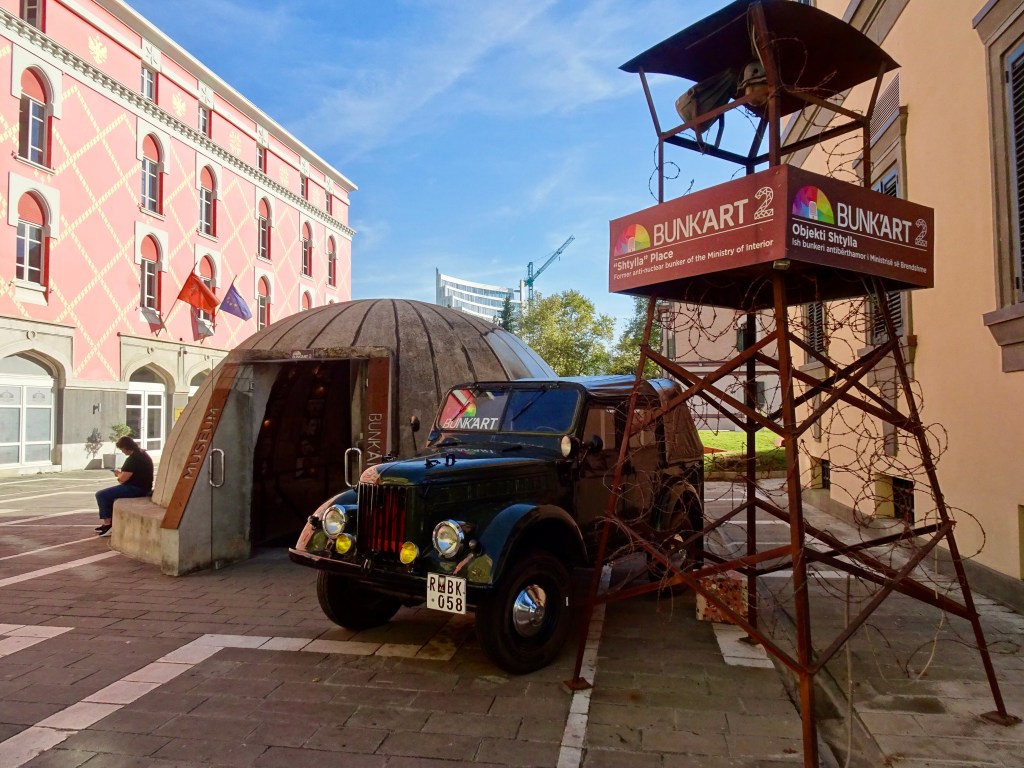
You enter through these open doors, down the staircase and into long dank tunnels, from which rooms spoke off on either side. Very informative, it covered a lot – the secret police, the chain of command ranging from the commander to the lowly snitch. Dedicated to the victims of communist terror, there were videos, graphic rooms depicting scenes of torture and intimidation, and survivor testimonials.
As if the information wasn’t difficult enough, it felt close and claustrophobic to be in those hallways.

And, away from the sense of being trapped in the past, there is proof of a brighter future.
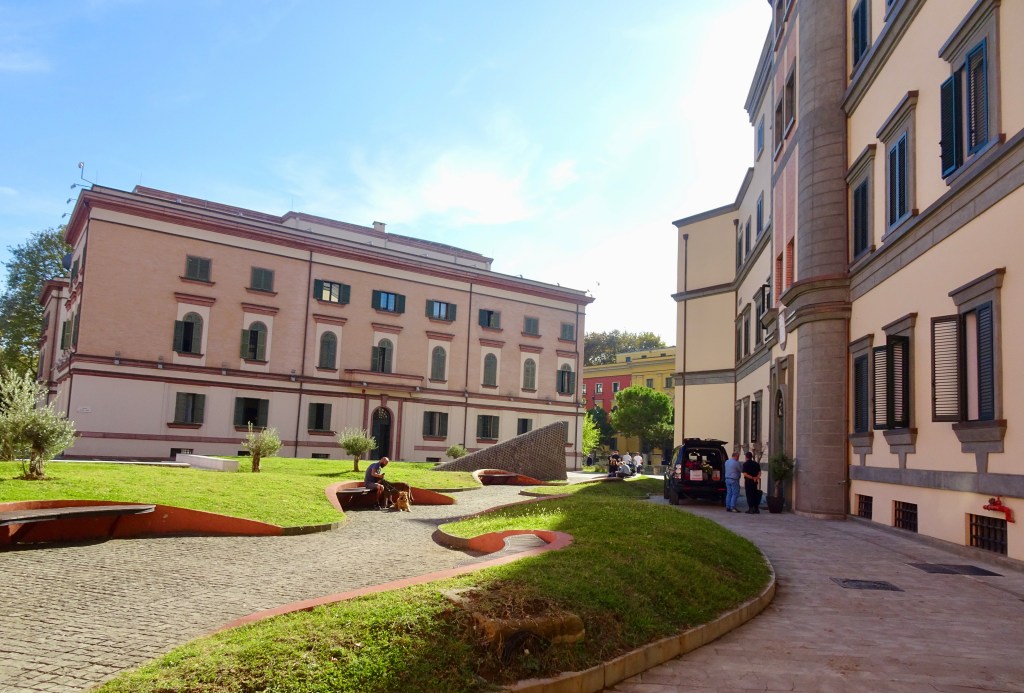
These are some government buildings close by the main attractions. They have been beautifully restored.

The New Bazaar

More attractive apartment buildings.

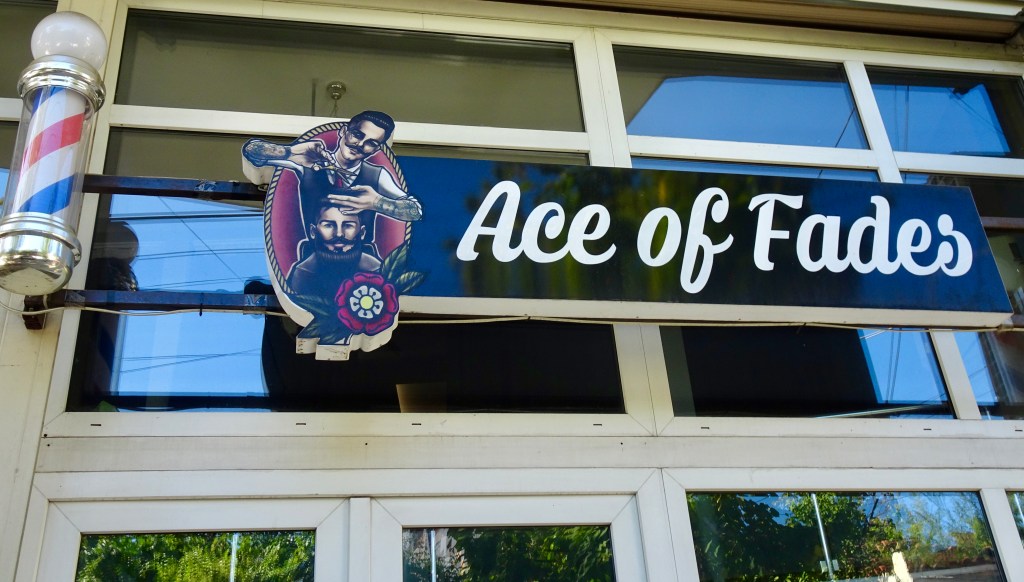
Humour.
Benediction. The Orthodox Church, Resurrection of Christ.
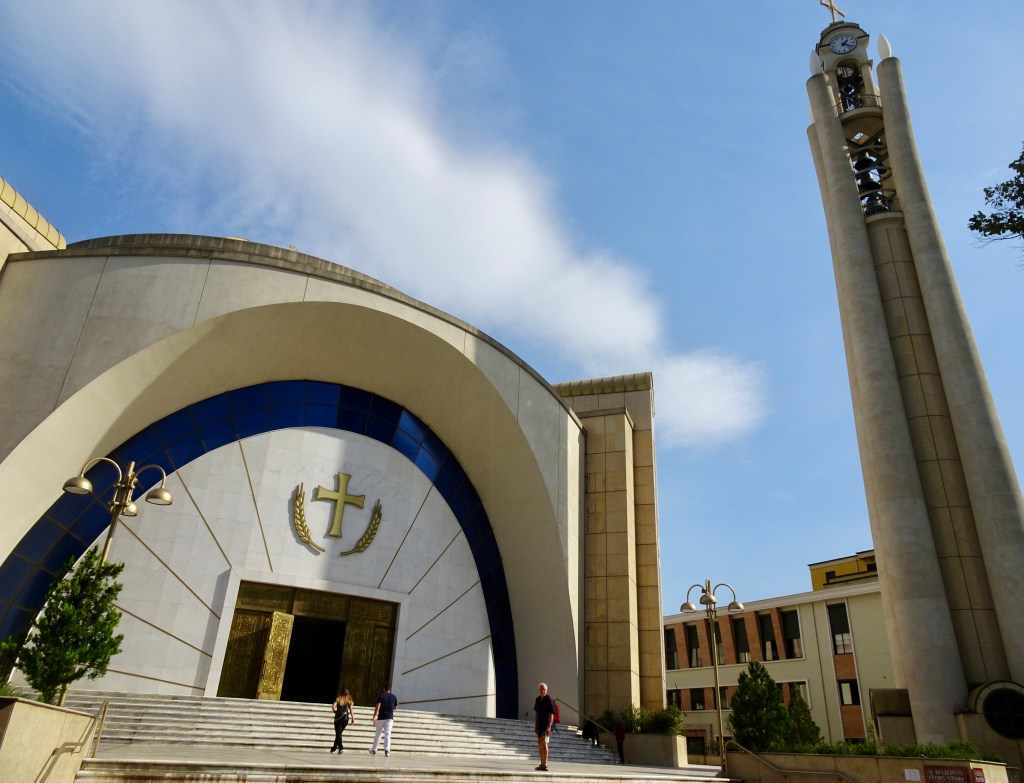
Philosophy. The world is changing fast, some things will never change.

While we were in Albania, the world became a much more dangerous place. Is this the lesson we learn from Albania during these shocking and frightening times? We have little control over the big picture, but small everyday routines give us comfort.
Albania was nothing like we expected and gave us a lot to think about. It will take a while for it all to sink in, but it has whetted our appetite to visit the other Balkan countries. So many Albanians asked us how we liked their country, like anxious hosts who aren’t sure how the party is going. It was an incredible experience, and we missed a lot. We have to come back in a few years and see how Tirana has evolved and there is still the north part of the country to explore. Next time…
 Leaving Ourselves Behind
Great !
I FINALLY got to reading your wonderful info, re your trip !!!
Amazing👍👍😊👏
Love Flo
LikeLike
Flo – were you not getting the blogs until now? Or did you just not have the time? I’ve had a couple of comments about not being able to open the blog, so I hope that’s not the case.
ANYWAY – happy to hear you enjoyed them! See you soon – we’re home in a couple of days.
LikeLike
the Balkan countries are lovely. We were in Bosnia after the last war. Many young people asked what we thought of their homeland. Isn’t it a shame so many greedy cruel men get into power? People are the same everywhere.
LikeLike
Nancy! Lovely to hear from you! From everything I’ve heard from anyone who has been there, the Balkan countries are wonderful. I’m really interested in Montenegro, Croatia and Slovenia for another trip.
It kills me to see what is going on in our world right now, and it’s the same story – our fate lies in the hands of a few. Our world leaders are increasingly less moderate, less intelligent and less suited. And people are the same the world over, you’re so right.
LikeLike
Once again your pictures and commentary have painted a captivating story of Tirana and its history. What a remarkable people. We could definitely relate to your unfortunate lunch experience as it’s happened to us. Will you be coming home anytime soon? Thanks for these wonderful travel blog.🤗
LikeLike
Tirana was so interesting, Julie. We feel so lucky to have visited this country – it wiped out many preconceptions and stereotypes we had about Albania, and really broadened our minds.
We’re in Frankfurt now, and fly home tomorrow. Hope to see you soon.
LikeLike
Thank you both for a fascinating tour. The photos are fantastic and Ginny, lines like “So many Albanians asked us how we liked their country, like anxious hosts who aren’t sure how the party is going” make me hope you’re going to write a book…in between journeys! All the best, Shelagh
LikeLike
Thanks so much Shelagh, and lovely to hear from you! I’d love to write a book, but where to start? I tend to use 20 words when 10 would do the trick, and I have no idea how to compress all the backstories.
LikeLike
Often people might react with a “Why would you want to go there?” when you tell them about plans to travel to certain places – and it’s often travel to those places that are the most rewarding. So sorry your (our!) trip is over already, but glad to have been able to follow and learn more about Albania – our knowledge of the place has been limited and full of misconceptions. Have a safe return and hope to catch up with you in the near future.
LikeLike
I think there are two kinds of trips one can take – the much-needed break to relax and turn a fresh page, or the trip where you have the time and opportunity to just be curious (and maybe not be that relaxed). We’re lucky to be in the latter position, and Albania took a while to make sense to us!
Our knowledge is still so limited, but it is miles away from what we thought we might experience. We just spent two days in Frankfurt and even this experience is so different from what we thought of Germany.
And therein lies the addiction…
We would love to see you and Tom once we’re back and settled in. It’s been a while and we can swap grandparent stories.
LikeLike
Reading about Albania and, in particular, Tirana’s past under communist rule has me thinking how very fortunate we in Canada are, something that I regret to say I take for granted sometimes. I’m glad to see they are slowly transforming what was into something better.
LikeLike
Aren’t we so lucky to live in Canada, Heather! And of course we take it for granted, because it is all we’ve ever known. Although I am finding that increasingly I think to myself how personally lucky I am, and the older I get, the less I take that for granted.
LikeLike
Enjoyed all your stories and pictures. Can’t wait for next trip.
LikeLike