Our month in Costa Rica is almost over. We’ve gone from the wilds of Osa Peninsula to the much-touristed Manuel Antonio Park to sublime cloud forests and are now in the steamy heat of the Caribbean.
While we have found each area carries its own attractions and identities, I think it is fair to say that the Caribbean side of Costa Rica is completely unique.
This area was settled by Africans by way of Jamaica who were brought here in the 1800s to build the coffee railroad and work on banana plantations. The multi-cultural community present in these towns are reflected in a large population of blacks, as well as ex-pats from other countries. You could easily imagine you are on a Caribbean island. Locals ride by on bicycles, Bob Marley is on rotation from many doorways, weed wafts from many other doorways and Spanish is spoken with a Jamaican lilt. Men play dominoes; clattering away in a corner to the occasional rousing cheer of what sounds like “Jess-i-ca!”
There are two main destinations to choose from – tiny Cahuita, much larger Puerto Viejo and tinier Manzanillo. We chose Cahuita since it was smaller and within easy walking distance to the main attraction, Cahuita National Park.
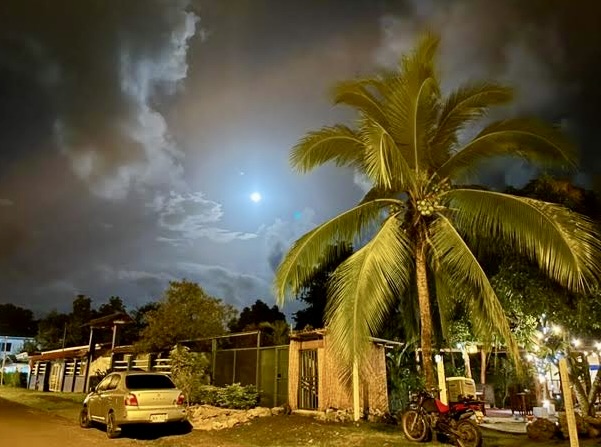
Cahuita is made up of a few streets that mainly all lead to the sea. Our first night there we stopped for ceviche and patacones (mashed and deep fried plantains) with guacamole, and then wandered the town. Cahuita has night action, but it’s not crazy. Lots of people out enjoying the slightly cooler evening, the full moon and the competing music. By 11:00 pm, we’re all home in bed and asleep.
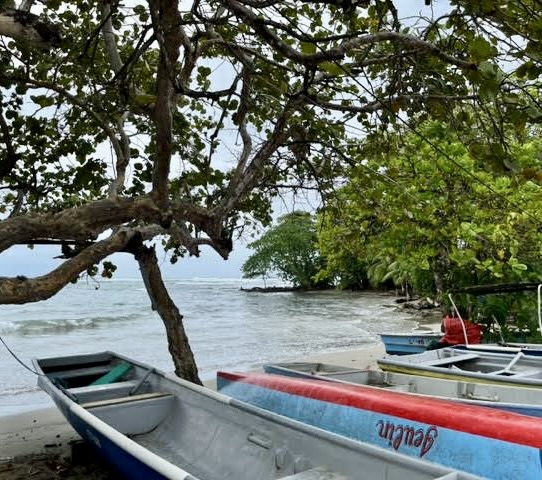
A walk down any street leads to the water. In most cases the water around Cahuita is a bit too rough to swim safely, but it is simply glorious to sit and watch the waves pound in.

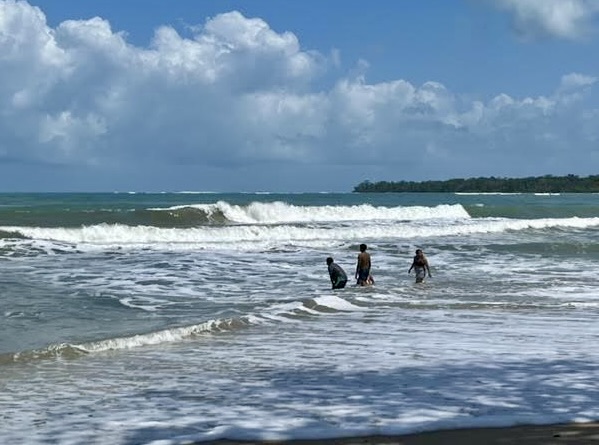
The locals splash about in the waves, but nobody seems to go further than their knees.
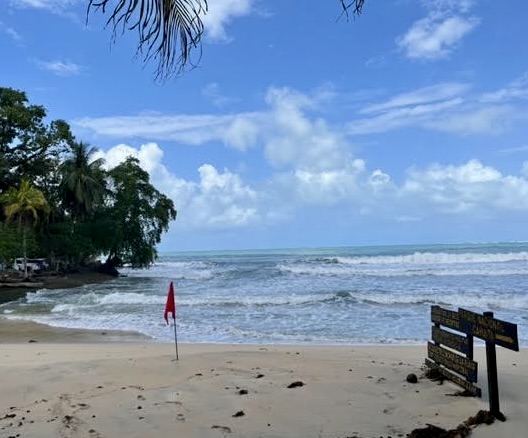
In certain parts of the park, there are signs warning of dangerous conditions, accompanied by a permanent red flag.
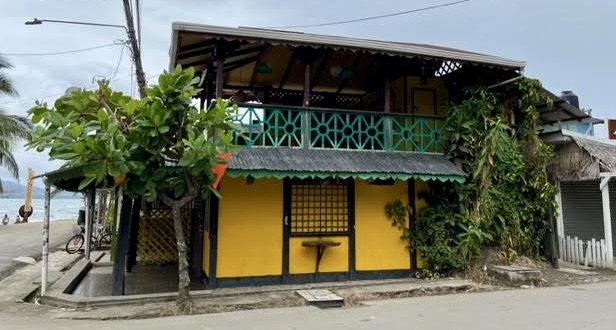
Houses in Cahuita are brightly coloured and distinctively Caribbean in appearance.


Puerto Viejo, the larger community on this coast, is just 20 minutes south of Cahuita. We grabbed a local bus to go and check out the action.
And action it was: cars, buses, trucks, motorcycles and bicycles zoom and roar around Puerto Viejo’s streets. There are few sidewalks to jump onto for safety and tourists would appear to be expendable. There are many, many more hotels, inns, restaurants, shops and tour operators vying for business. Where Cahuita has tour buses full of seniors to check out the national park, Puerto Viejo has the 20-something backpackers to check out the party scene. We began to feel a bit jangled.
Still, lots to recommend a stay here. In Cahuita, the beach is more hidden; in Puerto Viejo, it is easy to access.
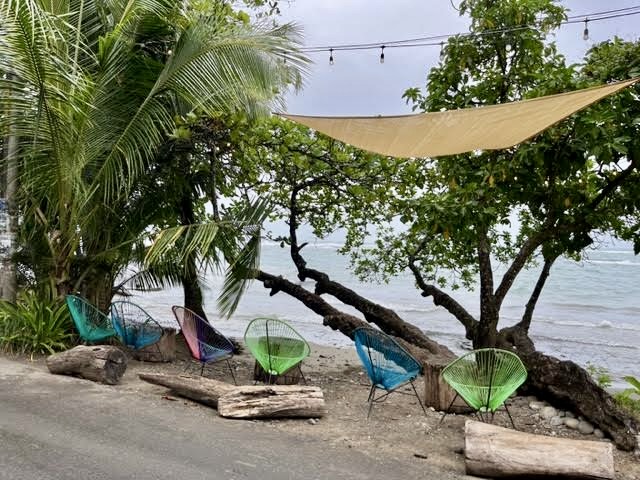
There is a little more commerce on the beach; food trucks, jewellery vendors and fresh produce.
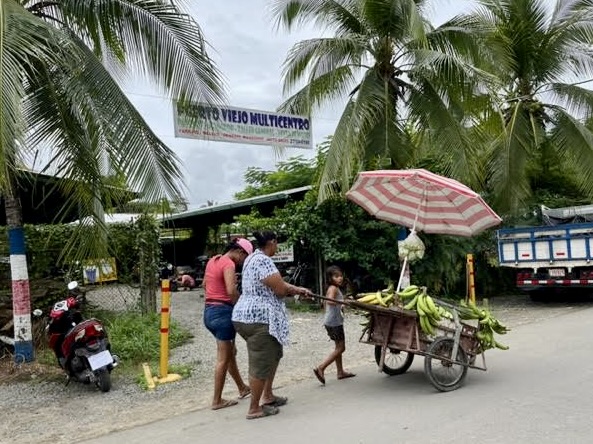
More colourful houses and shops.
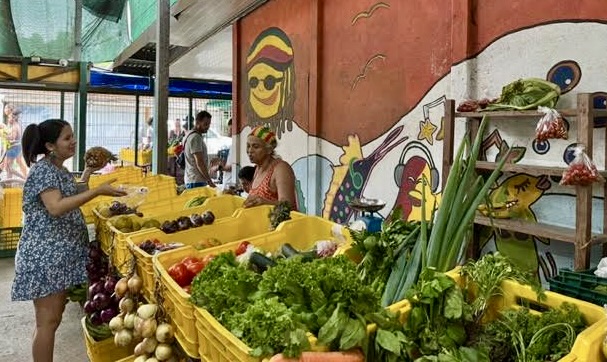
We checked out the Saturday market, but since we’re not cooking here and I’m all good for beachglass bracelets wrapped in hemp, we just people-watched.
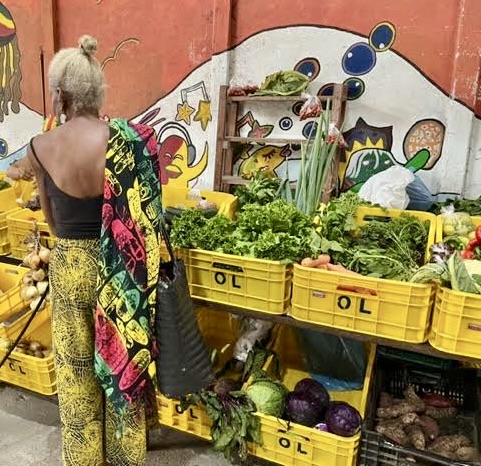
I was so taken with this woman. Tall, elegant, with a dancer’s body, she had a beautiful face, a regal bearing and great style. She was in her late 70’s, possibly her early 80’s. I so wanted to ask to take her photograph, but there are many ways that could go; most of them bad. Would she smile graciously? Stare incredulously? Make me feel like a provincial (white) tourist? Call security?
If any of you have mastered the art of photographing interesting people (with their permission), I would love to know your approach.
I settled for a sneak photo.
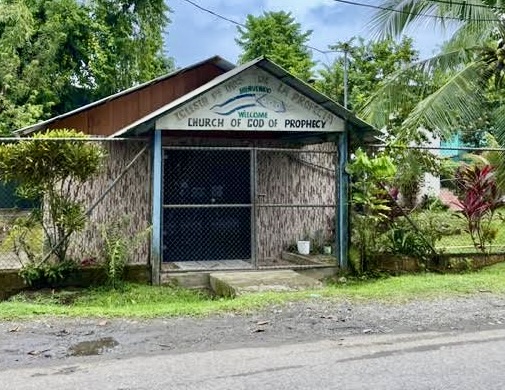
There seemed to be a disproportionate number of churches to population in Puerto Viejo, among them a large Seventh-Day Adventist, an exuberant Baptist church and the Church of God of Prophecy, with a noticeably smaller congregation.
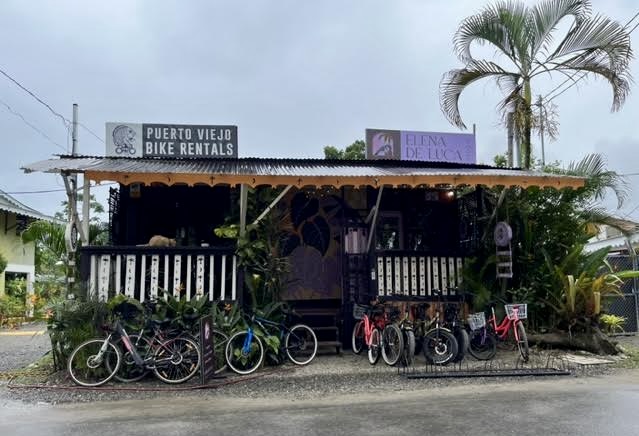
More Puerto Viejo scenes.
Biking – the most efficient way of getting around this town.
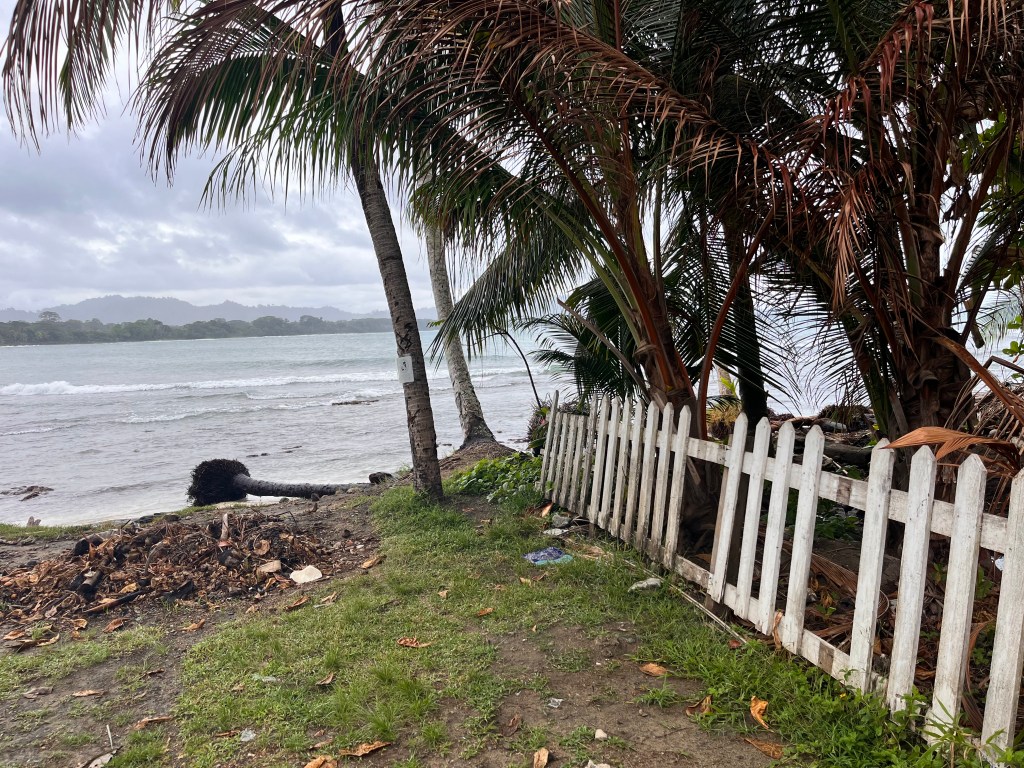
And back to the main attraction, Cahuita National Park, which was founded in 1970 to help protect the coral reefs which circle the park. The reefs are under serious threat from illegal logging, runoff from banana fertilizers and climate change. The reefs support hundreds of fish and while snorkelling is an obvious draw, it is only permitted with a guide and the visibility can be hampered due to the rainy conditions in the area.
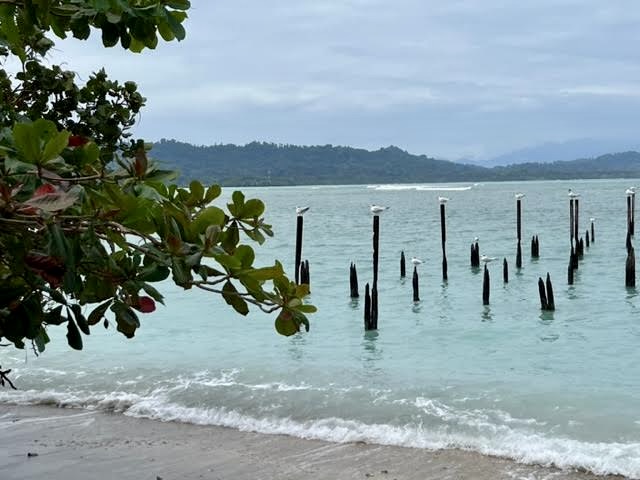
The reef break is visible here, just on the horizon.
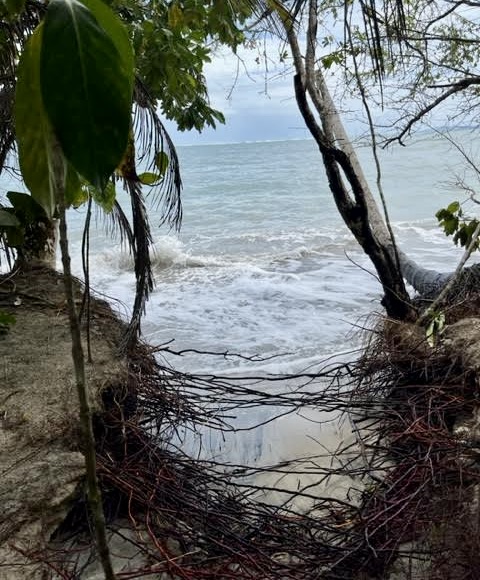
This was one of our favourite national parks. There is no entry fee, but a suggested donation ($5) is appreciated. There is a linear trail that mostly follows the water for 8.3 km. You can walk the whole trail and catch a bus at the other end back to town, or you can puddle along as you please, sit on the beach or wade in the water and just enjoy the beauty of the surroundings. On two separate visits, we saw a large number of animals.
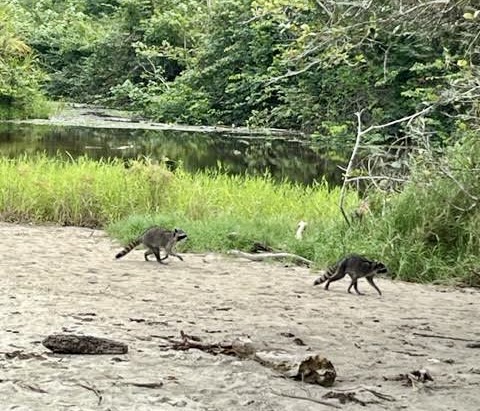
Raccoons, which are like their North American counterparts, but with longer legs.
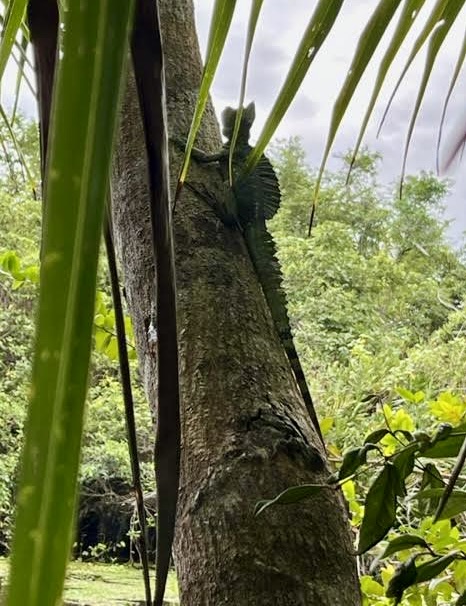
Jesus Christ lizard. So-called because it can “walk on water” – it skims across the surface.
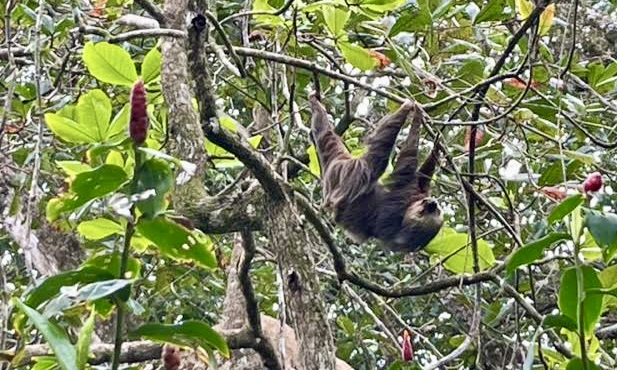
A cooperative sloth. It hung just 20 or 30 feet above the ground, allowing dozens of excited tourists to get their best shots. It scratched its belly; we all laughed. It moved slowly along the branch and we all remarked on the fact that it was moving.
A white-faced monkey in a contemplative state.

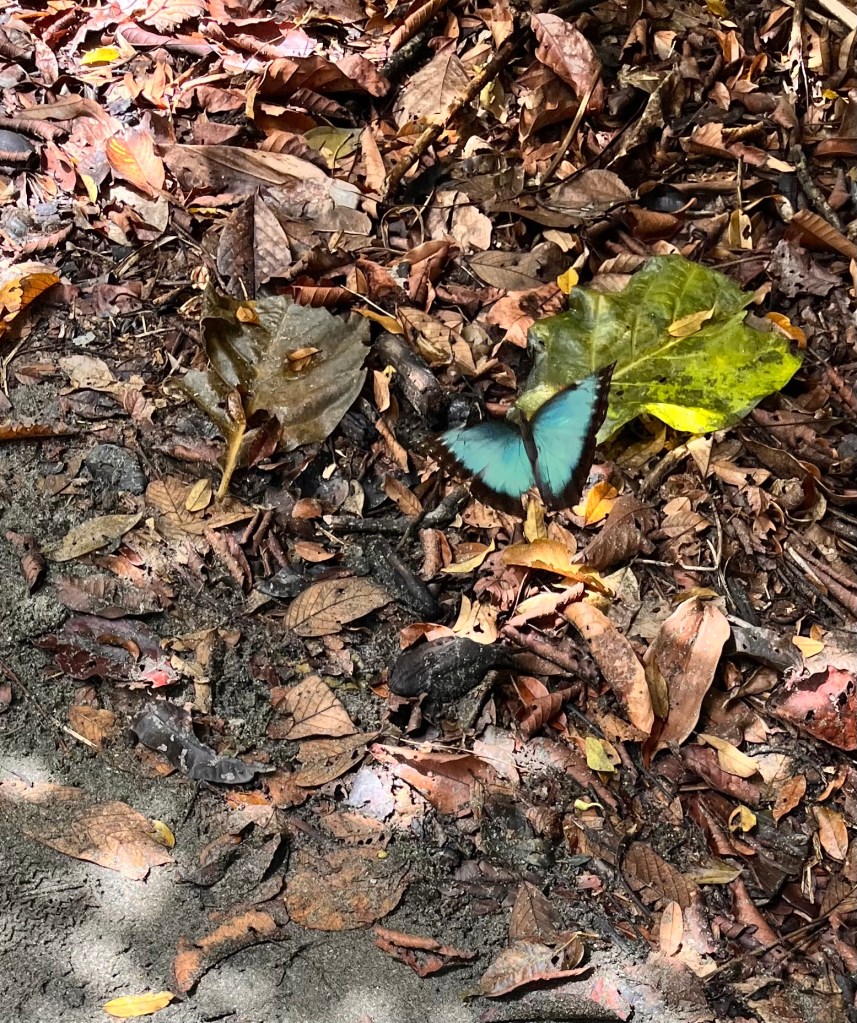
Morpho butterfly. We chased this beautiful butterfly around a few times during our stay here – they are not given to staying put for very long. Finally, Stephen nabbed this shot.
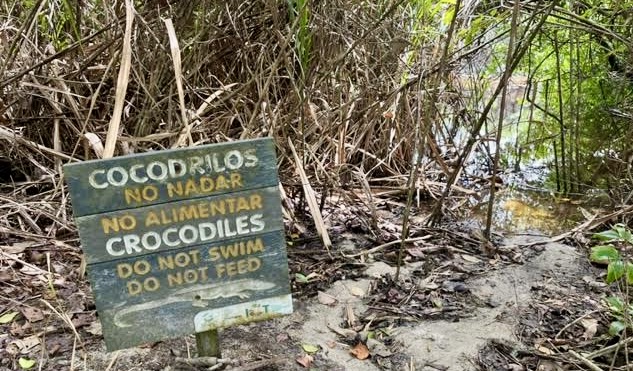
Crocodiles are on everyone’s hit list. As soon as you see this sign, you begin staring into the murky water, wondering if that log might move.
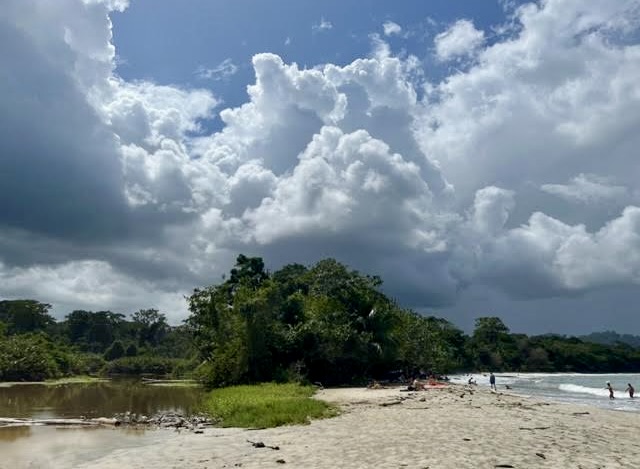
The narrow stretch of sand between the crocodile lagoon and the ocean. I overheard a guide telling his group that he had seen a crocodile in the ocean the day before. True story? It could easily be. Lagoon on the left, ocean on the right and a few unsuspecting tourists wading in the water.
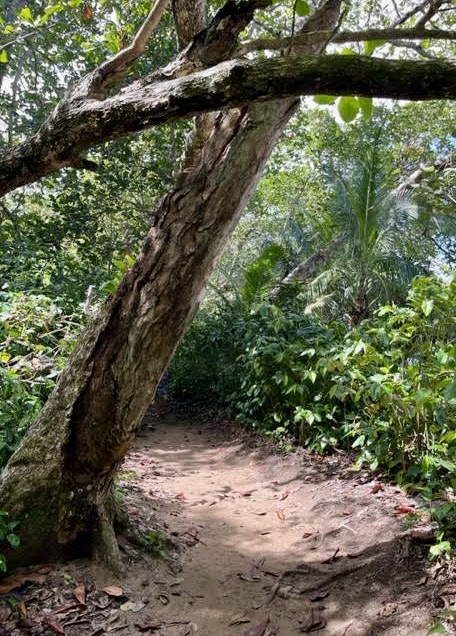
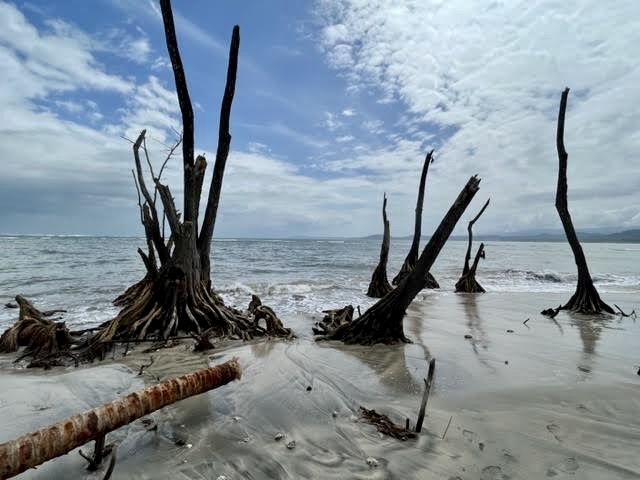
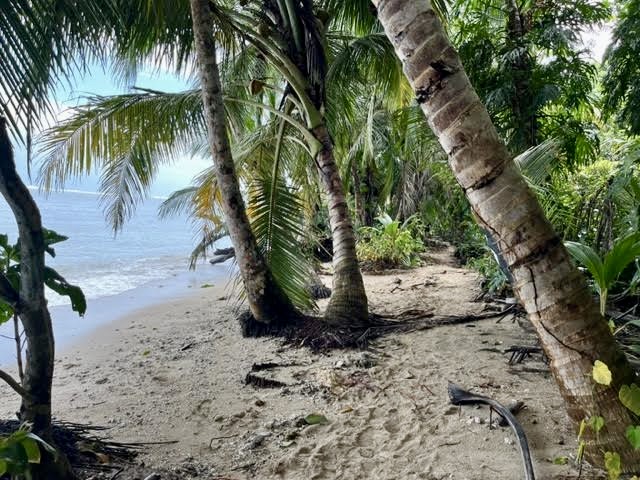
Scenes from the trail.
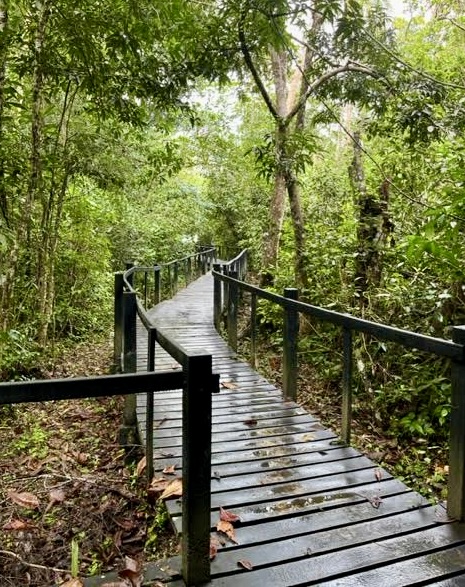
The raised walkway at the end of the park.
We loved everything about our stay in Cahuita. We woke up early every morning to the sounds of birds and monkeys roaring. We sat on our balcony watching a torrential late-afternoon rainfall, talking to our East German neighbours who explained how life in Germany changed when the wall came down.
Costa Rica has been a lot of things – hotter and more humid than we expected, way more expensive than we could have imagined (even some Norwegian travellers were complaining about the prices here!), and it has been so welcoming, the people so friendly, the scenery so dazzling and the animal life so entertaining.
We’re very happy we had the chance to see this country, and now we’re ready for the next adventure. Just five days in Panama City as a layover on our way to Peru, but it will be a complete change of scene. See you all in a few days.
 Leaving Ourselves Behind
🤩 amazing pics
LikeLike
thanks Annie!
LikeLike
I am loving your photos and commentary. I almost……. almost feel like I’m there with you.
Safe travels xo
LikeLike
It would be great if you were here!
LikeLike
Seems like your last few days in CR have been amongst the most relaxing – just hanging out and taking everything in.
I was going to make a joke about the Church of God of Prophecy, but I wasn’t sure how it would be received…
Looking forward to Peru!
LikeLike
Mike, I’m happy you picked up on the appropriateness of commentary about the Church of God Prophecy! As far as I can tell, this church was founded in Tennessee and has a number of churches in Jamaica, among other countries.
Speaking in tongues, the second-coming, and abstinence from alcohol, tobacco and drugs are central tenets, but I don’t know the bible well enough (at all, really) to understand other aspects.
Judging from the size of the church, there are not a lot of followers in Puerto Viejo.
LikeLike
thank you for sharing….awesome !👍👍👍😁🙋🏻♀️
LikeLike
Thanks Heather!
LikeLike
Sounds like you had a wonderful time in Costa Rica and saw some of the things/creatures you were hoping to see while you were there. Looking forward to reading about your next leg of you journey!
LikeLike
We did have a fantastic time in Costa Rica – very happy to have been able to visit there.
LikeLike