When I thought of travelling in the Amazon, the following images came to mind: hammocks slung on sweaty passenger boats slowly drifting into the heart of darkness. Monkey screeches, oppressive heat, jungle smells and a low-key dose of yellow fever (or at least a fever of some sort) thrown in for good measure.
We knew we wanted to visit the Amazon, but we also knew we wanted a modicum of comfort. We checked out a number of packages that featured photos of 20-somethings spear-fishing piranhas (not that there’s a problem with that), but then Stephen found the Sotupa Eco Resort and we were hooked.
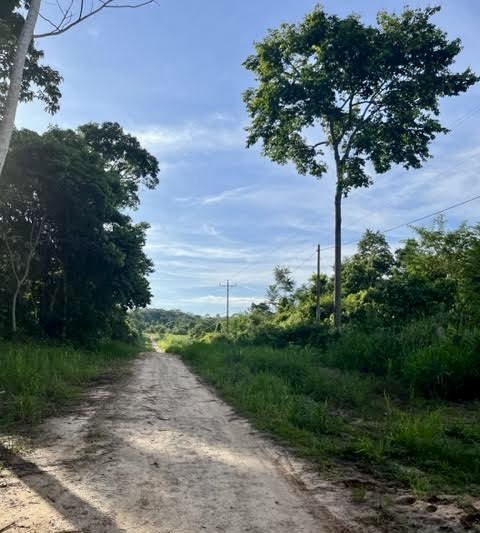
Located on the Tambopata River, about a half-hour drive from the small town of Puerto Maldonado, we arrived after a bumpy drive along a dirt road left rutted and water-filled after a recent downpour..

Our charming host George welcomed us with fresh passionfruit juice and cold cloths to wipe our sweaty faces.
The Sotupa Lodge is small – just six cabins overlooking the river, a large dining room (all three meals included), a small pool and raised covered walkways connecting all the buildings.
Since this is the rainy season (low season), the lodge was just half full – a Swiss couple, a French family and us.
This was our room:

This was our screened deck overlooking the river.
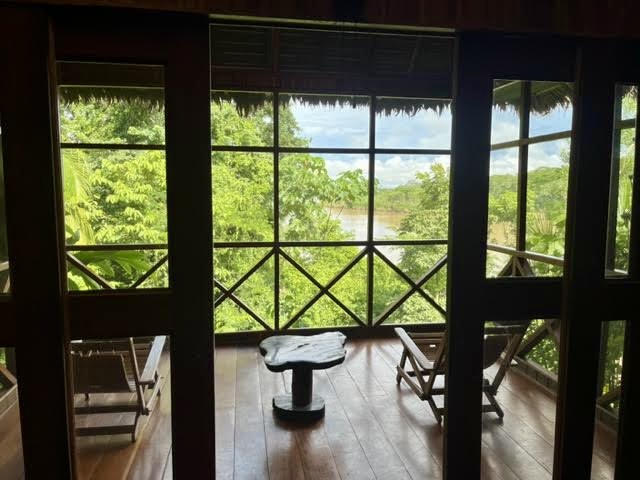
One of a number of sitting areas on the property.

The screened dining hall (also the only source of wifi).
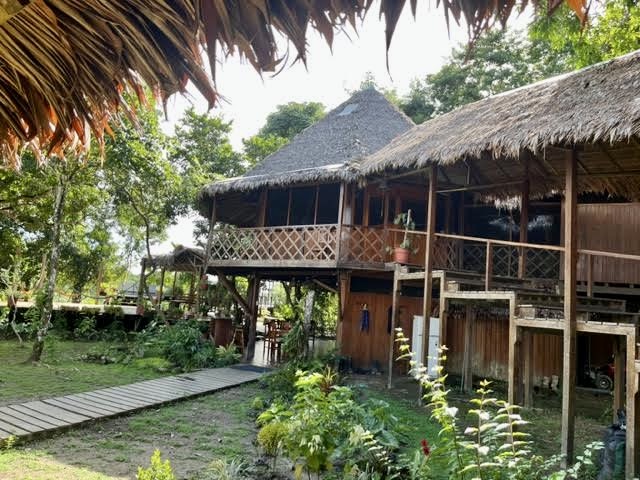
Sotupa Lodge includes six activities: boat ride, night search for caimans, bird-watching, day walk, night walk and kayaking. A couple of hours after we arrived, we joined the rest of the guests on the boat tour, which set out at 4:30.
This was our rustic boat, operated by a sweet driver with an alarmingly temperamental motor. “One by one“, warned our guide, Ciro, as the boat rocked merrily from side to side.
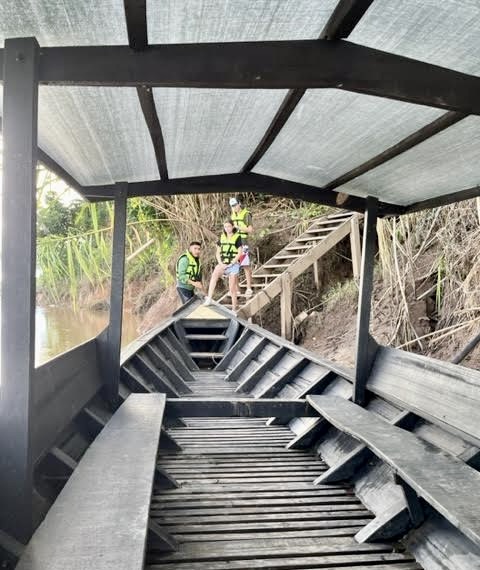
And away we went, heading upriver, with Ciro pointing out various flora and fauna along the way.

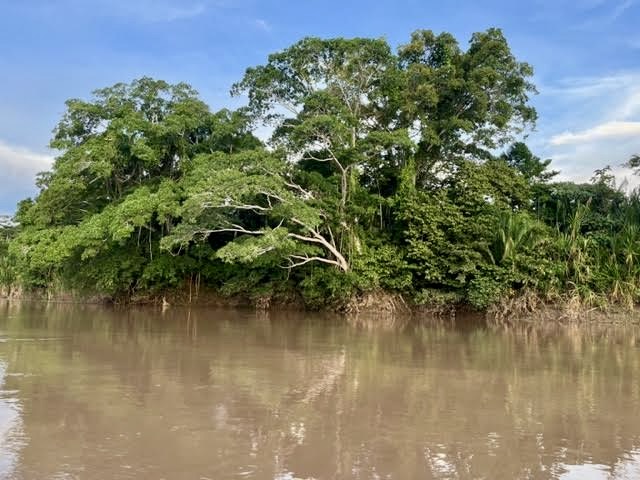
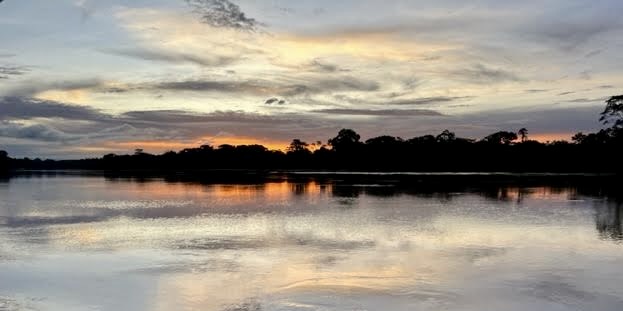
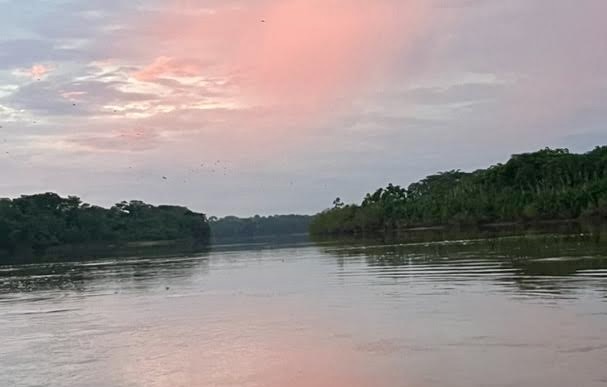
Although this water looks clear in the photo below, it is simply a reflection of the sky. The Tambopata river is brown, brown, brown. This river, part of the Madres de Dios Amazon basin, runs 350 km. long and is a tributary of the Amazon River. A gentle current runs through the river at this point: our guide Ciro talked about his reverence for the river and how much he loves swimming in it.
Ciro grew up in this area and it holds deep meaning for him. He speaks of his incredible childhood in the Amazon and how sad he is to see his 14-year-old brother so attached to his cellphone. Ciro is probably only in his mid-20s and already mourning the adverse changes technology has brought upon the world.

As the sun begins to set, our tour shifts from being a boat tour to being a hunt for caimans.
Caimans are members of the alligator family, but much smaller – typically 6.5 feet long and about 88 lbs. The black caiman are much, much larger – 16.5 feet long and weighing an incredible 2425 lb. They are only found in freshwater areas of South and Central America and they are nocturnal.
Ciro used his flashlight to try and catch their eyes glowing in the dark. As we slowly cruised along the shore, Ciro moved the light up and down the shoreline.
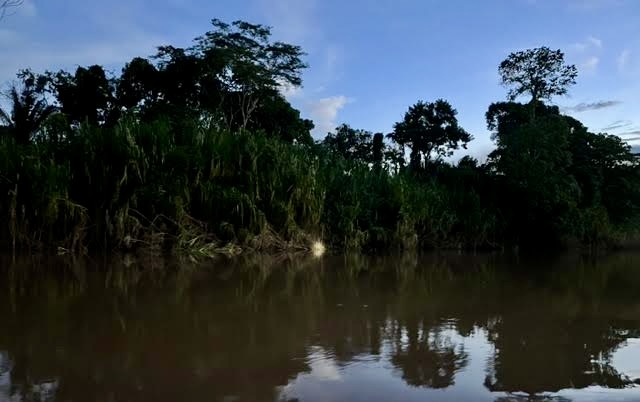
We never did see any adult caimans, but we caught two tiny babies. In the glare of the light, they looked less like alligators and more like newborn mice. Apparently the adult caimans will not attack humans (unlike crocodiles), but between the caimans and the piranhas and who knows what else is lurking in that muddy water, I’m sticking to our swimming pool.
After all of that, we came back to enjoy a huge dinner. The food here is wonderful – massive breakfast buffet at 7:30, lunch and dinner at 1:30 and 7:30 – all of the food sourced locally, but such huge portions.
Lunch and dinner are interchangeable – no midday dainty plate of crackers and cheese or a sandwich. Soup, salad, a half pound of rice and potatoes, with fish or meat. Delicate puddings for dessert. They greeted our pleas for less food with a smile and then simply ignored us.
Next day, Ciro led us on a guided walk in the forest to show us medicinal plants. He is incredibly knowledgable and growing up in the Amazon, well-versed in the power of native medicines.
First up – the Viagra Tree. The bark and leaves are macerated into sugar cane distillates to prepare alcoholic beverages that will enhance male sexual performance. It is also known as “Levantate Lazaro” (bringing Lazarus back from the dead), and told us his grandfather swears by it.
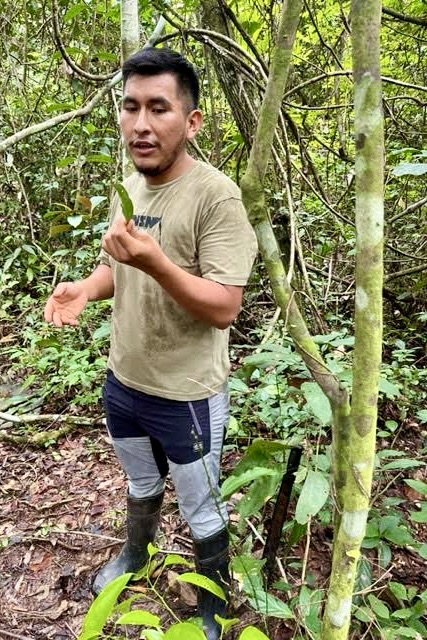
The bark from the una de gato (cat’s claw) plant has a variety of uses – rheumatic pain, arthritis, toothache, wounds.
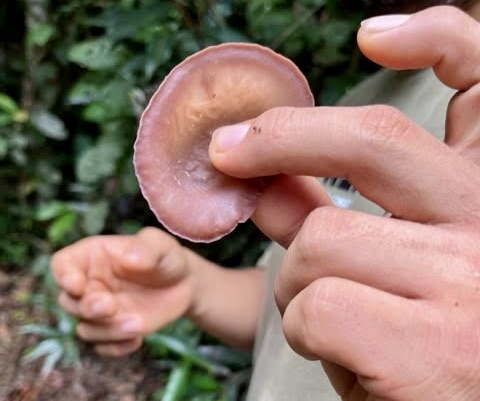
Mushrooms are widely used for both food and medicinal purposes. This rather life-like mushroom, known as Judas Ears, is antioxidant-rich and beneficial in preventing Alzheimers and dementia.
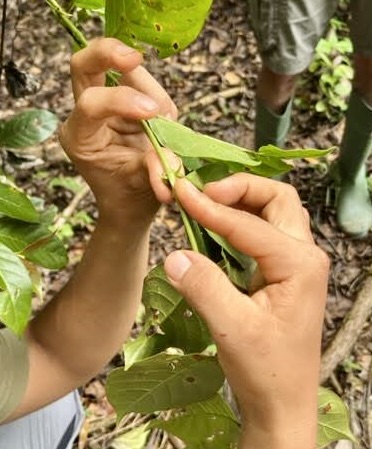
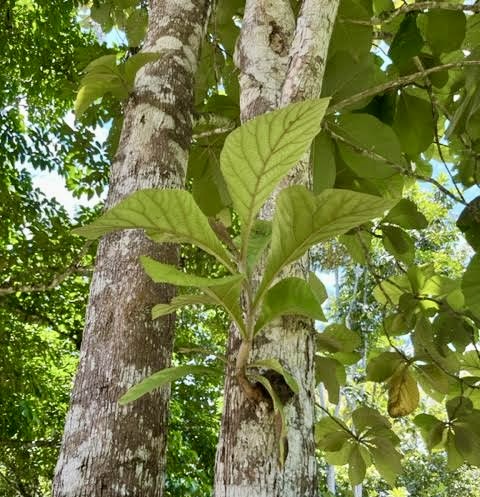
If I run out of lipstick, I can pluck a tiny leaf from this tree, rub it between my fingers and voila – a pretty red-brown stain to smear on my lips.
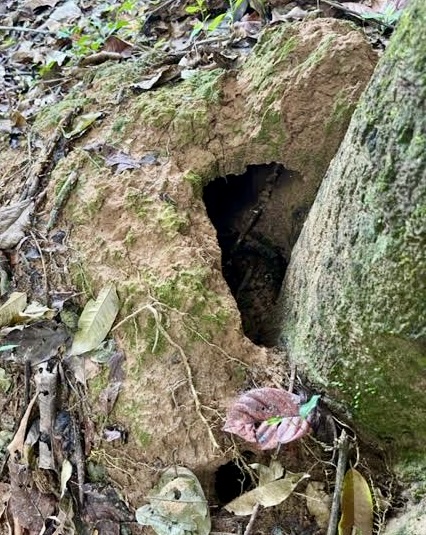
And…the home of an armadillo. Armadillo presumably having a nap.
Our 5:30 am bird-watching expedition was a bust, unfortunately. Just below the property is a clay lick, which draws macaws and parrots every morning to dose up on their daily supplement of magnesium, sodium and potassium that is found in the clay.
We climbed into the boat and pushed off a few metres to watch the clay lick. The process is this: the birds begin their noisy, squawky arrival, circling overhead and landing on the trees above the lick. They are supposed to then descend onto the lick, where they will stay for 30 minutes to one hour, providing fabulous photo ops.
These little devils did not cooperate – we watched them by the dozens in the sky, on the trees and then they took off, presumably for another clay lick further down the river. Disappointing not to see the birds up close, but the morning was peaceful and beautiful.
Our sunrise.
The clay lick.
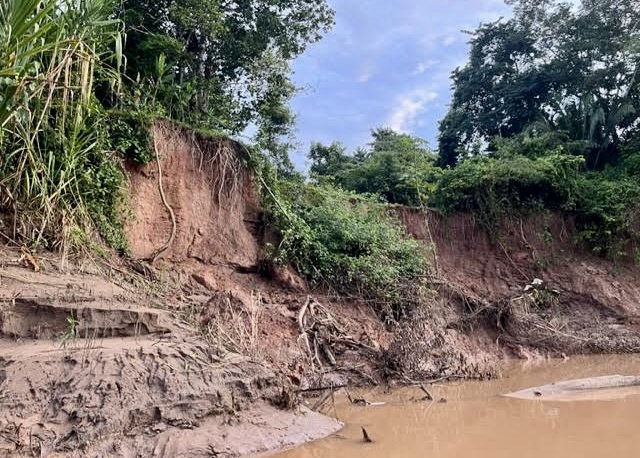
Our disheartened guide.

All was not lost though. We had our chance to see macaws, parrots and dozens of other local fauna in the nearby Amazon Shelter.
The Amazon Shelter was located about five minutes down the road from the lodge.
This shelter was founded over 14 years ago by local animal activist Magali Salinas. It is an NGO, run on a shoestring and kept alive by tourist dollars and volunteer labour. Its mission is to rescue, rehabilitate and release wild animals who have been affected by habitat loss, hunting, mining and illegal trade.
Our guide Olivia is here from the U.K. for a three-month volunteer stint and the experience has cemented her desire to work with animals. Other volunteers we passed on our tour are here for a variety of reasons, but they are all of a type; young, passionately committed, idealistic and hard-working.
These volunteers were cleaning the cages when we walked by.
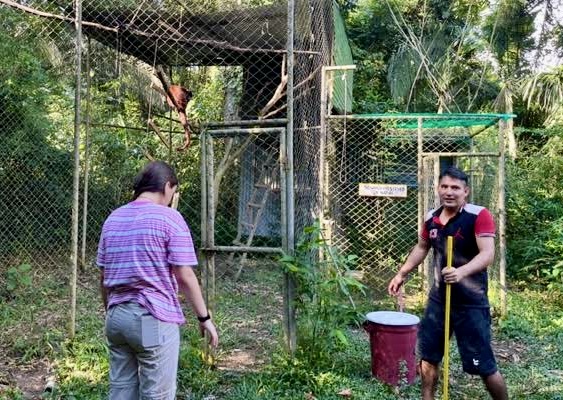
The compound is spread over several shady acres and with just a few exceptions of birds or animals who cannot safely be released again, the goal is to calm the animals down, rehabilitate them and then let them reach the point where they are ready to go, on their own terms.
This monkey, accurately decribed by Olivia as “aggressive” can’t get out of there soon enough, but he’ll have to wait until August – the current earliest release date for many of the animals.

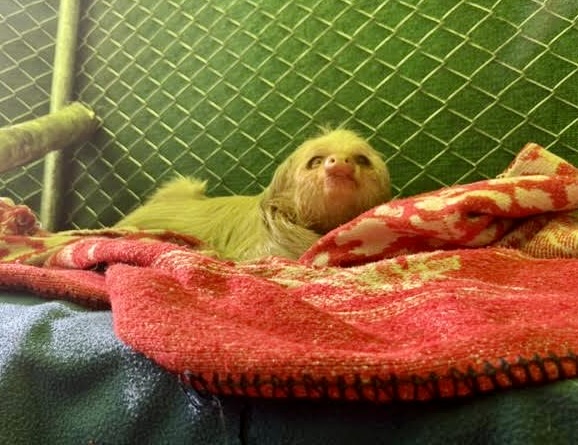
This darling little two-toed sloth isn’t going anywhere and why would she? All cuddled up and much loved by the staff and visitors alike, she has a comfy home for the rest of her days.
The tour took over an hour, with Olivia telling us hair-raising stories about baby monkeys with bullets lodged in their tails, abandoned after their mothers had been shot and taken for food. Macaws with their wings roughly clipped and confined to cages barely the length of their bodies.
Having birds as pets is not uncommon in Latin America and I find the notion of trapping a bird in a cage really upsetting. I’m also not a fan of zoos and we had quite a conversation with Olivia who holds similar views. As she points out, it takes a very long time to change approaches to animal welfare, so they keep their mission kind and inclusive and hope for long-term change.
Olivia had an encyclopedic knowledge of each animal, the state it was in when it entered the shelter, its progress and prognosis, as well as every animal’s name.
We loved the howler monkeys and they loved us right back. They set up quite a show as we lingered by their cages – a deep gutteral chorus that sounds “just like a jaguar“, according to Olivia. Our videos didn’t capture the sound well, but we have this guy in full throttle.
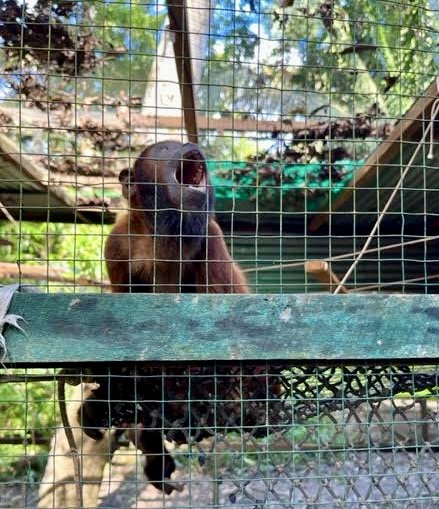
More monkey shots.


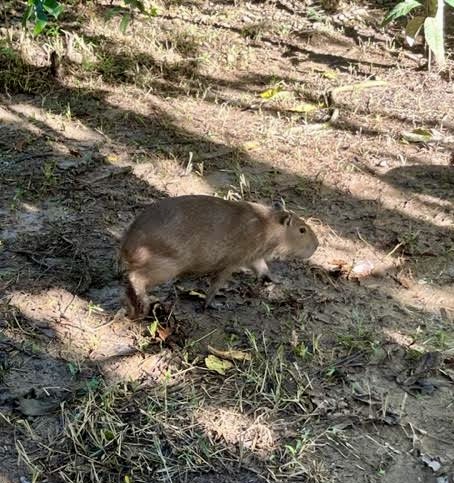
A capybara, the largest rodent in south America, who can grow to 66kg. under normal circumstances. This fellow won’t make it to that size, but as rodent-phobic as I am, I find them extremely endearing.
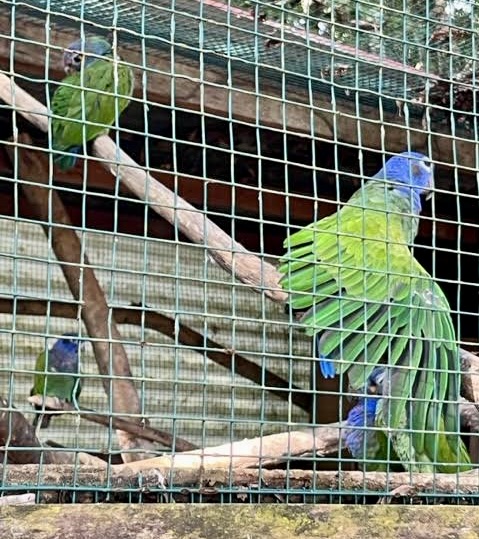
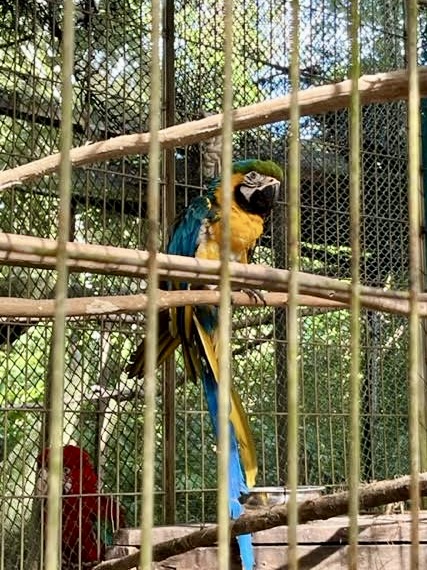
And…the birds. Examples of some of those gorgeous birds that took a pass from the clay lick.

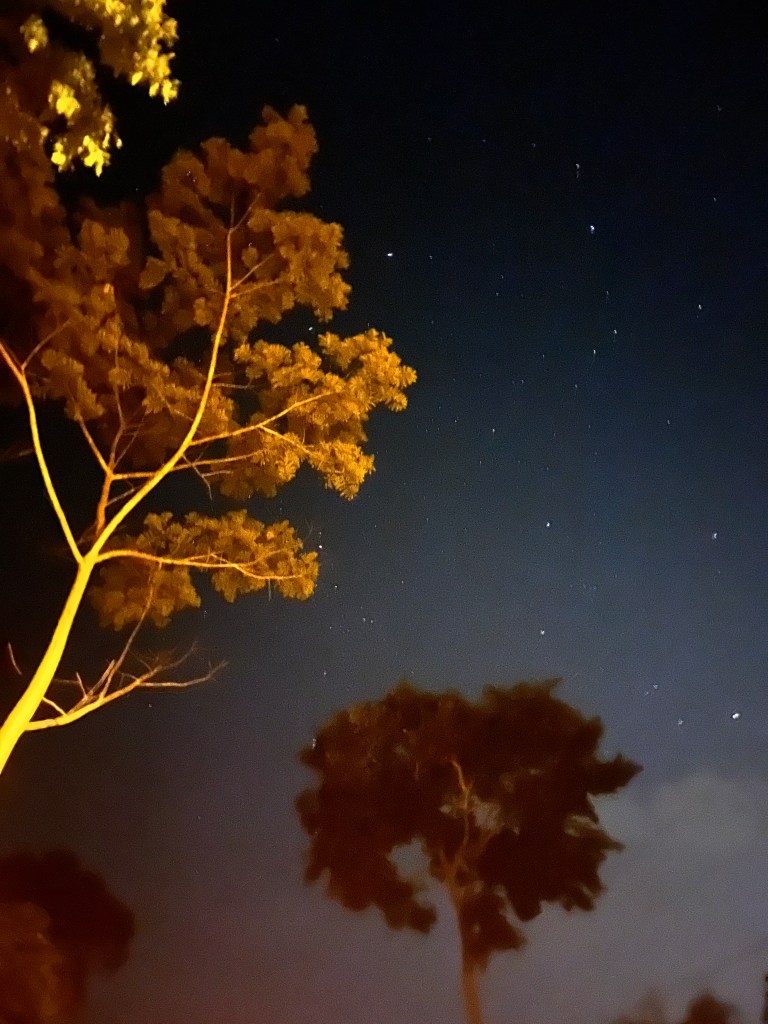
Our final tour was a night walk, which was a rather sweaty, buggy endeavour of trying not to trip over things in the dark and avoid Ciro’s machete as he swung it from time to time, clearing the path. We heard lots of screeches and night sounds, a whole pile of owls who did not want to be seen, as well as a couple of bamboo rats who did (massive creatures high in the canopy.) We waded through mud and creeks in our boots, crossed over dubious bridges and aside from a spectacular night sky, did not really see much.
Still, we so seldom wander though the jungle at night and that experience in itself was worth it. Stephen caught this pretty shot at the end of the walk.
So our Amazon experience has come to an end, and even if it feels a bit “Amazon-lite“, it was still an incredible time here.
Tomorrow we fly back to Cusco, where we will spend a full week.
 Leaving Ourselves Behind
This is a wonderful post! Love your adventure.
LikeLike
Thanks Linda – this trip has definitely been an adventure!
LikeLike
Love this post! Great pics! What a great adventure. Love your room!
LikeLike
Good choice in accommodation. It’s a great way to see the Amazon. We did the same on a trip out of Iquitos. Enjoy your time in Cuzco. I will be anxious to hear about what you see there.
LikeLike
We were lucky with our place in the Amazon – like any place, you never really know until you get there and this was better than we had hoped for.
We’re in Cusco now, trying to cope with nasty head colds and altitude wooziness, but we’re taking it slow. Gorgeous city.
LikeLike
Brings back priceless memories of our Amazon adventure. Can’t wait to hear all the stories. The Eco-Lodge looks peaceful & perfect, rustic but comfy. Spending time with the local guides & lodge staff offers an intriguing glimpse into their world. Hard to imagine the Viagra tree guide’s grandfather’s life….
It is a privilege for us to experience even a sliver of the Amazon world, especially in light of the ongoing deterioration of both the environment and the social life of the residents.
Your blogs have been excellent, Ginny. Thanks for taking us along!
LikeLike
Now that we’ve been to the Amazon, your experiences there will be all the more meaningful to hear about again. Most everyone we know, like you two, went to Iquitos.
We had quite a chat with our guide about the deterioration of the Amazon, and he feels so helpless about how little residents like him can do to fight back. Obviously this is a situation that affects the whole world, but of course, feels deeply impactful to his future.
LikeLike
”Cruising” down the Amazon” – another adventure to add to your ever-expanding bucket list! Loved your accommodations!
LikeLike
That list just seems to keep on growing – I hope we have the stamina to see the many places on our list.
LikeLike
Like gazing into a campfire, I think spending time near a large, slow-moving body of water opens the soul to big thoughts. And to perspective – at 350 kilometres in length, the Tambopata is only a tributary of the Amazon?
LikeLike
I know – I wish we had gone to the Amazon River, not just the basin. I can’t even imagine the size of it. But that was entered in another part of the country, and this seemed to fit in with our travel route a lot easier.
LikeLike