Rumi, the celebrated 13th-century poet, philosopher, scholar and founder of the Sufi mystical cult, would have been 817 years old today. Notable – his works have lasted. They are translated all over the world and he is still considered the “top-selling poet” in the United States.
Not to condense Rumi’s contributions to a few pithy quotes, but in addition to his extensive writings and teachings, he offered simple contemplations such as “Sit, be still and listen.” ; “Patience is the key to joy.”
We were exceptionally lucky to have timed our visit to Konya with the Sufi Music Festival, held every year and culminating in the final day celebration of Rumi’s birthday. Rumi was Iranian and the streets of Konya are full of Iranian tourists who have made the trek here to honour their native son.
Rumi’s contributions to the world are the reason we are in Konya – to visit various holy sites in the city, and to see a performance by the famed Sufi Whirling Dervishes. Normally the shows are held once a week at the Cultural Centre, but because of the festival, there were free shows held in the gardens of the Mevlana Museum every night.
We arrived early last night to claim a good seat and once the show began we realized that our perceptions were all wrong. If you have ever been referred to as “a whirling dervish” (I have), then your understanding is the dance will be one of speed, even frenzy. We couldn’t have been more off-base.
The dervishes appeared on the stage in high hats and long black cloaks and their initial presence was extremely somber and measured. The performance began with small, deliberate movements as the dancers faced one another, took deep bows and slowly moved in a circle.
Then gradually, as the music took on a different tempo, the dancers shed their cloaks to reveal all-white costumes, with long white circular skirts and the whirling began. We were waiting for the lead-up to another of Rumi’s quotes – “Dance until you shatter yourself.”
As you can see, not a lot of frenzy here. The entire show was a variation on this theme and it soon became apparent to us that the whole point of the whirling dervishes was neither speed nor shattering, but rather a physically active meditation. The intention is to let go of the ego by shedding the black cloak, raising the arms to God and spinning in repetitive circles; a symbolic imitation of planets in the solar system circling the sun.
This is a deeply, deeply religious ceremony; profoundly mystical. It is different from ones offered to tourists in other parts of Turkiye and we felt lucky to have witnessed it.
The Sufi ecstatic religious order, founded by Rumi in the 13th century, seek to live life on a higher plane. Rumi believed in the use of poetry, music and dance to reach God and the performance by the Whirling Dervishes was a clear insight into that philosophy.
Rumi is known as Mevlana (our master) in Turkiye, and the Mevlana Museum is dedicated to telling his story. The Museum at night.

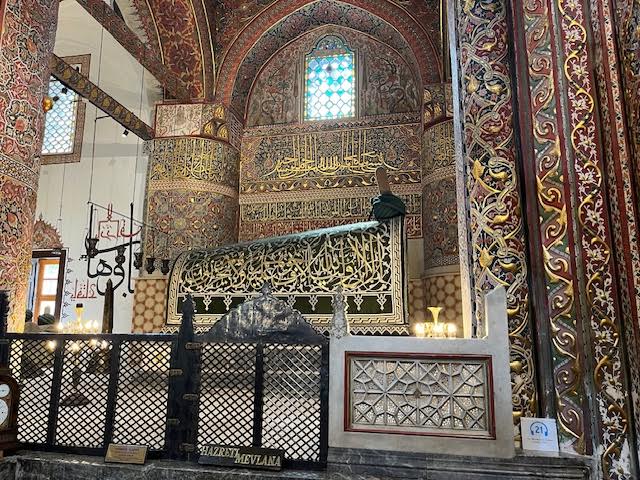
Inside the Museum is Rumi’s mausoleum, where Rumi and his family members are buried.
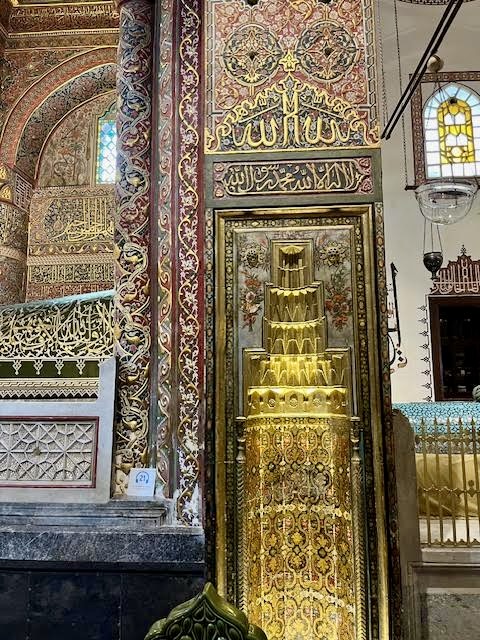
Rumi’s mausoleum.
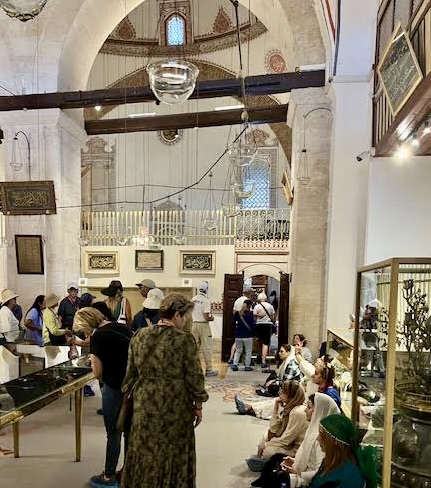
Although the museum was crowded, it was possible to be reflective and take the time to look at Rumi’s hand-written books and artifacts. It was oddly peaceful among the tour groups, not a selfie-taker to be found. These folks were lined along the wall absorbing the atmosphere; many of them in deep meditation.
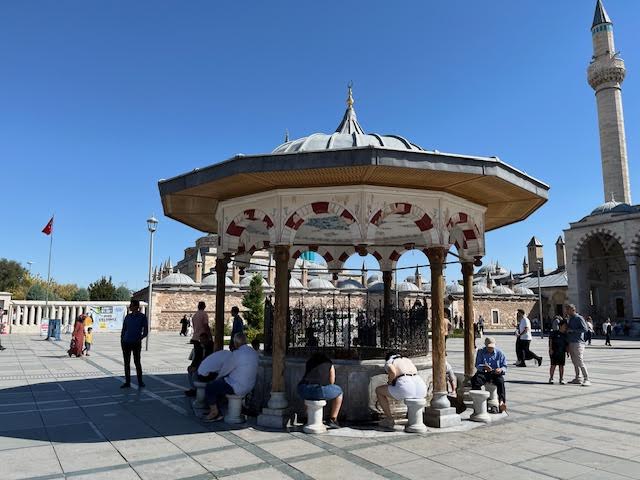
The fountain outside the Museum. Every mosque and religious building has similar fountains; allowing people to wash their hands and face, and their feet.
More of the Museum’s grounds.

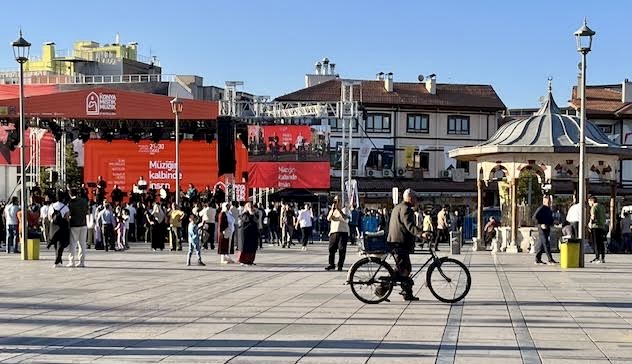
Every night, there were Sufi musical performances in the square in front of the mosque. We sat in the shade of the mosque, listened to music and enjoyed the parade.
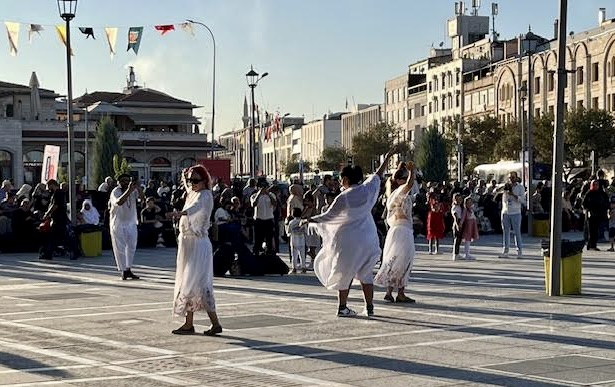
Lots of wannabe “Whirling Dervishes” having their Instagram moment.
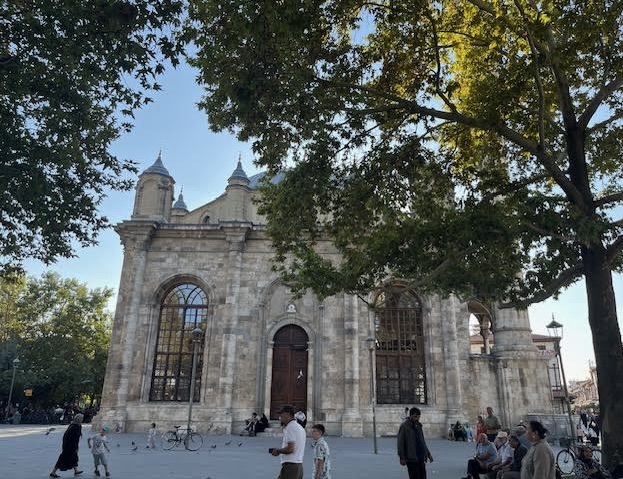
No shortages of mosques in Konya. This one, the Aziza Mosque is tucked away on a side street.

The rear view of the mosque.
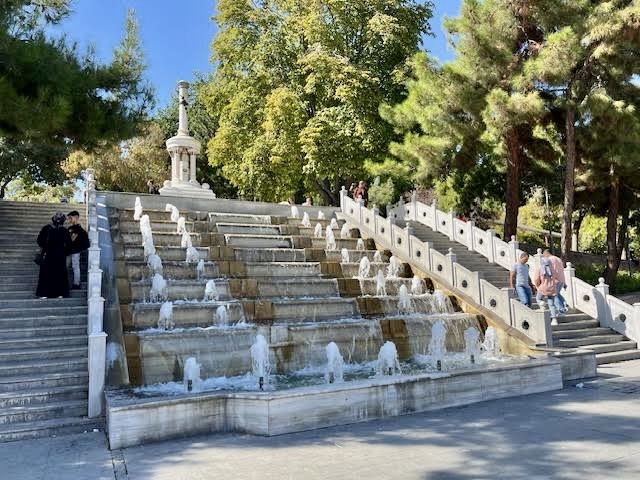
A centrepiece of Konya is Alaadin Hill and Seljuk Palace. This large park rises up in the middle of the city; offering refuge to its residents.
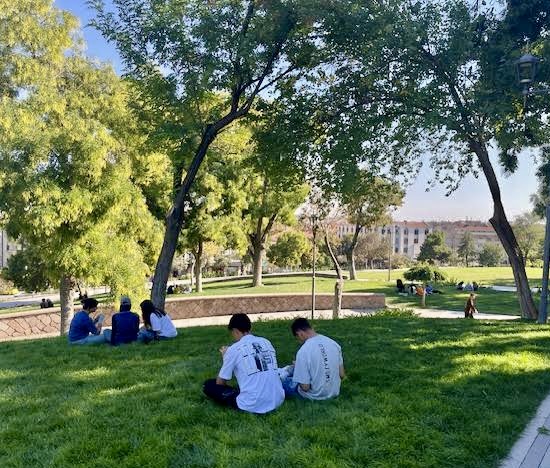
The Seljuk Palace dates to the 12th century. It was here that Rumi founded his Sufi order.
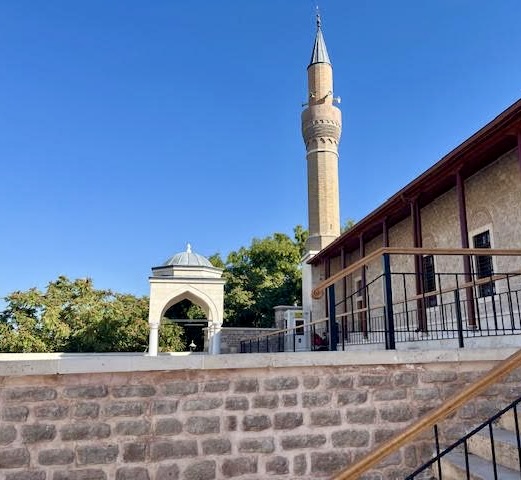
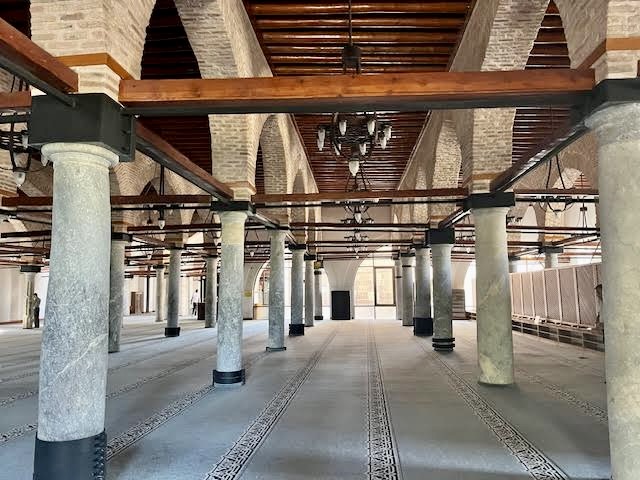
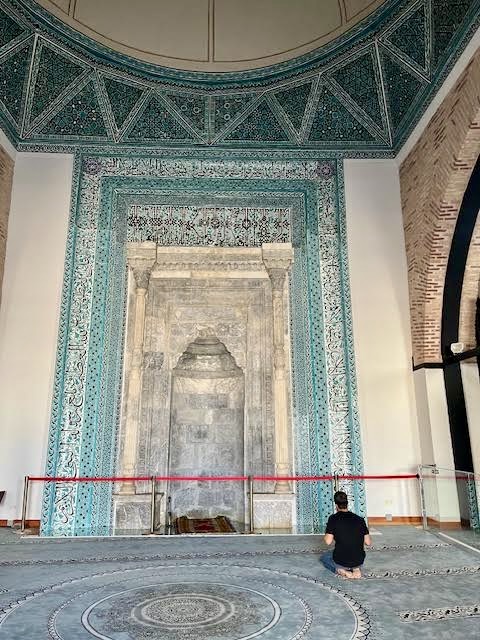
We were centred in the historic part of Konya, but the vast majority of this large city is unremarkable in its architecture. It has a tremendous tram system that runs on two lines across the city; otherwise you do as we did and walk everywhere. I’ve never felt so much like a senior foreign tourist as here; jitterbugging across several lanes of traffic, while the locals (and Stephen) simply step out without a second glance.
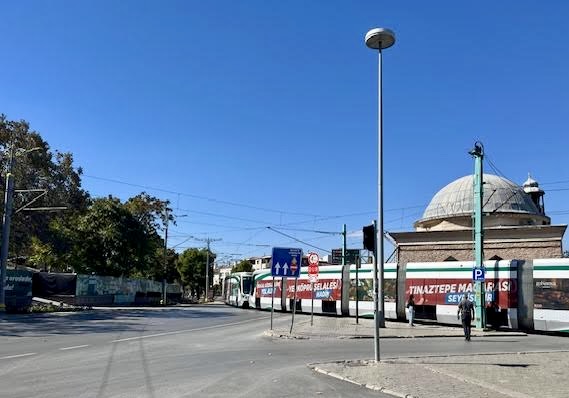
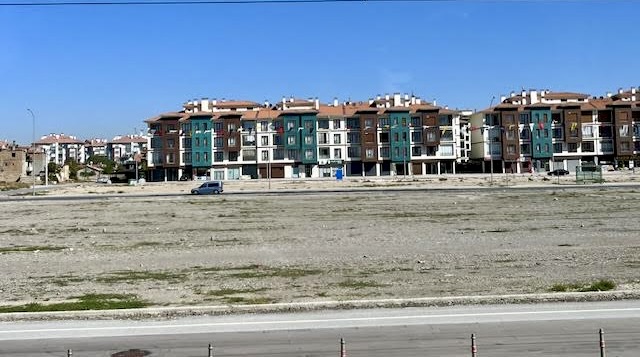
We took a double-decker sightseeing bus tour on our first day. We were definitely the only English-speaking tourists on board and our dual-language commentary reflected that. Five minutes in Turkish, followed by three sentences in heavily-accented incoherent English. Nonetheless, we got a good overview of the city, beginning with this rather bleak landscape that is not untypical.
We keep hearing about Turkiye’s dire economy, and high-density concrete jungles make up a lot of the city. Apparently the average wage is about $400 US a month.
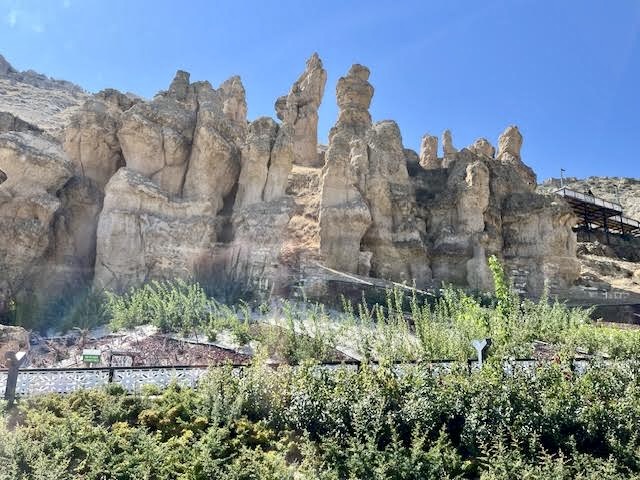
Hoodoos a few miles out of town.
Back in town, some street scenes.
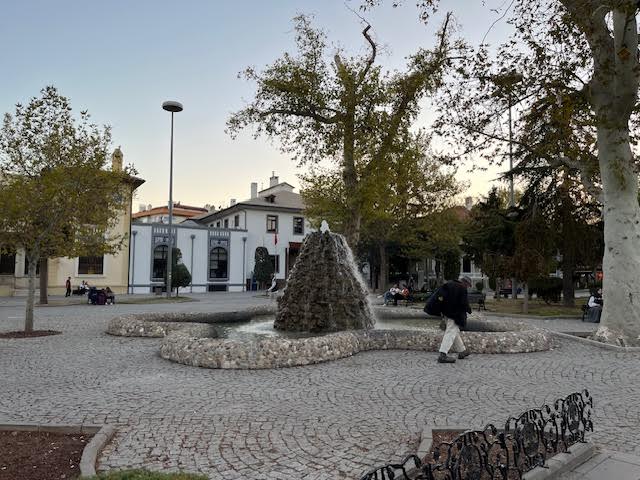
A local park.
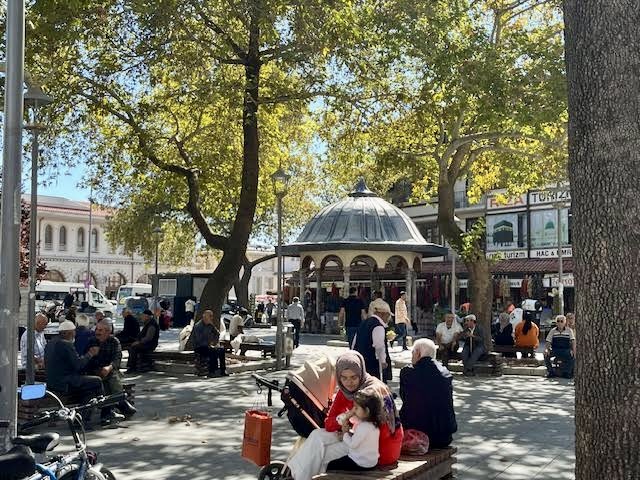
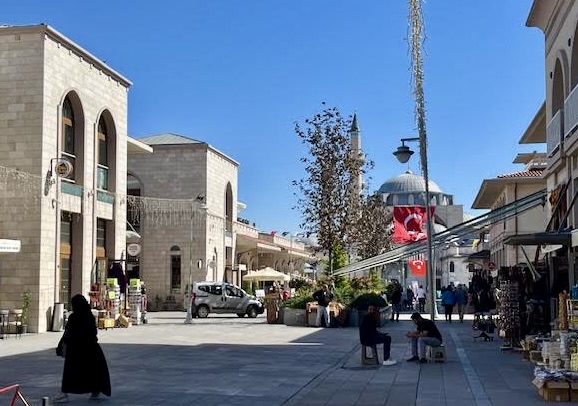
The New Bazaar.
One of the many shops in the New Bazaar selling modest clothing.
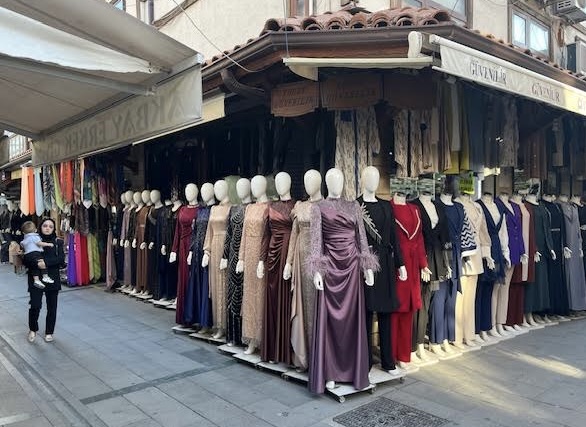
While almost all of Turkiye (99%) is Muslim, it is a secular country where women are free to choose how they practice their religion and dress.
In Konya, where it is especially conservative, we have seen everything from burkas to crop tops (although the crop tops probably belong to tourists).
There are a number of women who do not appear to be religious (no head coverings, bare legs and arms). The majority of women cover their hair, as well as their arms and legs and that distinction would declare them to be religious. After that, we have noticed the following differences: Modest – western-style modern clothing – jeans, leggings, stylish tops, long skirts. More conservative – full-length tunics or dresses in dark colours. More extreme – burkas – black, full coverage, with just the eyes visible. These were not as common, but we did see several women each day in burkas, often in the company of other women who were conservative, but not extreme.
We’ve been told that things are changing in Turkiye, and that many younger women are not opting to wear head coverings, as their mothers and grandmothers did.
I did choose to dress modestly in Konya, out of respect for the local culture, but that will change again as we head south into Kas and Feithye, which are beach areas and heavily touristed and the locals are less conservative. So far, every part of Turkiye has been entirely unique. We look forward to our next adventure in Kas – see you again in a few days.
 Leaving Ourselves Behind
Wonderful blog Ginny. You captured the area well. Glad you enjoyed the Whirling dervish as we did. Ours was not touristy either but an actual service,
Love Lyn
LikeLike
Lyn, I think we have a lot to talk about the next time we see each other.
LikeLike
Oh my, absolutely in awe. Love your pics & the way you are describing it. What an adventure! Wonderful timing that you hit the festival & able to see it from the point of view of the locals. No words.
LikeLike
It was one of those lucky things. It’s funny – we were booking our hotel room a couple of months ago and couldn’t figure out why there were so few rooms and they were somewhat expensive!
LikeLike
You were so lucky to be in Konya at a festive time. We also were able to see the Dervishes in the Rose Garden. What a fabulous experience. Maggie
LikeLike
Yes, ordinarily the only show was the one at the Cultural Centre on Saturday night. It was quite the experience to watch it outdoors in such a beautiful setting. One thing I forgot to mention was that before the show started, three different women walked through the crowd handing out candies. They didn’t seem to be part of the show – it was as though they were taking the role of host upon themselves.
LikeLiked by 1 person
I was particularly interested in reading about Konya because I am a big fan of Rumi. I have a book of his quotes which I just love. I especially enjoyed the video and the explanation of the dance’s meaning. I bet it was a memorable experience for you.
Blessings, Heather
Sent from my iPhone
>
LikeLike
Heather, you will have to tell me the significance of your new handle! You are so right – seeing the show was an extremely memorable experience – one of those moments when you feel like there is no one else in the room, even though we were surrounded by a couple of hundred people.
Once again, we are introduced to a subject (or person) that has really opened a door.
LikeLike
Nice video clip of the dancing. Reminded me of the ballet folklorico that we saw in Mexico City.
LikeLiked by 1 person