It is not hard to get around Japan by train and bus, but in some cases where locations are more remote (such as travelling from Natasugawa ( the Nakasendo Trail) to Kawaguchiko (Mt. Fuji), it will require a few tightly-timed connections.
To get to Kawaguchiko, we walked 5 minutes from our hotel to grab our 15-minute bus ride to the station. Hopped on a train for 108 minutes to our first station. Ran downstairs and across the tracks for our next train (9 minutes between trains – had to fend off a starving husband who thought he had time to buy a sandwich). Hopped on that train for 111 minutes, then disembarked and ran across the platform for our next train (4 minutes between trains). We rode on that train for 7 minutes. Disembarked and had 7 minutes to catch our bus to Kawaguchiko! Fifty-four minutes later and we were dropped off about three minutes from our hotel. That itinerary would have never happened in Canada, but here, where Japanese residents criss-cross their cities and countryside without breaking a sweat (and on time to the minute), it is normal and it works.
It is also normal for young travellers, who never look frazzled, always seem to know exactly what train to take and always remember to buy snacks. (Contrast that with us me, who had by now compulsively checked the itinerary 40 times and had anxiously glanced at my watch at least 300 times.) No idea why making multiple connections had me in such a twist this time – this is Japan; and in the unlikely event we might miss a train, another one will be along soon. I never felt this undone when travelling in Mexico or South America, where missing a connection was a given, and bus schedules were just a suggestion.
So far we have mainly travelled by bullet trains, where you stay put in your reserved seat and zoom along at hundreds of miles an hour. The local trains almost look like subway trains, and are loads of fun – conductors, real clackety train sounds, small stations. We sat in the first car and had this birds-eye view.

We arrived in Kawaguchiko about 3:30 pm, with high hopes of seeing Mt. Fuji, as the sky was quite clear. We checked in, went up to our room, threw open the drapes and this was the sight that greeted us. Mt. Fuji from our hotel room!
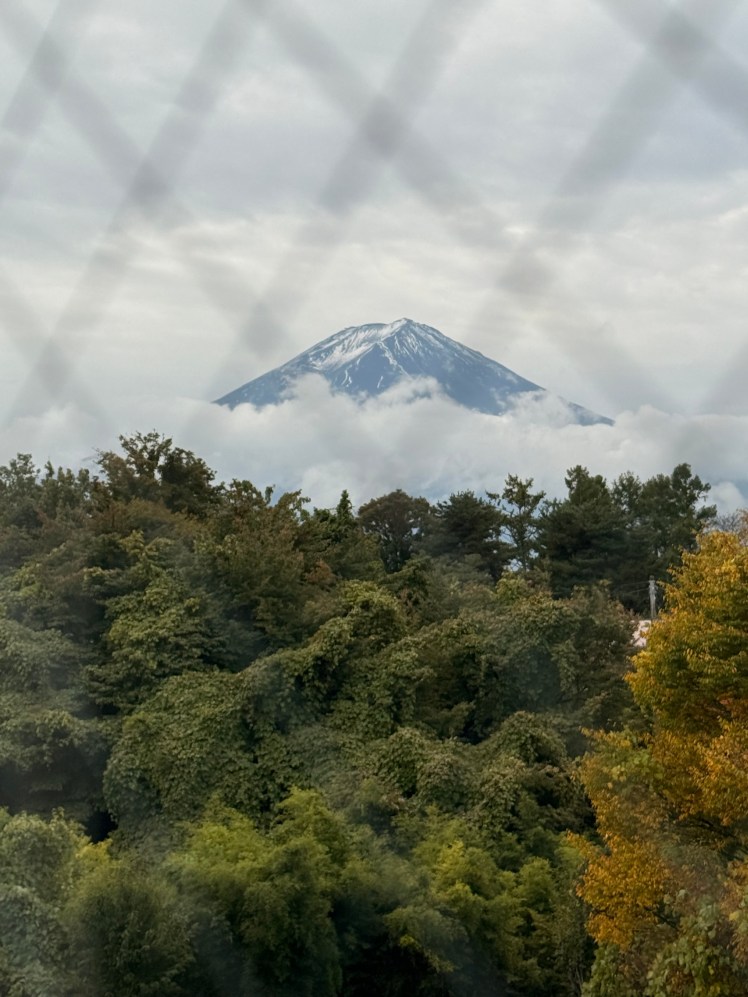
Mt. Fuji is notoriously elusive; being visible only 70-80 days a year. We had chosen to stay in Kawaguchiko as a number of travel sites described it as having the best view, particularly from the northern side of the lake. The fact we were visiting in late October improved our chances – apparently the spring and summer months are poor for viewings.
Lake Kawaguchi is a resort town and while it is pretty enough, Mt. Fuji was the draw. In fact, most tourists come to any of the Five Lakes towns expressly to see Mt. Fuji.
So we headed out in high spirits; our prize already captured. But it only got better.
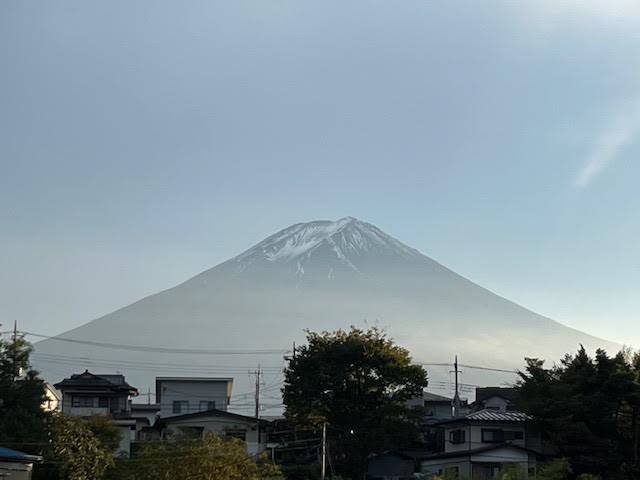
We wondered,”What is it about Mt. Fuji?” What is the appeal (apart from the uncertainty of its sightings), that would make travellers go out of their way to try and include it in their itineraries.
We get the attraction on one level – it in the iconic symbol of Japan, this nearly-perfectly shaped conical volcano, which is one of Japan’s “three holy mountains“, as well as being the tallest. it is considered sacred in the Shinto religion and has been an object of worship since ancient times. Climbing the mountain has been both a religious practice and a modern-day pilgrimage.
Once we saw Mt. Fuji, it made sense. We feel so very lucky to have had the privilege of spending a bit of time here.
Luck was with us all the way along yesterday – glorious weather and numerous sightings. First we went to the Mt. Fuji Ropeway, which is a 3-minute cable car ride to an observation deck for unfettered views.

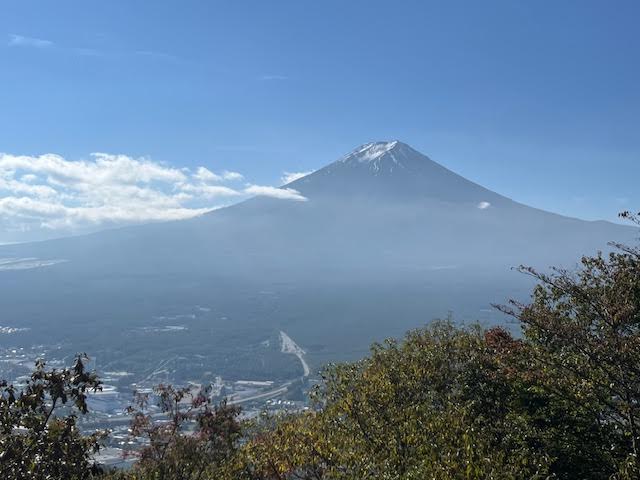
We even took a selfie.

We had zipped right up to the observation deck with almost no wait. Came back down to discover a lineup that was probably over an hour and a half long. Lucky.
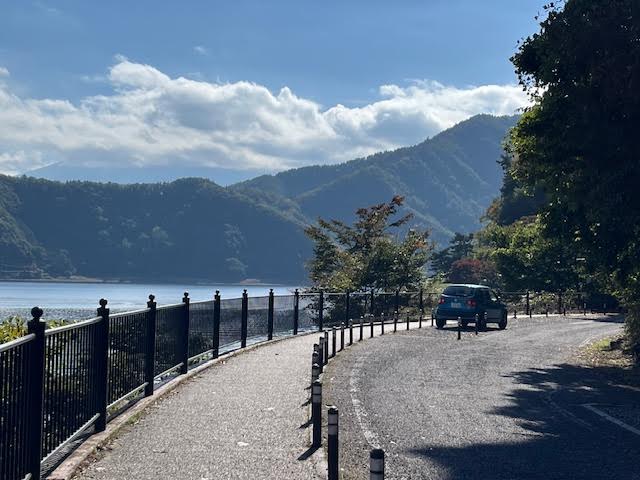
Next up – our 20-km. bike ride around the lake. It was so much fun in every way, with just a couple of small issues. Driving in Japan is on the left-hand side, so it took a tiny bit of adjusting, but we just followed the blue markers and followed the road counter-clockwise. The bigger challenge was that the roads are quite narrow and the traffic was heavy in spots – we just had to pay attention. We had a number of places where the cycling lane was diverted to no-vehicle pathways, which was a delight.
Some photos of our ride.



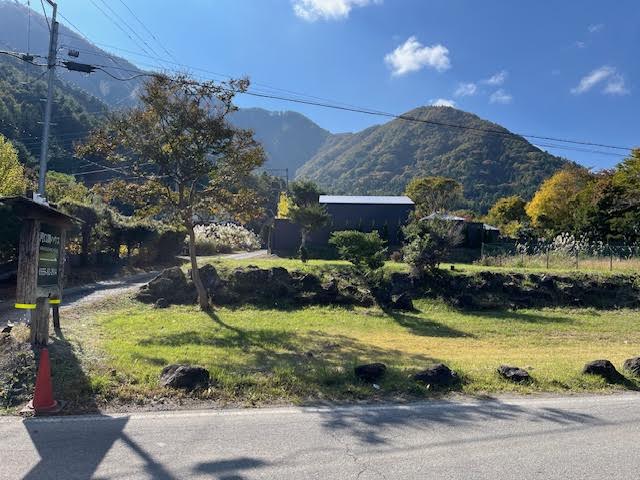
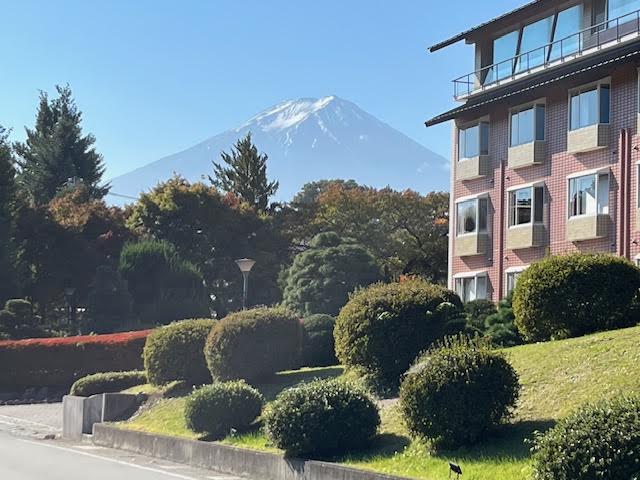
And finally, a late lunch before returning our bikes to town. This place, called Cisco Coffee, is owned by people from San Francisco – that was all the info I could get, but it was such a treat to stop there. Beautiful building, wonderful brunch-y food – they even let us park our bikes right in the walkway.

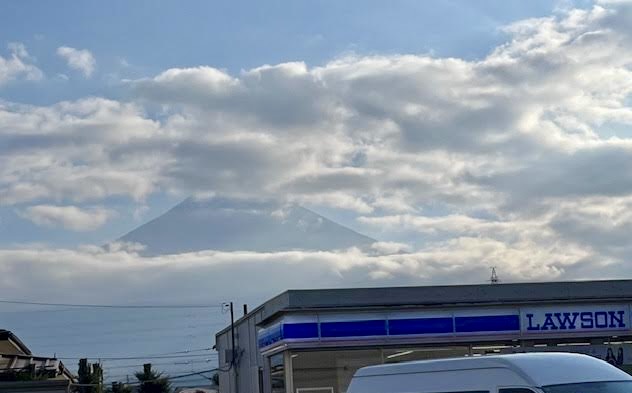
After returning our bikes, we decided to walk to the train station to make arrangements for our upcoming trip to Nikko. We got our tickets sorted and began the walk back to our hotel and in that hour or so, clouds had moved in a bit. We were astonished to walk down the street and see this sight.
Right in front of this barricade is a double-threat – Mt. Fuji, framed by Lawsons. Lawsons, Seven-Eleven and Family Mart are the singular convenience stores that Japan has transformed with their incredible assortment of really good takeout food, Japanese sweets, good coffee etc. No resemblance whatsoever to our convenience stores back home.
What has happened is that so many tourists were wanting to nail the “Fuji-framed-by-Lawsons” money shot that they were endangering themselves by running into traffic.
Thus, the barricade, the annoyed signs and the traffic guard.
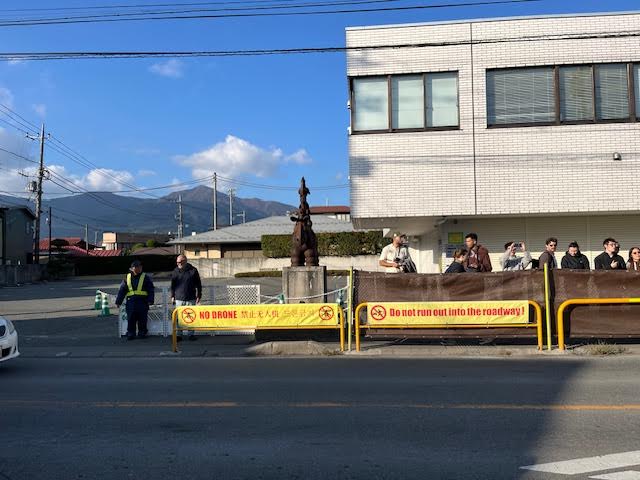
Probably 30 or 40 tourists were lined up, phones in the air, hoping for the clouds to clear and reveal the top of Mt. Fuji.
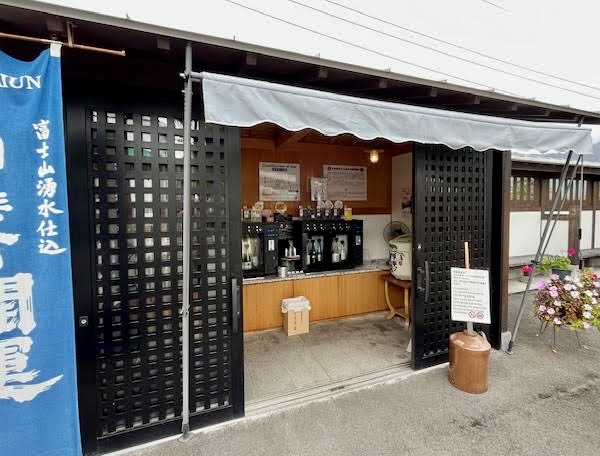
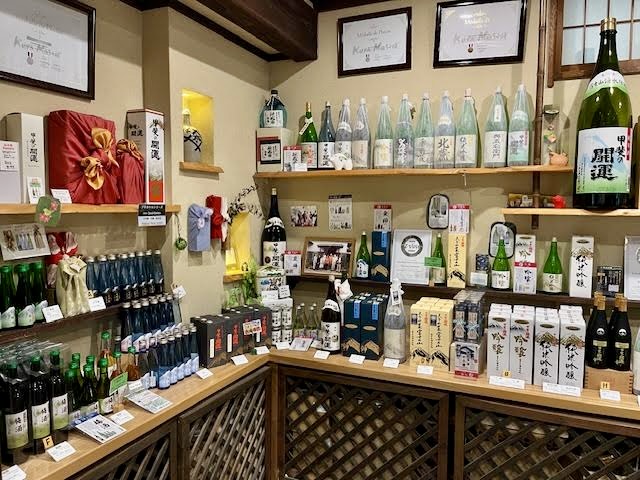
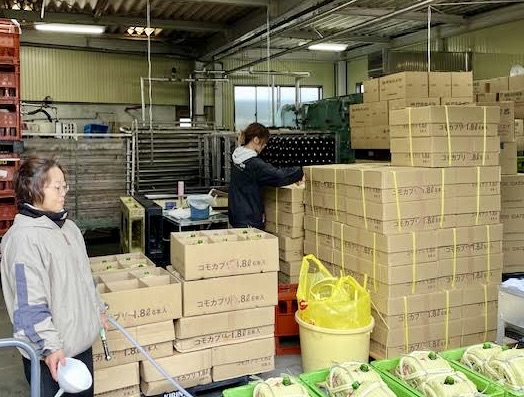
Neither Stephen nor I have ever tried sake, so we decided to go to Ide Sake Brewery for a tasting. We had missed the 9:30 am. brewery tour, which would have been interesting, but the tasting room had lots of good information and we had it to ourselves the entire time.
The showroom
The packing and shipping area
Some information about Ide Sake Brewery

Now, here’s where it got a little complicated. Without the benefit of an English-speaking tour and guide, you are on your own to do the tasting. Each spigot is regulated to dispense roughly an ounce of sake into small plastic cups. They are all well-described, so that part of the self-service worked well.
The lady who sold us our tokens ( 5 tokens per tasting) did not speak English very well and when we inquired about quantity, she sold us two tastings. Fair enough, but we soon realized that 10 tokens equalled 10 ounces – or 5 ounces each.
We tried 8 varieties of sake, one plum liqueur and one whisky, and even with dumping some of it, we were feeling a little tipsy. Our take-away – neither of us are big sake fans, and…don’t drink at 10:30 a.m. The plum liqueur and whisky were enjoyable.
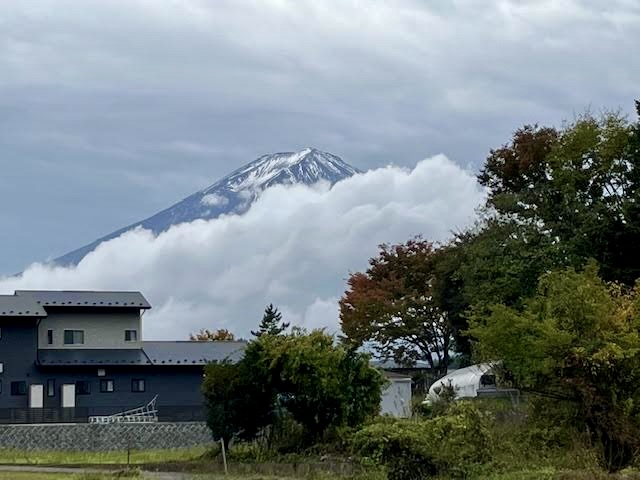
Time for a walk. Different day, different weather and Mt. Fuji was showing a different side.
There are bass and rainbow trout in Lake Kawaguchiko, and we saw a number of people fishing along the shore.
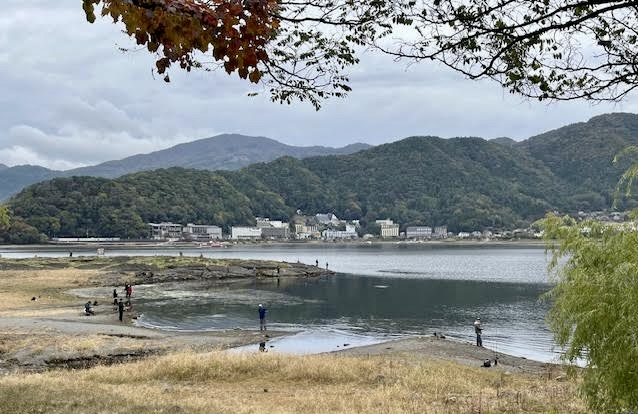
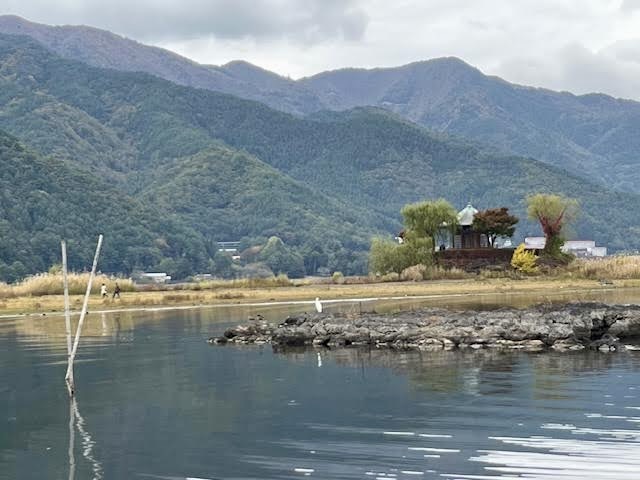
A Japanese painting – a gazebo, a heron, a couple of walkers.
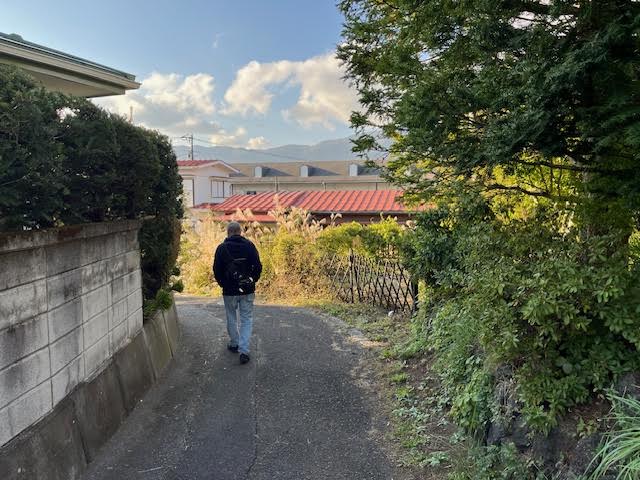
And finally – a most familiar sight – Stephen strolling down a laneway.
We’re off to Nikko tomorrow, a mountain town where we will spend four nights, enjoying the autumn colours. Our last stop before a final 5 nights in Tokyo.
 Leaving Ourselves Behind
Hi Ginny and Stephen,
You were indeed lucky that the weather cooperated and gave you beautiful views of Mt. Fuji! I was particularly taken with your photos as you biked around the lake. What stunning views!
Happy travels, Heather and Mitch
Sent from my iPad
>
LikeLike
We’ll have good memories of our time there. Interesting how you imagine a place one way and it is so different when you see it. I had always thought of Mt. Fuji as being stand-alone with a cherry branch artfully draped in front of it!
LikeLike