The mountain town of Nikko is remarkable in that it has combined diverse and dramatic natural landscapes with ancient and ostentatiously-embellished shrines and temples – all within Nikko National Park.
Our impressions of Japanese temples and shrines so far has been ones of austerity, simplicity and sameness.
So we were not prepared to climb up into a forest of cedars and see this:
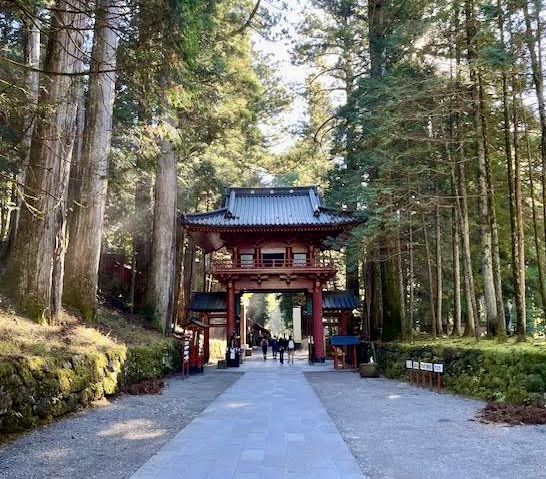
And this:
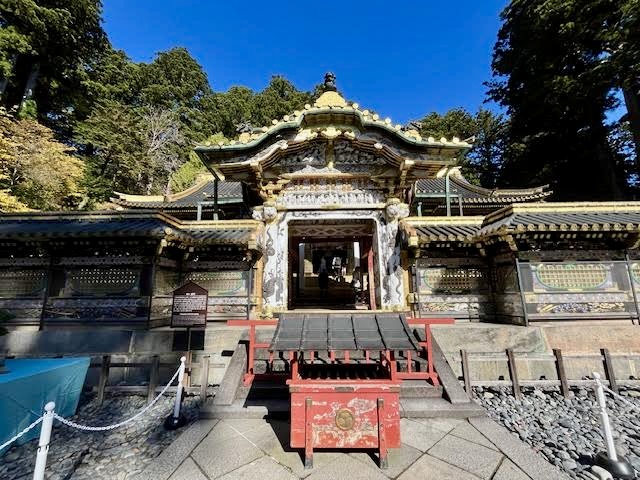
and this:

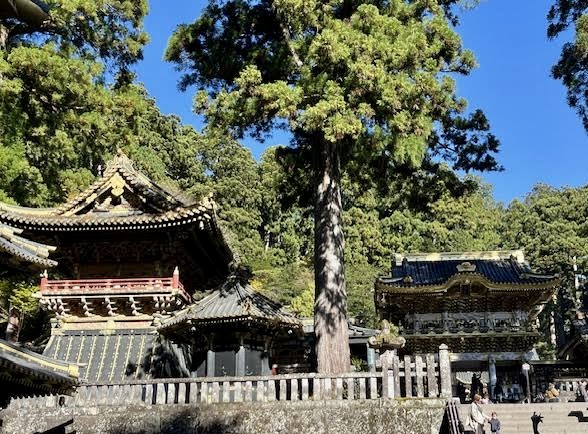
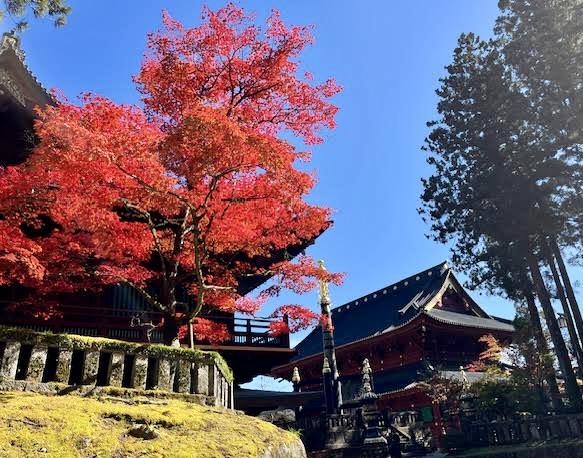
There are several temples and shrines within Nikko National Park, but the most impressive one by far is Toshogu shrine, a memorial to Tokugawa Leyasu who was one of Japan’s most famous military figures. Nikko has been a centre for Shinto and Buddhist worship for centures and Toshugu was built in the 1600’s.
This complex has over a dozen buildings, adorned with 5173 carvings depicting animals, flowers, birds and plants. Every square inch of the shrine and buildings are covered with carvings and gold leaf and the impact is overwhelming.
Among the famous carvings are the Sleeping Cat. If not for the signs, it would be easy to miss this little figure among the ornate carvings over a doorway.


Impossible to miss is the carving of the Three Wise Monkeys, imparting wisdom most of us have forgotten or choose to ignore. “Hear no Evil, Speak no Evil, See no Evil.“
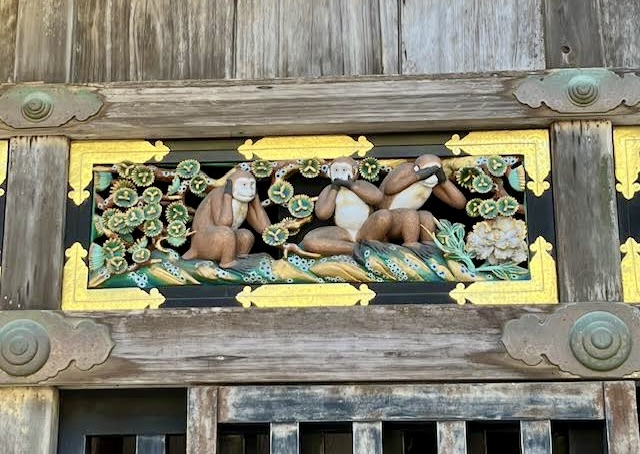
These adorable children have it down, thanks in part to the direction of the older sister, helping her little brother who couldn’t seem to figure out how to cover his eyes without peeking through his fingers.
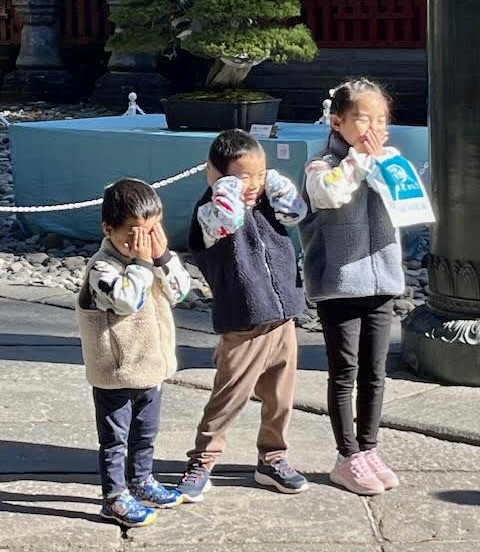
The attention to detail is astonishing.


Throughout the Toshogu Shrine, there were multiple bonsai exhibits.

Futurasan Shrine was founded in 782 by Shodo Shonin, the monk who brought Buddhism to Nikko. It is dedicated to Nikko’s sacred mountains.
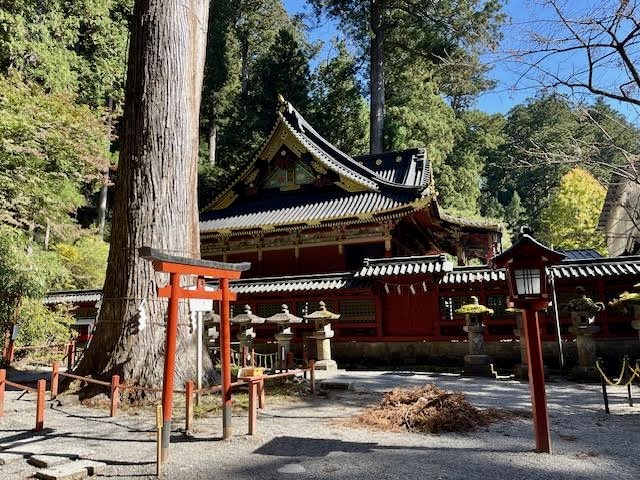
The grounds around this shrine were quiet and contemplative and while the shrine had ornate carvings, it was more subdued and felt more in tune with its natural surroundings.
The last temple we visited was the Rinnoji Temple, and unfortunately I have no photos to show you. The exterior of the shrine was so packed with people I figured I would try for a photo later (and then I forgot.)
Inside the temple are three golden Buddhas, which were quite stunning, but photos were strictly forbidden. That said, strangely there was a photo shoot going on, with two young actors strolling forward to study the Buddhas. After three “cuts”, we finally left, but they never did get their shot while we were there, as tourists kept coming in and staring curiously at them.
All in all, a gorgeous day spent in the woods with the temples. Our first day here we had gone on a self-guided walking tour of Nikko.
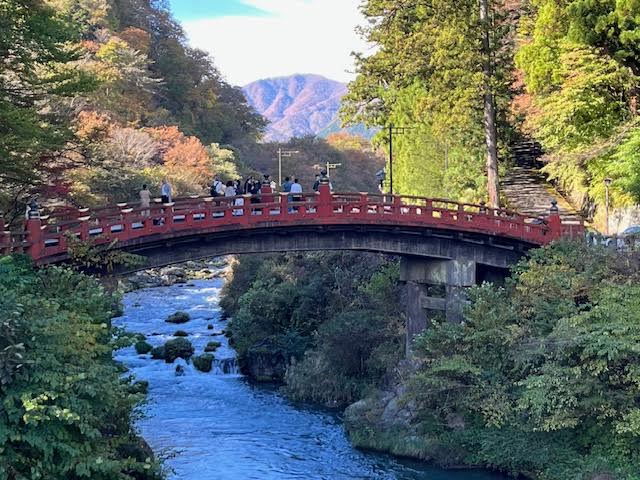
The famous Shinkyo sacred bridge, scene of a million photos.
A line-up of 74 stone Jizo statues.

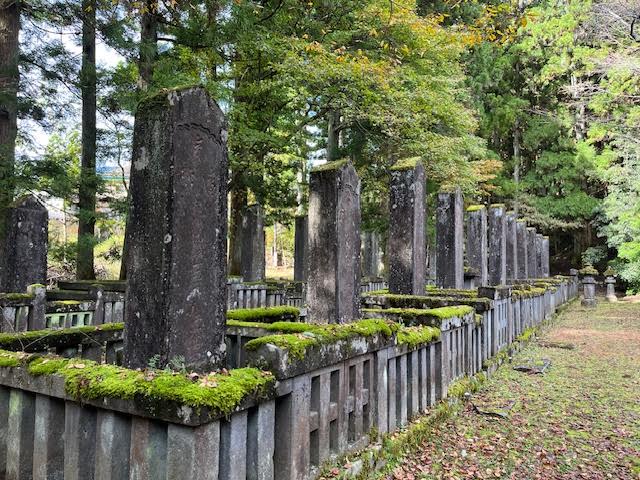
The Gravestone of the Self-Immolations. This ancient cemetery holds 24 three-metre-high gravestones. The first five in the front marked the soldiers who performed ritual suicides after the death of their shogun in 1651. This act was considered one of loyalty, although the sign assured the viewer that this practice has since been outlawed.
The town of Nikko reminded us a bit of Banff – a thriving mountain town with a broad main street lined with shops and restaurants. It was colder here than other parts of Japan, and the sky was so dramatic. A shot from our hotel window.

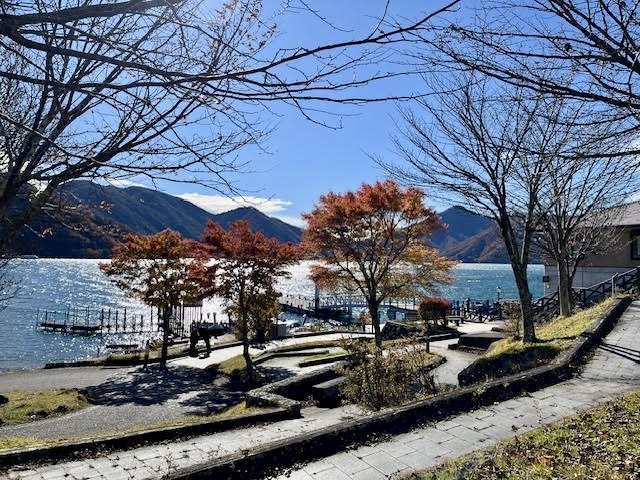
Moving from the spiritual and historical to the natural. Nikko National Park was founded in 1934, making it one of Japan’s oldest parks. Within an hour’s drive of town lies some incredible scenery – waterfalls, mountains, hiking – and Lake Chuzenji.

It is a town that must be packed in the summer, with boat rides and fishing and strolling along the promenade, but we were there on a cold and windy day, and as you can see by the photos – Nikko’s famous fall foliage is almost over.
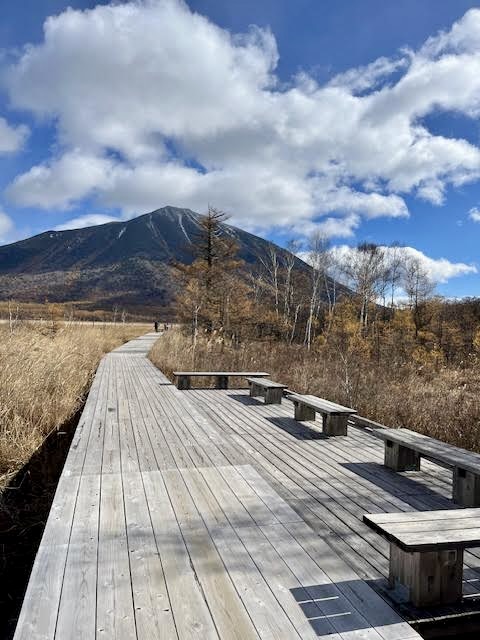
We were keen to hike through the Senjogahara Marsh – a plateau that stretches between the lake and Yumoto Onsen. We walked along a boardwalk trail for about 8 km., beginning at Yudaki Falls, a 70 m. waterfall.

It was clear and bright, but cold enough for snow flurries, which was a reminder that this region will be buried in snow in another month or so.

The Senjogahara Marsh is 1400 m. above sea level, or as the sign charmingly says, “1400 m. Above the Sea.” The light was a bit different up there – clear and sharp.

We finished our hike at Ryuzu Falls, which was more of a horizontal than a straight vertical drop over lava stones.

We loved our time in Nikko. It provided yet another side of Japan to enjoy, and we were blessed with weather as we certainly feel winter is just around the corner here.
Tomorrow we’re back to warmer temps for our last five days in Japan, in Tokyo. We are very excited to have another crack at this fascinating city – time will zip by.
See you in a few days.
 Leaving Ourselves Behind
a amazing art work and design ..very nice 😊
LikeLike
Vikki – the art work and craftsmanship is amazing – you have to wonder how long it took to create these masterpieces.
LikeLike
Nikko looks lovely. How fortunate you are with the weather. Your photography is as always amazing. I would have loved that walk amongst the cedars too. Keep on enjoying.
LOVE Lyn
LikeLike
Lyn, there are so many amazing hikes here – just wasn’t enough time.
LikeLike
thanks for your beautiful photos and interesting stories.
You must be in great shape with all that walking!
would love to see you again this winter when you are in Nanaimo, or if you come to Chemainus there is lots to see here too!
love
Rohana
LikeLike
I’d love to see you Rohana once we’re back – I’d love you to come to our place!
LikeLike
Hi Ginny and Stephen,
I expect there will be quite a contrast between the peace and tranquility you have experienced in the country versus the hustle and bustle of Tokyo! That’s likely true of most places but especially so in a city like Tokyo … enjoy all that it has to offer!
Blessings, Heather and Mitch
Sent from my iPad
>
LikeLike
Oh Heather – we are in Tokyo now and absolutely ramped up! The contrast could not be more pronounced – loving it for a few days, but it’s intense.
LikeLike