Petronas Towers are to Kuala Lumpur what the Eiffel Tower is to Paris: the instantly recognizable landmark that graces a million T-shirts, keychains, coffee mugs and shopping bags.
“They can’t be that great,” I thought to myself, as I have a deep and abiding aversion to tourist traps. In fact, Petronas Towers are pretty great and they’re not a tourist trap. Their stunning presence dominates the city’s downtown, and at 1483 ft. and 88-storeys, they are the tallest twin towers in the world.
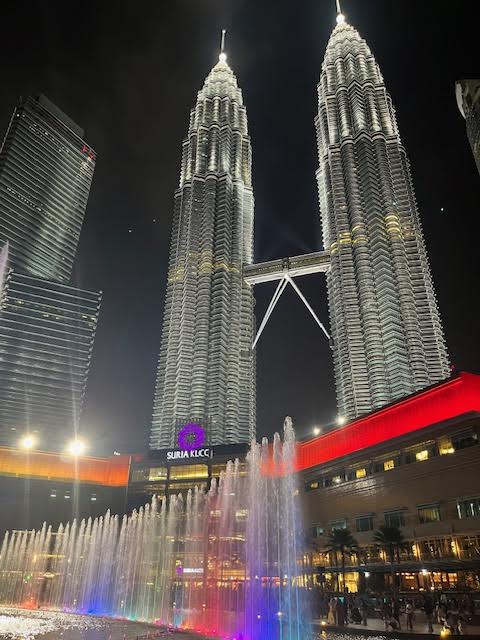
Every evening, there are two Light Symphony Shows, with the fountains synchronized to colour, movement and music. It was so enjoyable to be part of the crowds of tourists and locals, enjoying the warm night air and the incredible people-watching. We’ve been there twice, and the first night was a great start to our trip.
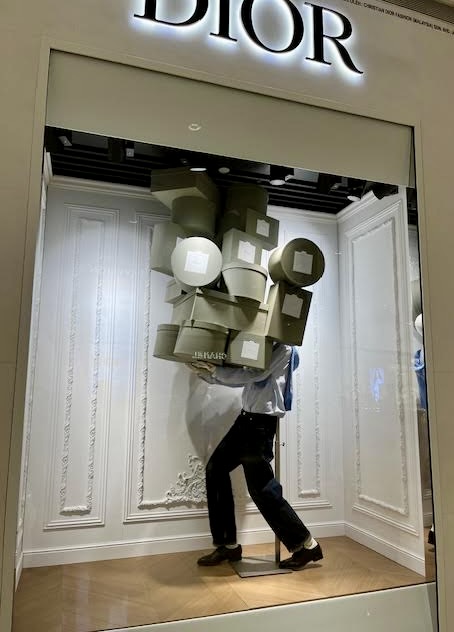
The Petronas Towers are anchored to a giant mall; one of many fabulous malls in the city. In North America, malls seem to be suffering, but that is far from the case in Asia. We wandered through two of them, primarily to get out of the mid-day heat and humidity and gaze at the luxury stores in air-conditioned comfort.
In the rarified world populated by Jimmy Choo, Fendi and Tory Burch, we can only dream. Even the wealthy have their problems, if this window display is anything to go by. This poor fellow – many, many objets weighing down his slight frame – it all hardly seems worth it.
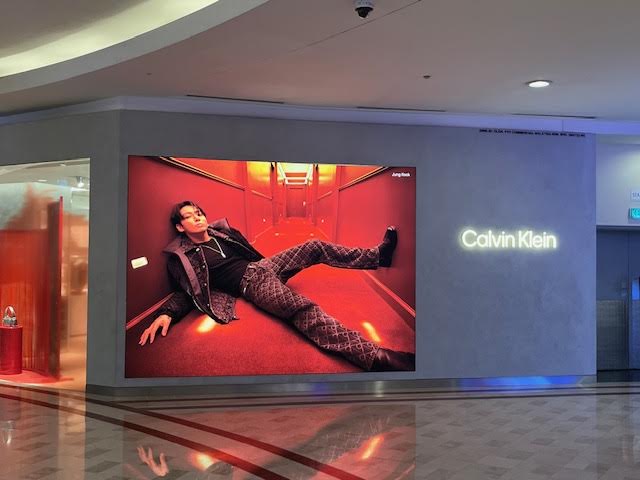
His lower-rent cousin, on the other hand, is having way more fun. Played by South Korean boy band singer, Jung Kook, this is what happens when you let something get between you and your Calvins. You find yourself wasted, splayed in an alarmingly red hallway, far from home.
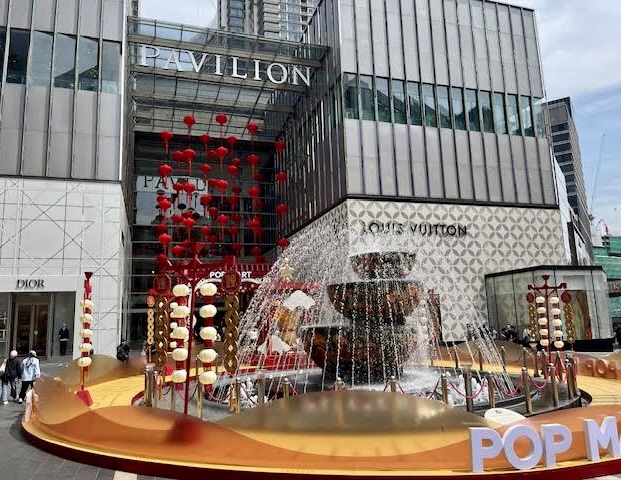
Of course, not every visit to a fabulous Asian mall requires a backstory. Just enjoy the sights and the Chinese New Year’s trimmings.
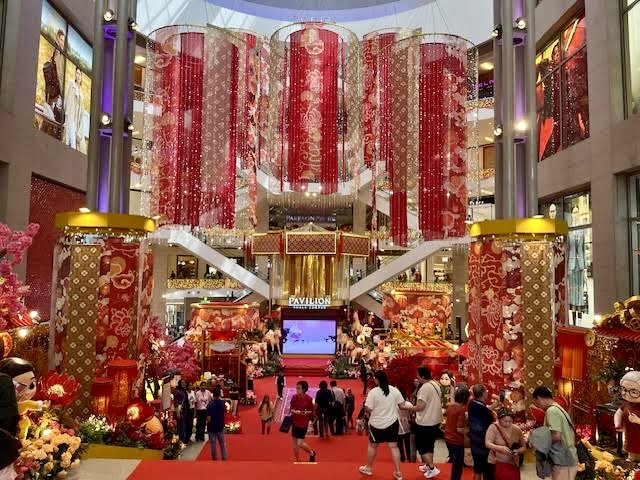
The famous Pavilion mall.
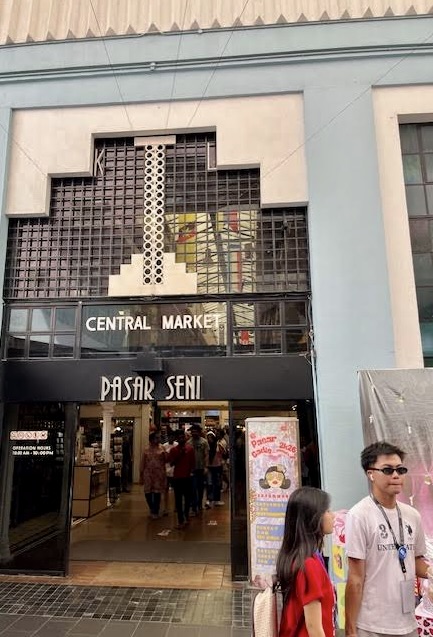
And now, for the flip side of the shopping coin – a couple of KL’s markets. Central Market, with its art deco design and two floors of crafts and food, was a treat to wander through.
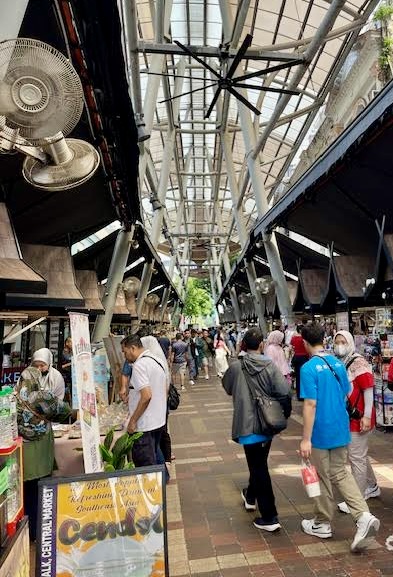
Just around the corner, and bordering onto Chinatown, things got a little grittier. Home to fake bags, jerseys, sunglasses and shoes, it came with a more pungent reality – the kind that makes you instinctively clutch your belongings a little closer.
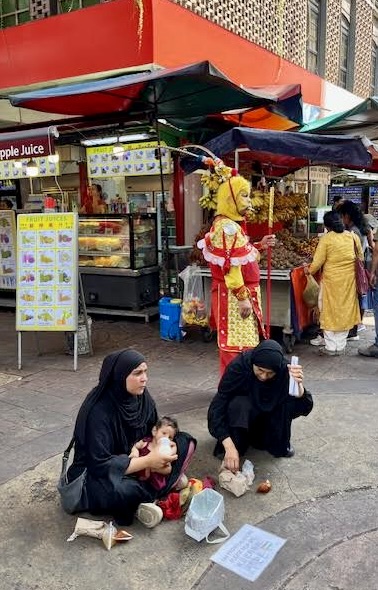
And where else will you find this juxtaposition of people – two Palestinian refugees and a man with his cigarette perilously close to his lion’s mane?
Just around the corner, we found ourselves on Chinatown’s Petaling Street and the atmosphere changed instantly. It felt edgy, restless; aggressive male energy. After someone yelled out “Americans” to us in a decidedly unfriendly way, we left.
We have found Kuala Lumpur to be such a curious mix of beauty and squalor; imaginative architecture and decaying buildings – all within blocks of one another.
We visited a most interesting traditional Malay neighbourhood that has been around since 1900 – Kampung Baru. It has been protected from development until now, but the worries are that this prime real estate will slowly disappear to join the sea of skyscapers that surround it.
It covered just a few streets, lined with dozens of food stalls and traditional wooden homes perched high on concrete stilts.
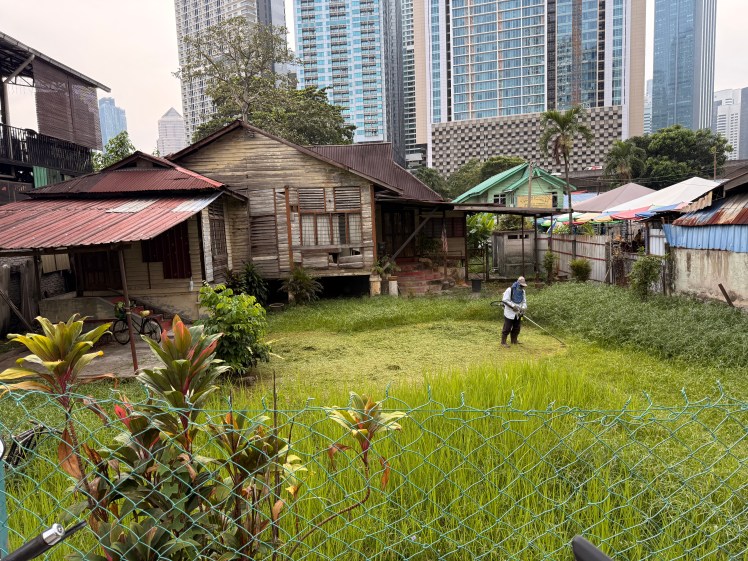
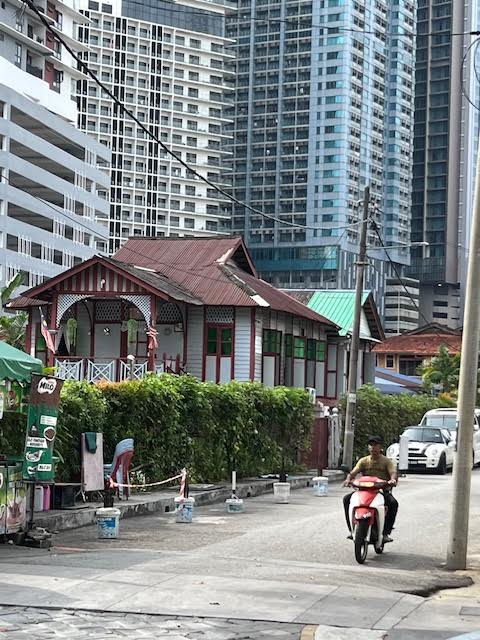
We wondered if much of Kuala Lumpur looked just like this before the building boom took over post-war. We also had an unfortunate incident happen here – we were scammed. I was just ahead of Stephen when I heard him call me back. He was in conversation with a man who turned to me and pleaded for some money to buy antibiotics for a wound on his arm. He pulled back gauze to show a truly horrifying injury and with tears in his eyes, he told me that he had no money and he had two children, and damn…I fell for it. I even cried along with him and gave him 50 ringits – about $17 CAD. Not a vast sum and if he had been legit, I would have felt cheap not giving more. We walked away but something did not feel quite right and a quick online check proved it – the old “festering wound” trick! Also, health care is free in Malaysia.
All of this to say – Malaysia feels like a safe country and its citizens are to be trusted, but we need to develop our spidey sense again. We’re in a country where there are many people with very little, and we represent wealth to them. With this one exception, we have met up with nothing but friendliness and kindness.
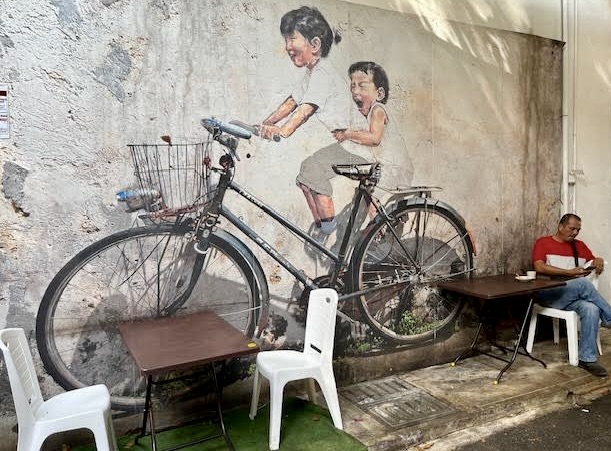
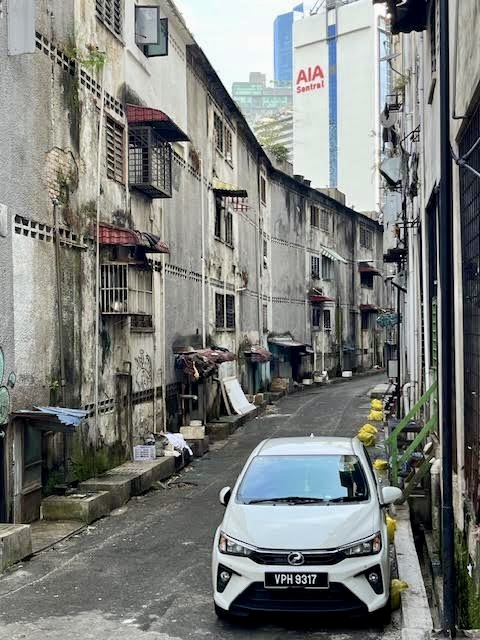
I’m a sucker for street art and while Kuala Lumpur cannot compare to the street art of Georgetown, Penang, we did check out a couple of streets that have been beautified. Again, the area is a mix of beauty and roughness.
This adorable image of two children:
People’s homes and businesses have been painted in such an exuberant way.
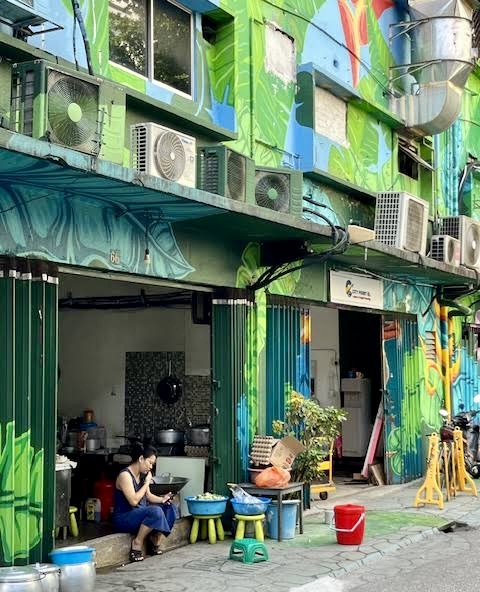
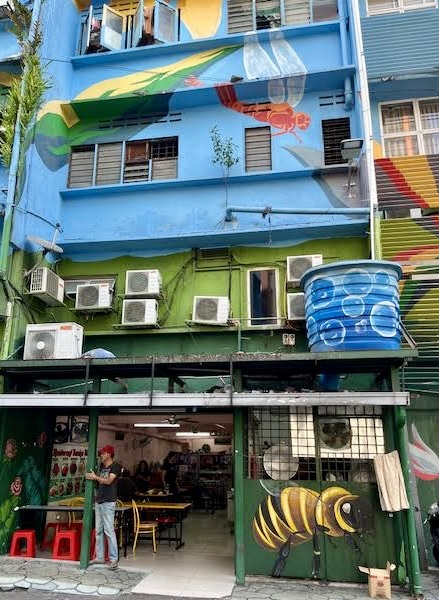
And the very next street has not yet been transformed.
Malaysia has almost 33 million people, settled over the years by the Dutch, Portuguese and British and today made up of half Malay, and the rest a mix of Chinese, Indian, indigenous and a substantial expat community. English is widely spoken and it is easy to acclimatize.
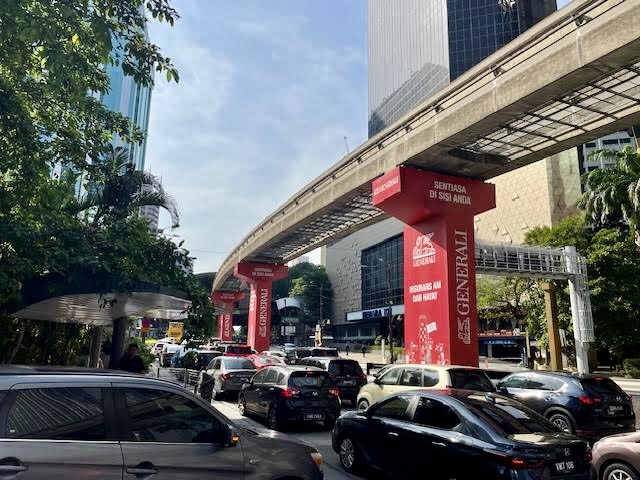
Transportation is good, with numerous LRT lines, buses, and a monorail. While there are loads of taxis, most people opt for ride-shares like Grab. Traffic is INSANE!!! It has to be said that Kuala Lumpur is not pedestrian friendly. Traffic lights appear to run to red on all sides, with whether or not it is your turn open to interpretation. Trying to cross an intersection is an exercise in split-second judgement (can I run faster than that truck?) and scooters frequently jump up on sidewalks to outwit the traffic jams.
After so many years of occupation, August 31, 1957 marks the joyous day that Malaysians broke from the British rule and became independence.
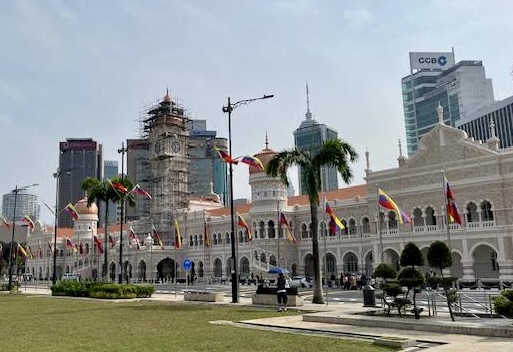
Merdeka Square is where this momentous occasion happened and the square is flanked with the glorious Sultan Abdul Samad building, unfortunately undergoing renovation and closed to the public.
Across the square is a large green space and one of the world’s largest flagpoles where the Malay flag has proudly flown ever since.
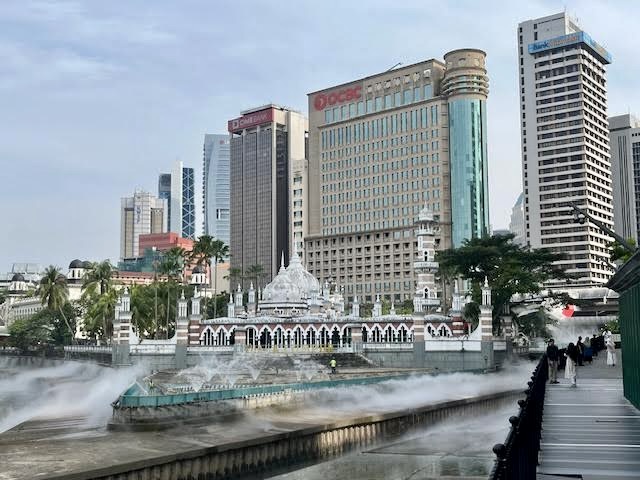
Just down from Merdeka Square is the River of Life, which overlooks the Sultan Abdul Samad Jamek Mosque. Unfortunately, we set out today to visit, not realizing that it was closed on Fridays to the public.
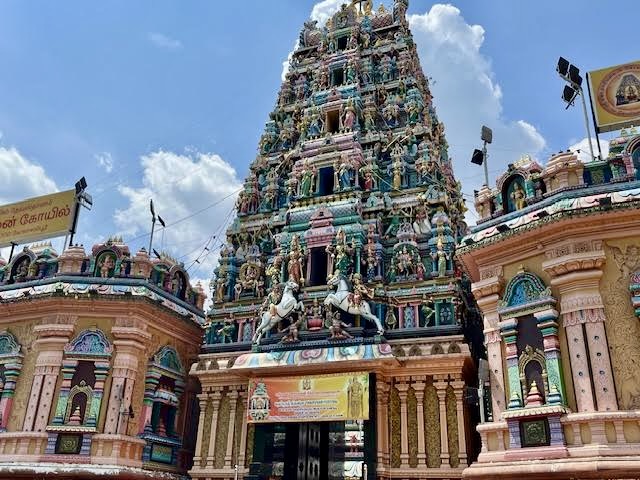
We did see the Sri Mahamariamman Temple – a Hindu shrine founded in 1873. If extravagant use of colour and expressive, life-affirming sculpture is your thing, then Hindu shrines are always a good bet.
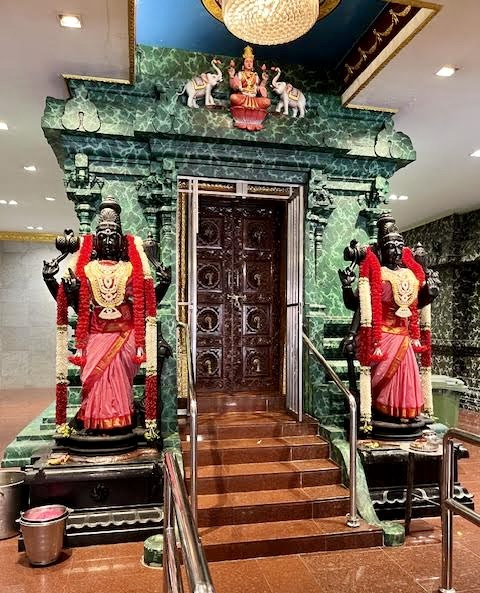
We visited Batu Caves, a phantasmagorical experience that was the exact opposite of what I had imagined. This Hindu temple is considered the most important Hindu shrine outside of India, and pilgrims come from all over the world to visit.
Armed with that information, I had imagined a mystical, deeply moving experience and a gratitude for being allowed to share. Neither Stephen nor I are religious, but we both find having a glimpse into various religious beliefs and practices to be a big part of any trip.
Batu Caves is just a short jog out of town, and the main shrine is deep inside the cave. It is free of charge to visit, but when we arrived, we were funnelled over to one side to visit another cave that cost about $20. This cave was short on information and long on drama.
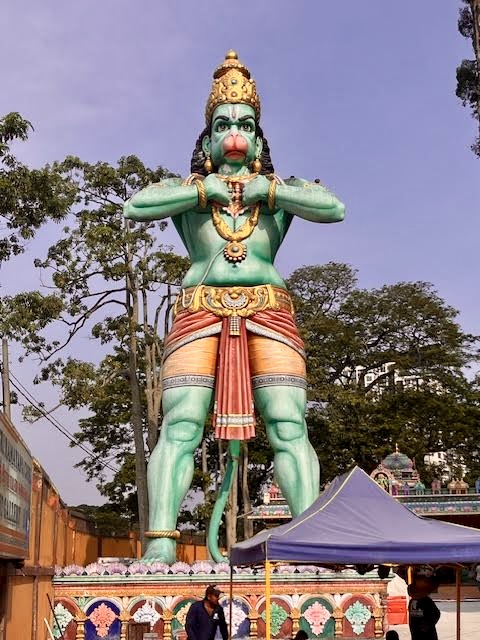
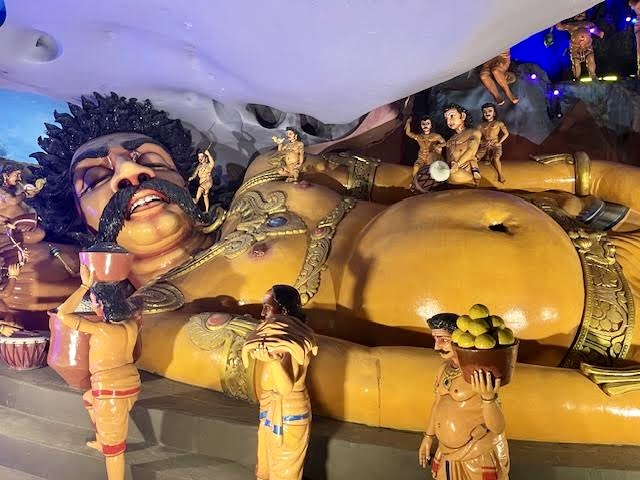
As we emerged from that cave, we found our way to the proper cave, but not before we ran the gauntlet of food outlets, trinket shops and other tourist tat.
Our first glimpse of the main attraction:
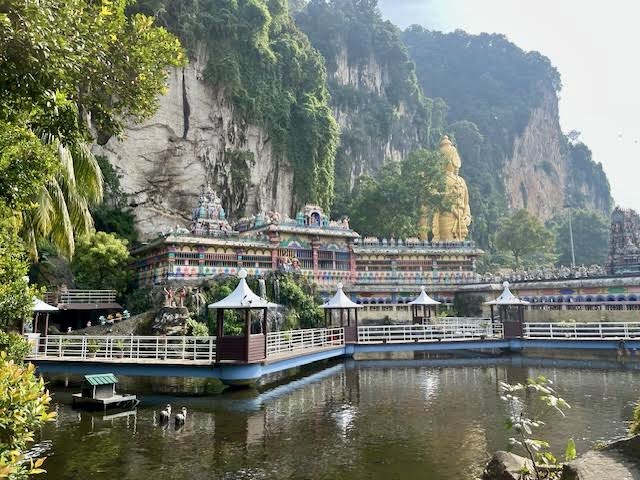
The surreal statue of the Hindu god Lord Murugan – standing a stately 43 metres high in all his glory. The climb to the caves is 272 steps high, and we saw a number of pilgrims make this trek in their bare feet.
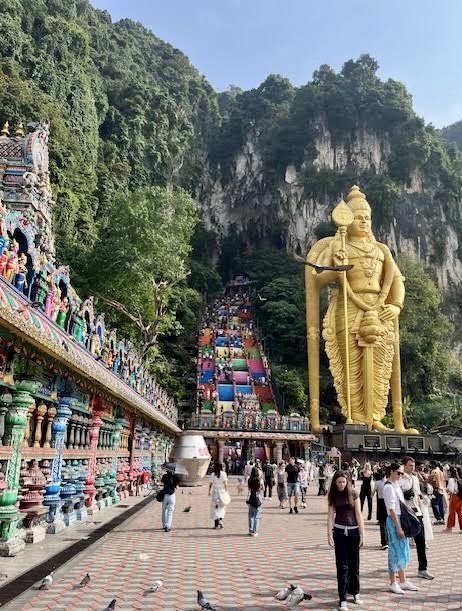
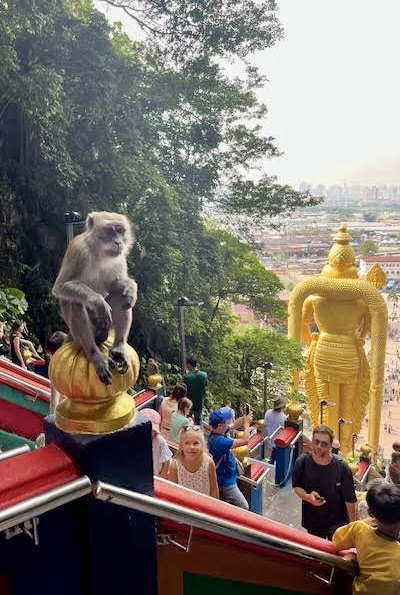
We had read about the colony of monkeys who live here and who are to be watched carefully, as they will grab anything that looks like food. I’m scared of moneys at the best of times, but the thought of climbing this stairway and being accosted was not far from my mind. So…I let out a full-throated shriek when a monkey jumped from one railing onto my arm and then spring-boarded to the opposite railing. No harm done, but we had to pass at least a couple of dozen of his cousins on the way up and down.
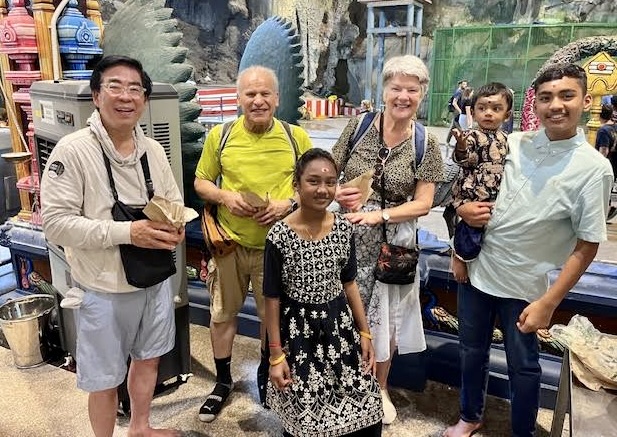
Safely inside, we removed our shoes and walked down the passageway to the shrine. The cave is enormous, with the shrine at one end, but I didn’t go in – there were so many people. On the way, this lovely family was handing out food – rice and mashed sweet potato to everyone. As we stopped to eat and chat, we were surrounded by the young girl, her brother and her baby sister who was turning 1 year old that day. They wanted our photograph for some reason, which felt really special. It reminded me of the many sweet people we met up with in India.
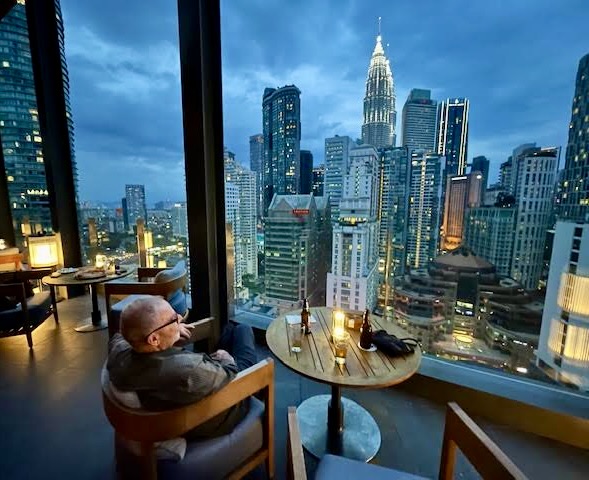
I could tell you so many stories, but as usual, this has gone on for longer than I had planned. I’ll leave you with a final image – Stephen and I enjoying a drink at the rooftop bar at the nearby Hyatt. In case you’re wondering – a drink at a rooftop bar in KL costs just $10 – $12 – a perfect example of affordable luxury in Malaysia.
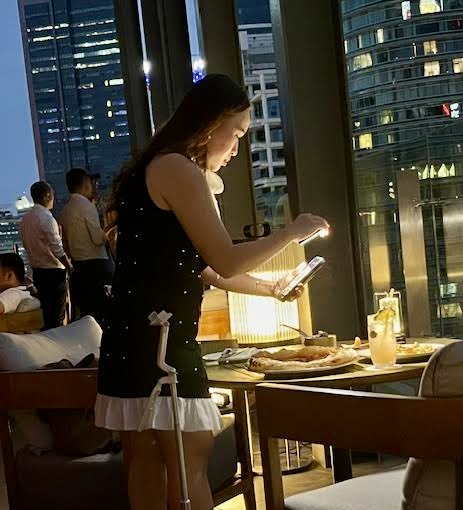
Okay – one more image. The young woman beside us was an influencer. She spent an inordinate amount of time arranging food and drinks and photographing from every angle, then setting up her camera to shoot a “casual” shot of herself sipping her cocktail. Fun to watch – a glimpse into that curated world.
So… a terrific start to our trip. We are used to the heat, loving the people and the food and ready to move on to the next adventure – Malacca.
 Leaving Ourselves Behind
love all the art work !! Looks like you guys are having a great time ! Nice city
experience! Cheers vikki
LikeLike
We’re having a great time so far, Vikki! I thought you’d like the art – wait until you see the beautiful murals in Melacca.
LikeLike
Hi Ginny and Stephen,
Looking at your photos of Kuala Lumpur, it seems to me there is a great del that is a feast for the eyes … such colour and vibrancy! I suspect at times it can be overwhelming!
Enjoy each moment as it comes, Heather
Sent from my iPad
>
LikeLike
Actually it is the heat that is overwhelming – we really have to learn how to pace ourselves. And traffic – we’re small-town people now!
LikeLike
Hi Ginny … I always enjoy your travel postings! Do you know the Canadian (indeed Guelph) connection to these sky-high buildings such as the Petronas Towers? RWDI, a company founded in Guelph by its partners Rowan, Williams, Davies and Irwin – and still headquartered here – is an internationally renowned engineering firm which specializes in testing and consulting on the effects of wind and other climatic factors on buildings all over the world – large scale, high rise, stadiums, bridges, etc. I know they’ve been directly or indirectly involved in many of the incredibly tall buildings which have gone up in our lifetime – eg the Burj Khalifa in Dubai, and I’d guess perhaps the Petronas Towers, too! I’ve visited their offices here during a “Doors Open” event, and it’s very neat to see the wind tunnels with all the models from past projects. I personally knew Peter Irwin (he sadly passed away a month ago); his work was so groundbreaking in wind engineering that he received the Order of Canada, amongst many other honours. Interesting bit of Guelph trivia – I thought you might enjoy it. Happy and safe travels to you … Kathy (MacLean)
LikeLike
Kathy MacLean – how great to hear from you after all these years! i’m so glad that you’re still following along – it means a lot.
Very interesting connection between Petronas Towers and Guelph – that city has a way of making itself felt on so many levels, doesn’t it?
I hope all is well in your world – thanks so much for reaching out.
LikeLike
So great to hear from you again and to be taken to such an exotic location. As always thank you for bring us along
LikeLike
I do it all for you, my friend! And yes, it is quite exotic – we’re just now getting used to the heat, and learning how to move about in 33 degree humidity! The trick is to move sedately and have a modest daily to-to list. So many stories coming up!
LikeLike